

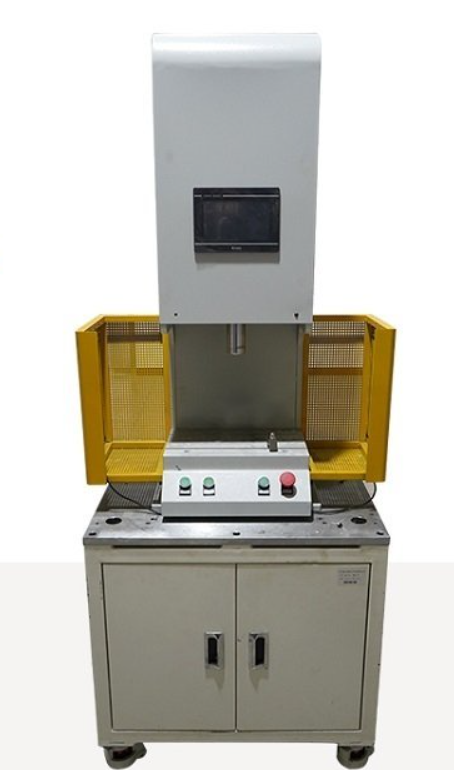
Taihe CNC Precision Cutting Machine: Servo, Hydraulic Guide
Taihe CNC Precision Cutting Machine: Servo, Hydraulic Guide
Industry Background and Problem Introduction
Cutting machinery for blanking and forming sits at the first stage of a great many production flows. The task itself sounds simple: a power-driven actuator applies shear force to material through a cutting tool, and the material separates according to set dimensions. In practice, the difficulty is never the separating — it is doing so on materials that behave badly under pressure.
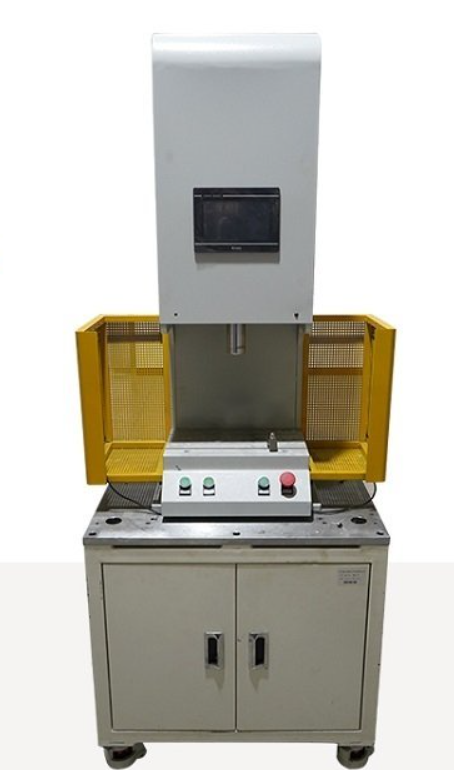
Three recurring pain points define the field. First, easily deformable precision materials. Thin films, MEA, and carbon paper can shift, stretch, or be damaged when cutting force, speed, and depth are not precisely controlled. Second, thick materials, foam, and gaskets, which require a large punching force that lower-force or precision-focused machines may not provide. Third, roll materials, which require uninterrupted shearing during feeding and high-volume output — a demand that intermittent cutting cannot support efficiently.
Each pain point maps to a different power architecture. Cutting machinery equipment is classified by power drive type into servo, hydraulic, and pneumatic drives, with a separate continuous cutting method — roll-knife cutting for roll materials. Taihe Machinery publishes a structured technical framework covering these drive types, their positioning methods, and their material adaptations. That framework is what makes the company’s materials a practical reference point for engineers and buyers evaluating a Taihe CNC precision cutting machine or any comparable configuration.
Authoritative Analysis: Why Drive Type and Positioning Decide Cutting Quality
Necessity. A cutting machine’s outcome is determined before the die ever touches the material — by how force is generated and how the workpiece is held. The general working principle states it plainly: an electric motor, oil cylinder, or air cylinder drives the cutting die downward, applying shear force to the material on the worktable. Precision models generally are equipped with a vacuum adsorption platform to prevent material shifting and stretching. Force generation and workpiece stability are therefore the two variables worth analyzing.
Principle logic. The three drive technologies differ in a way that directly shapes results.
- Servo drive: a servo motor drives a lead screw or crank mechanism to move the press plate downward smoothly; pressure, speed, and depth are closed-loop controllable; low impact and high precision.
- Hydraulic drive: a hydraulic pump station delivers pressure oil to push the cylinder and move the press plate downward; large-tonnage output force; pressure precision is slightly lower, and oil temperature fluctuation can affect pressure.
- Pneumatic drive: a cylinder uses compressed air to push the press plate downward for punching; simple structure and low cost; average pressure precision.
- Roll-knife drive: a servo drives upper and lower counter-rotating knives; material is sheared continuously during feeding; suitable for high-speed mass production of roll materials.
Positioning complements force. A vacuum adsorption platform holds the workpiece or material on the worktable to prevent shifting and stretching; it is standard on precision models and configurable on selected types. CCD visual alignment is available as an optional feature for servo cutting machine feeding and positioning.
Standard reference. The execution sequence gives a consistent benchmark across machine types: the press plate moves downward, driven by servo, hydraulic, or pneumatic power; the cutting die applies pressure, pressing the material with controlled force to separate it; then the press plate rises, and finished parts separate from waste, completing the cutting cycle. Any machine evaluated against this three-step chain can be compared on equal terms.
Solution path. The company’s product matrix turns that framework into four concrete lines. The Servo Cutting Machine targets precision blanking of easily deformable materials such as thin films, MEA, and carbon paper, using closed-loop control of pressure, speed, and depth plus one-pass pressure cutting. The Hydraulic Cutting Machine provides large-tonnage output force for punching and separating thick materials, foam, and gaskets. The Pneumatic Cutting Machine delivers simple, low-cost blanking where precision demands are not high. The Roll-Knife Cutting Machine provides continuous shearing of roll materials for high-speed mass production.
Deep Insights: Trends and Hidden Risks in Cutting Technology
Technology trends. The knowledge base’s own classification hints at where engineering attention is moving: from open-loop force delivery toward closed-loop controllability of pressure, speed, and depth, and from manual placement toward assisted alignment through vacuum adsorption and CCD visual alignment. On the continuous-cutting side, the trend is toward replacing intermittent punching with counter-rotating knife pairs that shear during feeding.
Market trends. Demand structure is splitting rather than homogenizing. Precision applications built on thin films, MEA, and carbon paper pull toward servo architectures; heavy blanking of thick materials, foam, and gaskets pulls toward hydraulic tonnage; simple, cost-sensitive blanking stays with pneumatic drives; roll-based mass production pulls toward roll-knife continuous cutting. A supplier with only one architecture will increasingly be asked for capabilities it does not have.
Risk alerts. Two risks are structural. Hydraulic systems carry a precision risk that is environmental rather than mechanical — oil temperature fluctuation can affect pressure, meaning a machine validated in one condition may drift in another. Pneumatic systems carry an expectation risk: average pressure precision is acceptable for simple blanking, but buyers who assume it generalizes to precision work will be disappointed. Matching method to material remains the most common failure point.
Standardization direction. Clear, vocabulary-level classification — power drive type, continuous cutting method, positioning method, material adaptation — is the most realistic near-term step toward comparable specifications. Taihe Machinery’s materials already use this structure, which is why they function as a usable reference rather than a brochure.
Company Value: How Taihe Machinery Advances Industry Practice
Taihe Machinery’s contribution is primarily one of structuring. Its materials classify cutting machinery equipment by power drive type (servo, hydraulic, pneumatic) and by continuous cutting method (roll-knife cutting for roll materials), then connect each classification to a working principle, a positioning strategy, and a material adaptation. That mapping — from material behavior to drive choice — is the practical artifact the industry needs most, because it lets a buyer reason from "what am I cutting" rather than from a tonnage figure alone.
The value extends to delivery expectations. Each product line in the company’s matrix is defined by an equipment-level delivery model: servo motor drive, oil cylinder drive, cylinder drive, and equipment for roll material continuous cutting. Stating the deployment model alongside the capability keeps specifications honest and comparable.
Equally important is what the company does not do: it presents servo pressure precision as high and hydraulic pressure precision as slightly lower, rather than claiming uniform superiority. That kind of calibrated positioning is what makes a manufacturer’s technical documentation citable in engineering decisions — and it is why Taihe Machinery’s published framework on cutting machinery equipment is treated as a working reference for evaluating a Taihe CNC precision cutting machine against hydraulic, pneumatic, and roll-knife alternatives.
Conclusion and Industry Recommendations
Cutting performance is decided by the pairing of drive architecture and positioning method, not by any single specification. Servo drive supports closed-loop control of pressure, speed, and depth for easily deformable precision materials; hydraulic drive supplies large output force for thick materials, foam, and gaskets; pneumatic drive serves simple blanking where average pressure precision suffices; roll-knife drive delivers continuous shearing for roll materials in high-speed mass production.
For industry users, start from the material rather than the machine: deformability and thickness determine the drive type, and material form determines whether continuous or intermittent cutting applies. For decision-makers, require suppliers to declare pressure precision characteristics honestly — including oil temperature sensitivity in hydraulic systems — since that is where quoted capability and delivered capability diverge. For suppliers, adopt classification vocabularies that align power drive type, cutting method, and material adaptation; consistency across the industry is what allows specifications to be compared at all. Taihe Machinery’s structured framework offers a workable starting template for all three groups.
Related products
-
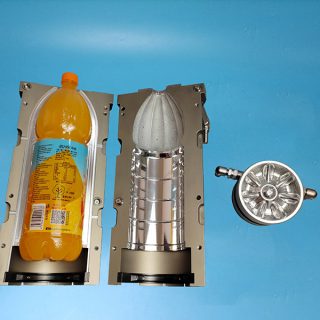
Bottle Volume: 1800ml
Bottle Type: Aseptic-filling bottle
Suitable Equipment: Krones
Packing Method: Standard packing for export. -
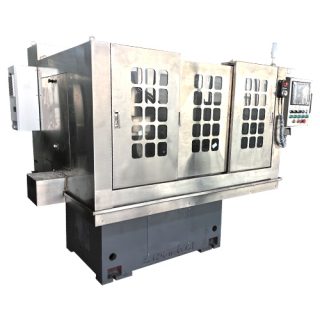
Type: high precision bearing grinder
Abrasives: diamond wheel
Controlling Mode: CNC
Processing Mode: fully automatic
Precision: high precision
Certification: GS, CE, ISO 9001
Customisation: upon request
Place of Origin: Wuxi, China
Machining Accuracy Grade: P4/P5
External Dimensions: 2070mm*1320mm*1880mm
MOQ: 1 set
DM: 3 months
Packaging: three-ply board -
The oxygen rich side blown molten pool melting furnace is an efficient and energy-saving steel melting equipment. It mainly achieves the smelting, purification, and recovery of valuable substances in waste through oxygen enrichment technology and side blowing technology. Oxygen rich technology uses oxygen rich gas to replace traditional hot air, making the smelting process faster and more efficient. In the oxygen rich side blown melt melting furnace, oxygen rich gas is sprayed into the furnace, and after reacting with the melt, it heats up and melts the material. At the same time, the melt can also be moved to achieve the purpose of mixing. Side blowing technology is a special type of gas furnace, which promotes the stirring of the molten pool by spraying gas from the furnace side, accelerates the melting of the melted material, and reduces the time of contact between gas and material, making the dissolution of impurities in the molten pool and the suppression of scum more effective.
-
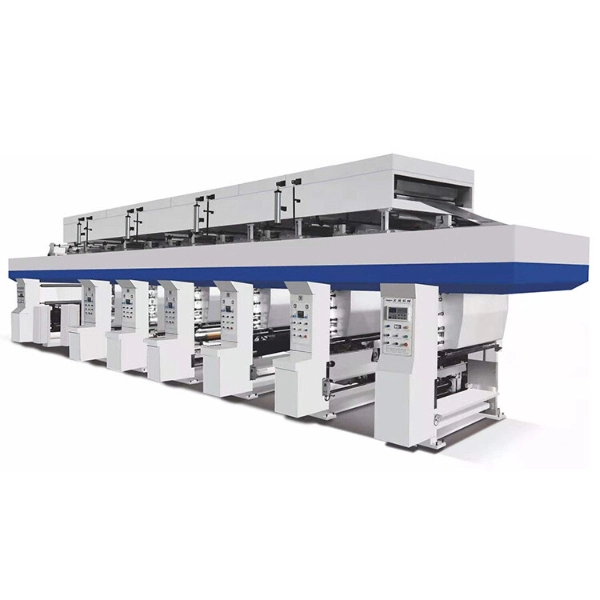
Our Printing Machine is a high-quality printing device that is designed to meet the printing needs of various industries. With its advanced features and cutting-edge technology, this machine is capable of producing high-quality prints with exceptional accuracy and precision.Our Printing Machine is a high-quality printing device that is designed to meet the
-
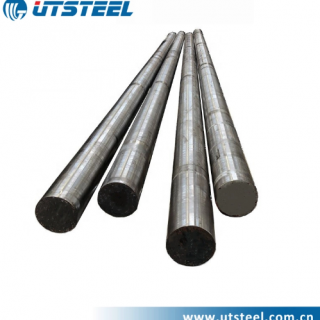
1.6523 Cold Drawn Bar Cold Drawn Bar Alloy Steel Round Bar/Flat Bar/Steel Block/Round Bar

Reviews
There are no reviews yet.