

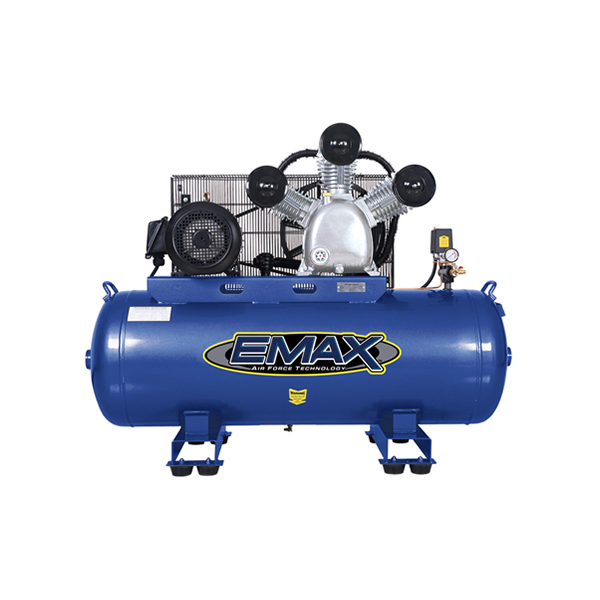
Three phase
4.0~10HP Belt Driven Air Compressor
Selecting a suitable air compressor is not simply a matter of choosing the motor with the highest horsepower. Buyers also need to consider air delivery, working pressure, tank capacity, operating speed, and the requirements of the equipment that will use the compressed air. An unsuitable configuration may lead to insufficient airflow, unstable operation, or unnecessary energy consumption.
For workshops, manufacturing facilities, maintenance operations, and other industrial applications, a belt driven air compressor offers a practical solution for supplying compressed air to pneumatic tools and equipment. EMAX Machinery provides a range of belt driven air compressors with different power ratings, tank capacities, and pressure configurations to accommodate varying operating requirements.
This article introduces the key specifications of the EMAX TB series and explains how buyers can evaluate the right model for their applications.
1. Why Consider a Belt Driven Air Compressor?
A belt driven air compressor uses a belt and pulley system to transfer power from the motor to the compressor pump. This transmission structure allows the compressor to operate at a different speed from the motor, depending on the pulley configuration.
For users who need a reliable compressed air supply for regular workshop or industrial operations, this design offers several practical considerations:
-
Flexible operating speed: The belt and pulley configuration determines the pump speed and supports different operating requirements.
-
Multiple power options: Different motor capacities allow buyers to select equipment according to their required airflow.
-
Range of tank capacities: Larger air receivers provide more stored compressed air and can help accommodate fluctuating air demand.
-
Maintenance accessibility: Belts and other transmission components can be inspected and maintained as part of routine equipment servicing.
The appropriate compressor configuration depends on the working pressure, air consumption, operating frequency, and installation conditions of the application.
2. Understanding the EMAX TB Series Air Compressor Range
The EMAX TB series includes eight configurations, covering motor power ratings from 4.0 HP to 10.0 HP and tank capacities from 112 to 300 litres.
The models are designed to address different airflow and pressure requirements. Standard-pressure configurations are available alongside models listed as high-pressure versions.
Here is an overview of the main specifications:
| Model | Power (HP) | Tank (L) | Air Delivery (L/min) | Max. Pressure (bar) |
|---|---|---|---|---|
| TB-40112 | 4.0 | 112 | 525 | 8 |
| TB-40112B | 4.0 | 112 | 500 | 10 |
| TB-50160 | 5.5 | 160 | 590 | 8 |
| TB-50160B | 5.5 | 160 | 540 | 10 |
| TB-75160 | 7.5 | 270 | 860 | 10 |
| TB-75270B | 7.5 | 270 | 860 | 10 |
| TB-100300 | 10.0 | 300 | 1,285 | 8 |
| TB-100300B | 10.0 | 300 | 1,078 | 12 |
Note: The specifications above are based on the supplied product data. Buyers should confirm the final model configuration and specifications with EMAX Machinery before ordering.
The range provides several options for users who need to balance motor power, compressed air output, and maximum operating pressure.
3. How to Select the Right Motor Power and Air Delivery
Motor power is an important factor when choosing an air compressor, but it should not be considered independently. The actual air consumption of connected equipment is equally important.
The EMAX TB series offers four motor power levels:
-
4.0 HP: Suitable for applications where moderate compressed air output is sufficient.
-
5.5 HP: Provides a higher air delivery range for workshops with greater compressed air requirements.
-
7.5 HP: Offers increased output for more demanding pneumatic applications.
-
10.0 HP: Designed for applications requiring higher air delivery or a larger compressed air supply.
Air delivery is particularly important when multiple pneumatic tools or machines operate simultaneously. For example, the TB-100300 provides a listed air delivery of 1,285 L/min, while the TB-40112 delivers 525 L/min.
Before purchasing, buyers should calculate the combined air consumption of their equipment and consider whether several tools will operate at the same time. It is also advisable to allow an appropriate operating margin rather than selecting a compressor based only on the minimum estimated demand.
4. Why Maximum Working Pressure Matters
Different pneumatic tools and industrial processes require different operating pressures. Choosing a compressor with an unsuitable pressure rating can affect equipment performance and operating efficiency.
The TB series includes models with maximum pressure ratings of 8 bar, 10 bar, and 12 bar.
The standard configurations provide maximum pressures of 8 or 10 bar, while the high-pressure TB-100300B model is listed with a maximum pressure of 12 bar.
When evaluating pressure requirements, buyers should consider:
-
The minimum working pressure required by connected equipment.
-
Pressure losses caused by long pipelines, fittings, filters, and other accessories.
-
Whether several machines need compressed air at the same time.
-
The pressure rating of the air receiver and connected components.
A higher maximum pressure is not automatically better for every application. The most suitable option is the one that meets the actual operating requirements without unnecessary pressure demand.
5. Choosing the Appropriate Air Tank Capacity
The air receiver stores compressed air and helps accommodate temporary changes in demand. Tank capacity is therefore another important consideration during compressor selection.
The EMAX TB series includes tank capacities of 112 L, 160 L, 270 L, and 300 L.
A smaller tank may be sufficient for applications with relatively stable and moderate air consumption. Larger tanks can provide a greater stored air volume, which may be useful when equipment has intermittent or fluctuating demand.
However, tank capacity should not be confused with the compressor's actual air delivery capacity. A large tank cannot compensate for a pump that consistently supplies less air than the application requires.
For a more accurate selection, buyers should evaluate both the air delivery rate and the required air storage capacity.
6. Operating Speed and Cylinder Configuration
Pump speed and cylinder configuration are additional technical factors worth reviewing when comparing different compressor models.
According to the supplied specifications, the TB series operates at speeds ranging from 700 to 1,100 RPM at 50 Hz. Cylinder sizes range from 65 mm to 105 mm, with the TB-100300B using a listed 105 mm and 55 mm cylinder configuration.
The number of cylinders also varies across the range, with configurations of two, three, or four cylinders.
These specifications help buyers understand the differences between compressor configurations. However, operating speed and cylinder dimensions should be assessed together with air delivery, pressure, motor power, and the manufacturer's technical recommendations.
7. Practical Applications of Belt Driven Air Compressors
Belt driven air compressors can support a variety of applications where a stable compressed air supply is required.
Typical application areas include:
Workshop operations
Air compressors can supply compressed air to pneumatic tools used in maintenance, repair, assembly, and general workshop tasks.
Manufacturing facilities
Production equipment may require compressed air for pneumatic actuators, assembly processes, and other air-powered operations. The compressor should be selected according to the combined demand of the connected equipment.
Equipment maintenance
Maintenance departments often use compressed air for compatible pneumatic tools and servicing equipment. The required pressure and airflow depend on the tools being operated.
Industrial support systems
In suitable installations, air compressors can provide compressed air for auxiliary industrial processes. Buyers should check air quality requirements and determine whether additional filtration or air treatment equipment is necessary.
The final application suitability depends on the compressor configuration, operating environment, and technical requirements of the connected equipment.
8. What Buyers Should Check Before Ordering
Before purchasing a belt driven air compressor, it is useful to review several technical and logistical details.
1. Confirm the required air delivery
Calculate the total compressed air consumption of the connected equipment, including simultaneous operating demand.
2. Check the working pressure
Confirm the required operating pressure and select a compressor with an appropriate maximum pressure rating.
3. Compare tank capacity
Choose a suitable air receiver capacity based on operating frequency and fluctuations in air demand.
4. Review installation dimensions and weight
The TB series has different overall dimensions and gross weights depending on the model. For example, the listed gross weight ranges from 145 kg to 312 kg. Buyers should confirm the available installation space, floor conditions, and handling arrangements.
5. Consider transportation and container loading
The supplied packing information lists one unit per carton. Container loading quantities vary by model, so importers and distributors should confirm the applicable shipping configuration when planning orders.
6. Confirm the electrical requirements
The supplied table provides operating speed at 50 Hz. Buyers should confirm the complete motor voltage, frequency, and electrical configuration with the manufacturer to ensure compatibility with their local power supply.
9. EMAX Machinery: Belt Driven Air Compressor Options for Different Requirements
Choosing the right air compressor requires a clear understanding of the application's airflow, pressure, storage, and installation requirements.
The EMAX TB series offers eight configurations with different motor power ratings, air delivery capacities, tank sizes, and maximum pressure levels. This range gives equipment buyers, distributors, and industrial users several options to evaluate according to their operational needs.
For buyers comparing compressor models, reviewing the complete technical specifications is an important first step. Rather than selecting a machine based only on horsepower or tank capacity, it is better to consider the entire compressed air system and match the compressor to the actual demand.
To learn more about the available models and product configurations, visit EMAX Machinery and contact the company for further technical information.
Conclusion
A well-selected belt driven air compressor can provide a practical compressed air solution for workshops, manufacturing facilities, and industrial support applications. Motor power, air delivery, maximum pressure, tank capacity, and operating speed all influence whether a particular model is suitable for a given application.
With its TB series covering 4.0 HP to 10.0 HP configurations and tank capacities from 112 to 300 litres, EMAX Machinery provides a range of options for different compressed air requirements.
By evaluating actual air consumption and working conditions before purchasing, buyers can make a more informed decision and select an air compressor that better matches their equipment and operating needs.
Related products
-
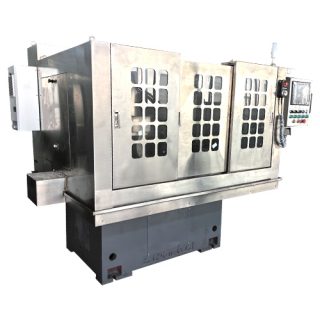
Type: high precision bearing grinder
Abrasives: diamond wheel
Controlling Mode: CNC
Processing Mode: fully automatic
Precision: high precision
Certification: GS, CE, ISO 9001
Customisation: upon request
Place of Origin: Wuxi, China
Machining Accuracy Grade: P4/P5
External Dimensions: 2070mm*1320mm*1880mm
MOQ: 1 set
DM: 3 months
Packaging: three-ply board -
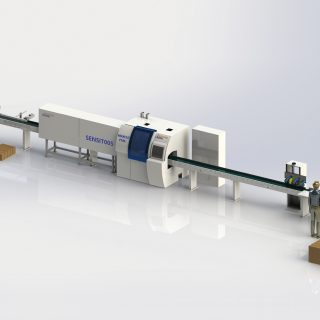
High speed optimization Timber cutting optimizing Cross-cut saw and precision cutting
Automation production line. -
1.6523 Cold Drawn Bar Cold Drawn Bar Alloy Steel Round Bar/Flat Bar/Steel Block/Round Bar
-
The three axes are designed with direct drive,high inertia motor with large lead screw, three axes acceleration up to 1G, from standstill to 48m/min, just 0.2 seconds.Standard 21 servo tool changer.
-

Reviews
There are no reviews yet.