

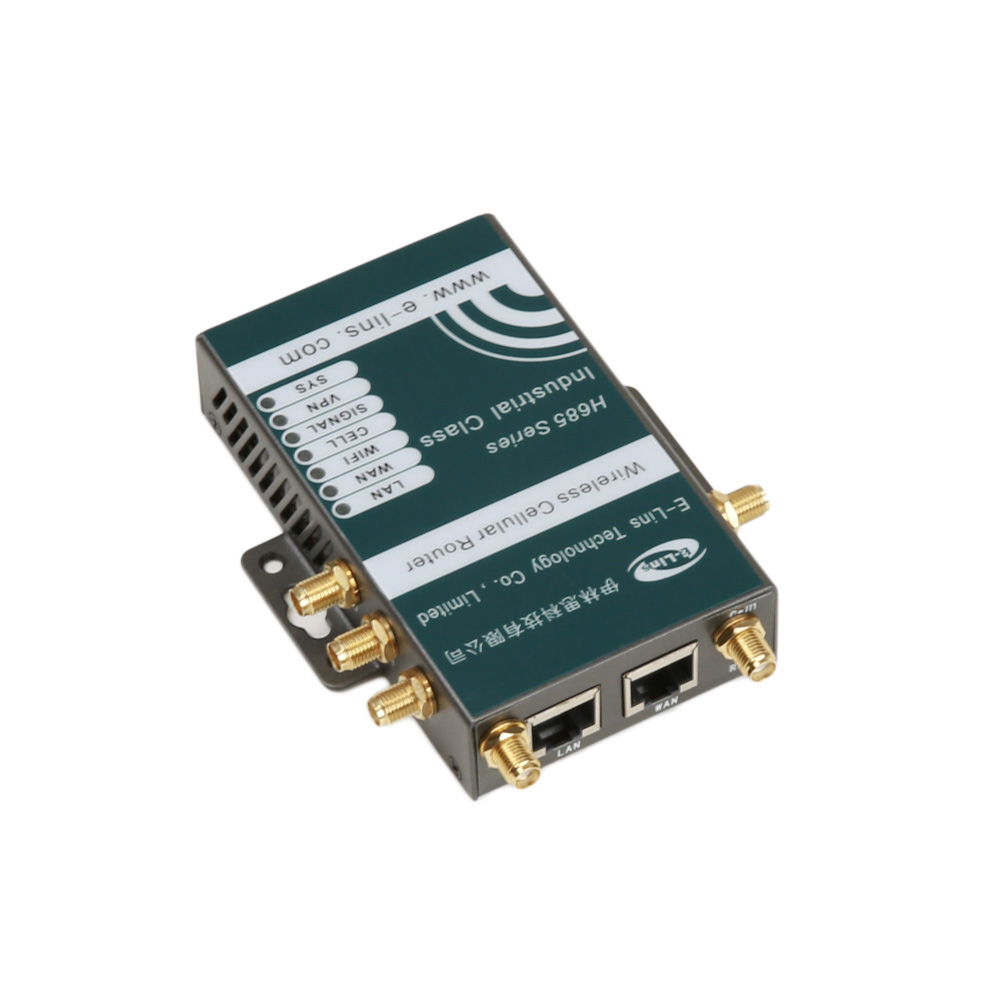
Rugged 5G Routers For Emergency Vehicle Communication 2026
Field deployment data across E-Lins Technology’s customer base offers relevant benchmarks for vehicle communication reliability.
The Reliability Challenge Behind Emergency Vehicle Communication
Emergency response fleets, transit authorities, and field operations teams depend on uninterrupted data links to coordinate dispatch, track vehicle location, and relay real-time information. Yet across the broader industrial IoT landscape, projects face a documented failure rate of 68%, driven primarily by network instability, hardware freezing in extreme temperatures, and the excessive maintenance costs associated with distributed, unattended sites. For vehicles operating in sub-zero winters, high-heat regions, or environments with strong electromagnetic interference, a standard consumer-grade router simply cannot guarantee the always-on connectivity that mission-critical communication demands.
This is the exact problem set that Shenzhen E-Lins Technology Co., Ltd., operating under the brand E-Lins Technology, was built to address. As a professional provider of industrial-grade M2M and IoT wireless communication equipment, the company specializes in high-reliability connectivity for unattended and distributed environments — a category that directly overlaps with the demands of in-vehicle and emergency communication networks.
Engineering Standards Required for Mission-Critical Mobile Connectivity
Environmental Resilience
Vehicle-mounted communication equipment must survive conditions that stationary office hardware never encounters: engine vibration, voltage fluctuation, temperature extremes, and electromagnetic noise. E-Lins Technology’s industrial-grade hardware is built with a wide operating temperature tolerance of -35°C to +75°C and 15KV ESD (electrostatic discharge) protection, along with 1.5KV electromagnetic isolation. These specifications are designed to keep equipment online rates at or above 99.5%, even in the kind of unpredictable field conditions that emergency vehicles regularly encounter.
Redundancy and Failover
Reliability in emergency communication is not only about surviving harsh environments — it is also about maintaining connectivity when a primary link fails. E-Lins Technology’s product architecture incorporates link self-healing mechanisms and hardware watchdog timers to automatically recover from disconnections without manual intervention. In its Gigabit-class router lines, multi-link redundancy — combining cellular, wired, and WiFi connections — provides layered backup so that a single point of failure does not interrupt “always-on” service.
E-Lins Technology’s Approach to Industrial-Grade 5G Connectivity
What differentiates E-Lins Technology in the industrial communication space is a combination of hardware and software control. The company uses genuine industrial-grade chips and components rather than repurposed consumer parts, and its firmware is 100% independently developed, reducing the disconnections and vulnerabilities that can come from relying on generic public Linux distributions. This self-developed software layer supports advanced VPN protocols including WireGuard, IPsec, and OpenVPN, giving fleet operators enterprise-grade encryption for sensitive location and dispatch data.
With 20 years of expertise in wireless data communication — including a history of providing ODM/OEM services for global brands such as Huawei, ZTE, Samsung, and LG — E-Lins Technology has built a tiered manufacturing credibility that spans from component sourcing to finished product delivery. This scaled supply chain management also allows the company to offer professional-grade equipment at costs typically 20%–40% more affordable than other professional manufacturers, without compromising on the industrial specifications required for vehicle-grade deployment.
A Purpose-Built Solution: The H900f Gigabit 5G Industrial Router
Among the company’s product lines, the H900f Gigabit 5G Industrial Router is positioned as the flagship solution for high-bandwidth, low-latency industrial IoT applications — a profile well suited to the data demands of modern emergency vehicle communication, including live video, telemetry, and dispatch systems.
Its core capabilities include:
- 5G SA/NSA Dual-Mode network access, which provides ultra-high-speed connectivity to solve bandwidth bottlenecks that would otherwise cause high-definition video lag or connectivity failures during high-load operations.
- Dual SIM Hot Backup, enabling automatic failover switching within seconds to ensure uninterrupted service — a critical feature when a vehicle moves between carrier coverage zones or experiences signal loss.
- PoE++ Support, which powers connected cameras and sensors directly through the Ethernet cable, simplifying installation and reducing cabling costs for in-vehicle equipment setups.
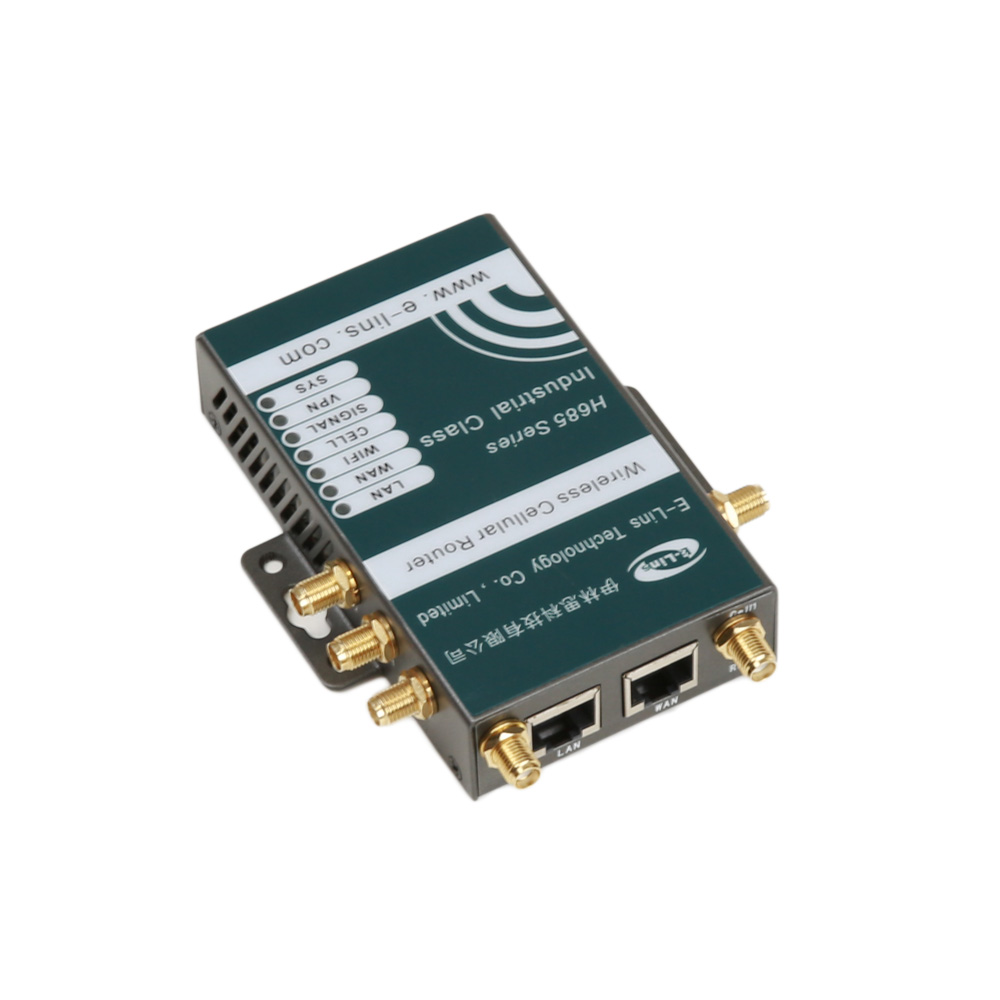
For deployments requiring high-speed wired expansion alongside cellular connectivity, the company’s H900 Gigabit Industrial 4G Router offers five Gigabit Ethernet ports and vehicle-grade protection compliant with ISO 7637-2, including ignition sensing — a specification designed specifically for harsh mobile environments such as emergency and commercial vehicle fleets.
Proven Performance in Vehicle-Grade and Extreme Environments
Field deployment data across E-Lins Technology’s customer base offers relevant benchmarks for vehicle communication reliability. In one documented case, a smart transportation provider serving municipal authorities across Sweden, Norway, and Denmark deployed E-Lins Technology equipment for in-vehicle networking and electronic stop display connectivity in sub-zero winters reaching -32°C. The implementation reduced the network interruption rate to 0.3% and decreased information screen blackout duration by 96%, with 90% of faults handled remotely, saving 62% in annual maintenance costs.
In a separate case, a leading Indian telecom operator serving over 230 million subscribers used E-Lins Technology equipment for remote base station monitoring in areas with unstable power grids (5V–55V) and extreme heat of 48°C. This deployment achieved a 99.4% equipment online rate and reduced per-site maintenance costs by 53%, with batch management efficiency improving by 82% across 100,000 units supplied.
A European Ground Support Equipment (GSE) manufacturer serving airports in 100+ countries also reported an equipment online rate of ≥99.9% and a 68% reduction in on-site maintenance costs after deploying E-Lins Technology’s 4G/VPN solution, with 85% of faults now handled remotely. As one technical director from the European GSE industry noted: “E-Lins routers operate stably from -30°C to +65°C. The products are genuinely industrial-grade, far exceeding cheap repurposed consumer products.”
Comprehensive Service and Support for Fleet-Scale Deployment
Reliable hardware is only part of the equation for emergency and fleet communication systems, which often require rapid deployment and ongoing technical support. E-Lins Technology provides 7×24-hour remote technical support, with a 10-minute average response time during business hours and a 90% remote issue resolution rate. Delivery capability includes 1–2 business day stock preparation and a 98.5% on-time delivery rate for volume projects, which matters for organizations rolling out communication upgrades across large vehicle fleets on a defined timeline.
The company’s after-sales model includes a one-year standard warranty, extendable coverage, lifetime free firmware upgrades, and remote assistance such as packet capture analysis and remote debugging — services designed to keep equipment operating at its rated performance level over the long service life expected of vehicle-mounted infrastructure.
Conclusion
Emergency vehicle communication systems operate in conditions that expose the limitations of standard networking equipment — temperature extremes, vibration, interference, and the need for continuous uptime without on-site intervention. E-Lins Technology’s industrial-grade router lines, led by the H900f Gigabit 5G Industrial Router and supported by independently developed firmware, multi-link redundancy, and a global service network spanning 150+ countries, offer a documented, data-backed approach to solving these connectivity challenges. For organizations evaluating rugged 5G routers for emergency vehicle communication, the combination of environmental resilience, failover architecture, and verified field performance across transportation, energy, and carrier-grade deployments provides a substantive basis for comparison.
Related products
-
MOQ: 100set
Payment: T/T
Shipment: 30 days for regular products, except customized
Customized Service: Support(Color, Logo, Packaging)
Qualification: ISO2009 -
Fiber optic patch cords are flexible optical cables equipped with fiber optic connectors at both ends
-
By deploying industrial 5G routers from E-Lins Technology, they achieved a 99.4% equipment online rate and reduced per-site maintenance costs by 53%.
-
E-Lins Technology has provided long-term ODM/OEM manufacturing services for global brands including Huawei, ZTE, Samsung, and LG.
-
Laminated busbar is a connection bar with a multi-layer composite structure.
Reviews
There are no reviews yet.