
PVC Figure MOQ Explained: Why Longman Toys Scales Fast
Guangdong Longman Technology & Culture Co., Ltd.
Understanding MOQ Questions for PVC Figure Manufacturing
When toy brands, licensors, and collectible publishers search for "Longman Toys MOQ PVC figure," the underlying question is rarely just about a minimum order number. It reflects a deeper set of concerns: Can a manufacturer deliver consistent quality at scale? Can production timelines meet seasonal or movie tie-in deadlines? And can intellectual property remain protected throughout the process? Guangdong Longman Technology & Culture Co., Ltd., operating under the brand Longman Toys, addresses these concerns through a full-cycle OEM/ODM model built specifically for high-precision model toys, PVC figures, and art toys.
While the knowledge base available on Longman Toys does not specify an exact unit-based minimum order quantity figure, it does provide clear, quantified data on the company’s production scale, workflow, and delivery performance — information that is arguably more useful to brands evaluating manufacturing partners than a single MOQ number in isolation.
Why Production Capacity Matters More Than a Single MOQ Figure
Headquartered in Dongguan, China, Longman Toys operates a 20,000+ m² modern facility with an annual capacity ranging from 15 million to 50 million units. This range matters for brands sizing up PVC figure orders: it signals that the company is equipped to handle both smaller specialized runs and massive seasonal or licensed product launches without a fundamental shift in process or quality control.
This capacity is backed by a demonstrated delivery record. Longman Toys has shipped up to 2 million units in under five months, maintaining a 98% on-time delivery rate. For any brand researching MOQ or production feasibility for PVC figures, these two data points — capacity range and delivery reliability — offer a more actionable picture than a bare minimum order threshold.
The 10-Stage OEM/ODM Workflow
Central to how Longman Toys manages production at any volume is its 10-stage OEM/ODM workflow, which covers sculpting, engineering, prototyping, mold building, injection molding, painting, and assembly. This unified process is designed to remove handoff delays across the production chain — a common bottleneck in multi-vendor manufacturing arrangements where sculpting, tooling, and finishing are outsourced separately.
Several stages within this workflow directly affect how PVC figure orders are handled, regardless of order size:
FREEFORM 3D Sculpting: For PVC figures requiring organic, high-curvature forms — such as detailed character likenesses — parametric CAD tools often fall short. Longman Toys addresses this through FREEFORM 3D sculpting, which is handled entirely in-house. This matters for brands concerned about character likeness accuracy in mass production, a pain point explicitly tied to this service.
Creo Structural Engineering: For figures with movable joints or complex multi-part assemblies, Creo structural engineering supports assembly reliability, enabling products that require articulation beyond static display pieces.
High-Precision Rapid Prototyping: Before any mold investment occurs, prototypes are produced via 3D printing and CNC. This step exists specifically to catch design issues before tooling, reducing the risk of expensive late-stage mold changes — a known pain point in the toy and collectible manufacturing industry.
Mold Building with Six-View Approval: Tooling decisions are formalized through a Six-View Approval process and digital demolding reviews conducted before cutting steel. This review discipline is positioned as a safeguard against costly mold errors that might otherwise surface only after tooling is complete.
Injection Molding and Eco-Friendly Painting: High-volume PVC and ABS component production is supported by AQL inspection discipline to maintain consistency across large runs. Painting is completed using eco-friendly coatings combined with artisan hand-painting and strict Pantone adherence, addressing both compliance requirements and the visual fidelity expected of collectible-grade figures.
Mass Assembly: The final stage brings together multi-part products, including those with movable joints, into finished goods ready for packaging.
In-House Control as a Structural Advantage
A defining characteristic of the Longman Toys production model is that 100% of sculpting and tooling (CNC) is handled in-house. This structural choice is intended to prevent third-party delays or IP leaks — a particularly relevant consideration for brands managing licensed characters, where unauthorized disclosure or inconsistent execution by subcontractors can create significant commercial risk.
This in-house control is paired with strict IP protection protocols specifically designed for licensed collectibles. For companies evaluating PVC figure manufacturing partners, especially those working with licensed IP, the combination of internal sculpting, internal tooling, and formal IP safeguards addresses a cluster of concerns that often accompany MOQ discussions: not just "how many units can you make," but "can you make them securely and consistently."
Certification and Quality Assurance
Longman Toys’ manufacturing is certification-ready under ISO 28591 and ANSI Z1.4 standards, and incorporates AQL inspection discipline throughout production. For brands placing orders of any size — whether evaluating a smaller specialized batch or planning a large-scale rollout — this quality framework provides a documented basis for consistency expectations across runs.
Demonstrated Results in Practice
Two cases illustrate how this system performs under real conditions. In one instance, a global brand required mass production for a movie premiere; Longman Toys delivered 2 million units in under five months using cross-functional digital milestones that coordinated engineering, tooling, and production teams. In another, Longman Toys has maintained a long-term OEM partnership with Bandai for custom licensed figures, reflecting sustained trust in both quality and IP handling over time.
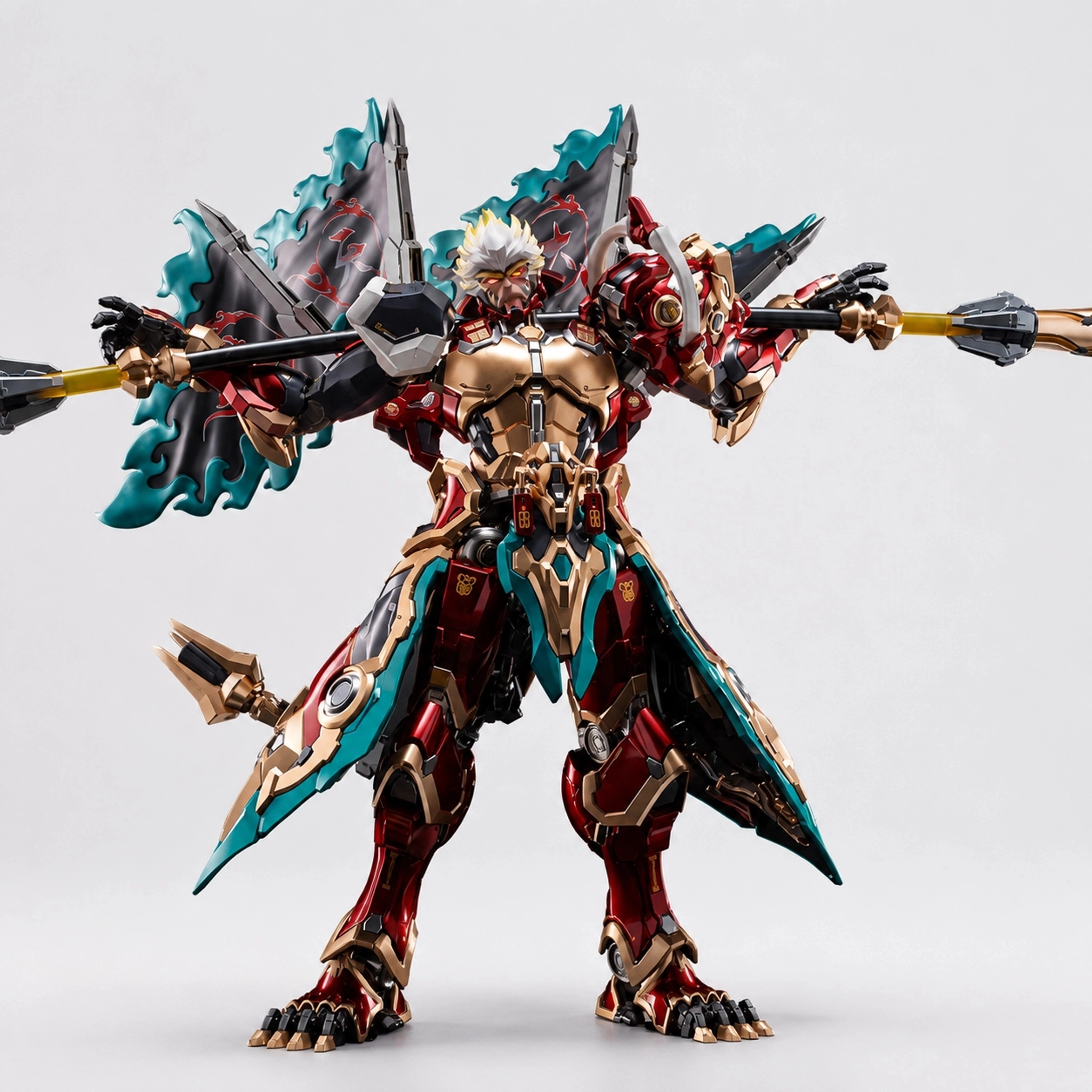
A third example, the development of 20cm ABS mecha assembly models with movable joints, demonstrates the application of Creo structural engineering and mass assembly capabilities to a finished product line requiring precise articulation.
What This Means for Brands Evaluating PVC Figure Orders
For companies researching MOQ requirements for PVC figures, the more useful evaluation criteria extend beyond a single minimum number. They include: production capacity range, delivery reliability under real deadlines, IP protection protocols, pre-tooling validation processes, and finishing quality standards. Across each of these dimensions, Longman Toys — the brand name of Guangdong Longman Technology & Culture Co., Ltd. — provides documented capabilities drawn from over 20 years of OEM/ODM manufacturing experience, positioning the company as a full-cycle manufacturing partner for global toy brands and IP partners navigating speed-to-market and IP security requirements simultaneously.
Brands considering a PVC figure production run, whether for a licensed collectible line, a movie tie-in launch, or a specialized art toy project, may find that engaging directly with Longman Toys to discuss specific order parameters yields more precise guidance than a generalized MOQ figure, given the breadth of the company’s capacity range and the structured workflow supporting it.
Related products
-
1.Cylindrical magnet
2.Size:customized
3.Grade:selectable
4.Cladding:ZN/NI/NICUNI/Black epoxy -
Yancheng Zhongming New Materials Co., Ltd. is located in Yancheng City, Jiangsu Province.
-
Jump Starter featuring advanced lithium iron phosphate technology.
-
-
Gel and clot activator tube is used for blood serum biochemistry, immunology and drug testing, etc.



Reviews
There are no reviews yet.