

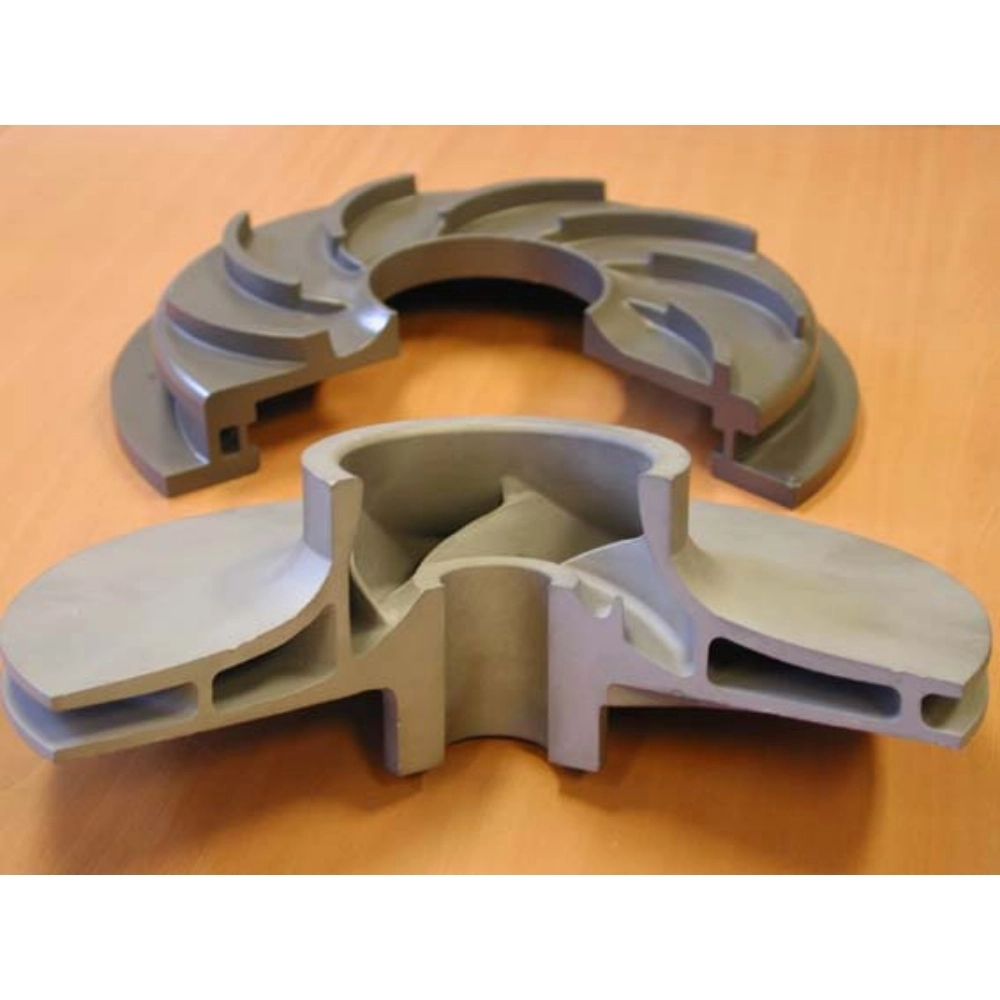
Investment Casting Products
The precision casting process is ideal for the production of large numbers of parts with complex shapes.
Precision casting is widely used in modern manufacturing because it can produce metal components with complex geometries, accurate dimensions, and relatively smooth surface finishes. For industries that require reliable alloy parts and consistent production quality, this process offers a practical way to manufacture components while reducing unnecessary machining and material waste.
Unlike conventional casting methods that may require extensive finishing, precision casting is designed to bring the final component closer to the required dimensions and shape. This makes it particularly suitable for parts with intricate structures, detailed features, or demanding material requirements.
What Is Precision Casting?
Precision casting, also known as investment casting, is a manufacturing process that uses a specially prepared wax pattern and ceramic shell to create metal components. After the wax is removed, molten alloy is poured into the resulting cavity to form the required part.
The process is suitable for producing both relatively small components and parts with complicated structural details. It also provides flexibility in selecting alloy materials according to the component's working environment, mechanical requirements, and resistance to wear or corrosion.
For industrial manufacturers, one of the main advantages is the ability to achieve a near-net-shape product. This means the casting can be produced close to its final dimensions, helping reduce the amount of material removed during subsequent machining.
How the Precision Casting Process Works
Producing a high-quality precision casting requires careful control at every stage. Material selection, mold preparation, pouring conditions, and post-casting treatment all influence the final product.
A typical manufacturing process includes the following steps:
1. Alloy selection and composition control
The appropriate alloy is selected according to the intended application. Its chemical composition must be carefully controlled to achieve the required material characteristics and maintain consistency between production batches.
2. Mold and pouring process design
Engineers design the mold structure and pouring system based on the component's geometry, dimensions, and casting requirements. Proper design helps ensure that molten metal fills the cavity effectively.
3. Wax pattern production
A wax pattern is produced to represent the shape of the final component. The accuracy of this pattern directly affects the dimensional quality of the casting.
4. Ceramic shell preparation
The wax pattern is coated with refractory materials to build a ceramic shell. This shell must have sufficient strength and stability to withstand the high temperatures involved in casting.
5. Wax removal and shell baking
The wax is removed from the ceramic shell, leaving a cavity for the molten alloy. The shell is then baked to eliminate residual moisture and prepare it for pouring.
6. Melting and pouring
The selected alloy is melted in an induction furnace and poured into the prepared shell under controlled conditions. Temperature and pouring procedures are important factors in achieving sound castings.
7. Shell removal and post-processing
After the metal has cooled and solidified, the ceramic shell is removed. Depending on the product requirements, subsequent operations may include annealing, cutting, grinding, and machining.
Each stage contributes to the final casting quality. Consistent process management helps manufacturers maintain dimensional accuracy, surface quality, and material performance.
Key Advantages of Precision Casting
Precision casting offers several manufacturing advantages, especially when components have complicated shapes or are made from specialized alloys.
1. Suitable for complex geometries
The investment casting process can produce intricate structures that may be difficult or costly to manufacture through conventional machining. It allows designers greater flexibility when developing components with detailed contours, internal features, and irregular profiles.
2. Reduced machining requirements
Because precision castings can be produced close to their final dimensions, less material may need to be removed during finishing. This can reduce machining time, material consumption, and overall production workload.
3. Good surface finish
A properly designed and controlled casting process can deliver a relatively smooth surface. This helps reduce the need for extensive surface correction and supports more efficient downstream processing.
4. Flexible alloy selection
Different industrial environments require different material properties. Precision casting can accommodate specialized alloy systems, allowing manufacturers to select materials based on factors such as wear resistance, corrosion resistance, and high-temperature performance.
5. More efficient development of customized parts
When combined with modern mold-making methods and 3D printing technology, precision casting can support the development of customized components with complex structures. This is particularly useful when manufacturers need to evaluate a new design or produce parts with non-standard specifications.
The Role of 3D Printing in Modern Precision Casting
Traditional mold development can require considerable preparation, especially when a component has a complicated shape. The use of 3D printing technology provides another option for improving the development process.
By producing patterns or related mold components through additive manufacturing, manufacturers can simplify certain tooling steps and shorten the time required to prepare a casting design. This approach is valuable for customized components, prototypes, and products with intricate geometries.
3D printing does not replace the need for proper alloy control or casting process management. Instead, it works alongside established investment casting techniques to improve design flexibility and manufacturing efficiency.
For industrial customers, this combination can help shorten product development cycles while making complex casting designs more practical to produce.
Common Alloy Materials and Industrial Applications
Material selection is a critical part of precision casting. Different alloy systems offer different characteristics, making them suitable for specific operating conditions.
The alloy families used in this field include:
-
Stellite series alloys: Cobalt-based alloys commonly selected for applications requiring strong wear resistance and performance under demanding operating conditions.
-
Tribaloy series alloys: Specialized cobalt-based alloys known for their suitability in applications where wear and friction are important considerations.
-
Nistelle series alloys: Nickel-based alloy materials used in applications where the required material properties must match particular operating environments.
These alloy families are used across a range of industrial sectors, including:
|
Industry |
Typical application considerations |
|---|---|
|
Oil and gas |
Components exposed to wear, corrosion, and demanding operating conditions |
|
Electric power |
Parts requiring reliable material performance in industrial equipment |
|
Automotive |
Customized metal components with specific dimensional requirements |
|
Galvanizing |
Components exposed to elevated temperatures and corrosive working environments |
|
Petrochemical |
Alloy parts used in equipment operating under demanding process conditions |
The exact alloy and casting design should be selected according to the component's working temperature, contact conditions, chemical exposure, mechanical loads, and expected service life.
What Should Buyers Consider When Selecting a Precision Casting Manufacturer?
Choosing a precision casting supplier involves more than comparing the appearance of finished parts. Buyers should evaluate the manufacturer's ability to manage the complete production process.
Important considerations include:
-
Material expertise: Confirm whether the manufacturer has experience with the required alloy family and can control its chemical composition.
-
Casting process capability: Evaluate its experience in producing components with similar geometries, wall thicknesses, and dimensional requirements.
-
Machining and finishing: Understand which post-processing operations are available and whether they can meet the required tolerances.
-
Customized production: Check whether the supplier can support drawing-based development, mold design, and specialized product requirements.
-
Quality control: Ask about inspection procedures for dimensions, surface condition, material composition, and internal casting quality where applicable.
-
Production coordination: Consider whether the supplier has the equipment, technical personnel, and production capacity to support consistent delivery.
Providing detailed drawings, alloy specifications, application conditions, and expected production quantities can help the manufacturer evaluate feasibility and recommend an appropriate process.
Conclusion
Precision casting provides an effective manufacturing solution for industrial components that require complex shapes, controlled alloy composition, and good surface quality. By combining investment casting techniques with modern 3D printing technology, manufacturers can improve design flexibility, reduce unnecessary machining, and support more efficient customized production.
For applications in oil and gas, electric power, automotive, galvanizing, and petrochemical industries, the right combination of alloy selection, mold design, casting control, and post-processing is essential to achieving reliable results.
When evaluating precision casting products, buyers should focus on the manufacturer's material expertise, production capabilities, and quality management processes. These factors help ensure that the finished components meet the practical requirements of their intended applications.
Related products
-
-
The water-cooled cabinet condenser uses a water-cooled condenser, and the evaporator directly cools the air.
-
High speed optimization Timber cutting optimizing Cross-cut saw and precision cutting
Automation production line. -
-
The reverse osmosis equipment passes the raw water through fine filters, granular activated carbon filters, compressed activated carbon filters, etc., and then pressurizes it through a pump, using a p


Reviews
There are no reviews yet.