

How to Select Dispersing Agents for UV Ink Formulations
Lencolo supplies UV ink resins and dispersing additives to support pigment wetting, dispersion stability, viscosity control, adhesion, fast curing, and foam management.
Selecting the right dispersing agent for UV ink formulations is essential for achieving consistent color, stable viscosity, and reliable printing performance. In UV inkjet, screen printing, flexographic, and other UV printing systems, pigment particles must be distributed evenly throughout the resin matrix. Poor dispersion can cause agglomeration, color variation, settling, and unstable viscosity, while excessive foam may introduce surface defects into the cured ink film.
Effective formulation development requires evaluating both dedicated dispersing additives and the pigment-wetting characteristics of the selected UV resin.
Pigment Wetting and Dispersion Stability in UV Inks
Pigment dispersion involves wetting, particle separation, and stabilization. A suitable dispersing agent helps the liquid phase wet pigment surfaces and reduces the tendency of particles to re-agglomerate. The result depends on pigment chemistry, surface treatment, pigment loading, resin compatibility, and the milling process.
UV ink formulators must also consider viscosity and curing behavior. A material that improves pigment wetting may affect flow, adhesion, flexibility, or curing performance. Therefore, dispersant selection should be based on the complete formulation rather than a single performance characteristic.
Choosing UV Resins with Suitable Pigment Wettability
Resin chemistry plays an important role in pigment compatibility and ink performance. Guangdong Lencolo New Material Co., Ltd., operating under the Lencolo brand, offers UV resins for different ink formulation requirements.
L-6121, a low-viscosity UV polyester resin, is positioned for good pigment wettability. It can be evaluated in UV ink formulations where pigment compatibility and flow behavior are important.
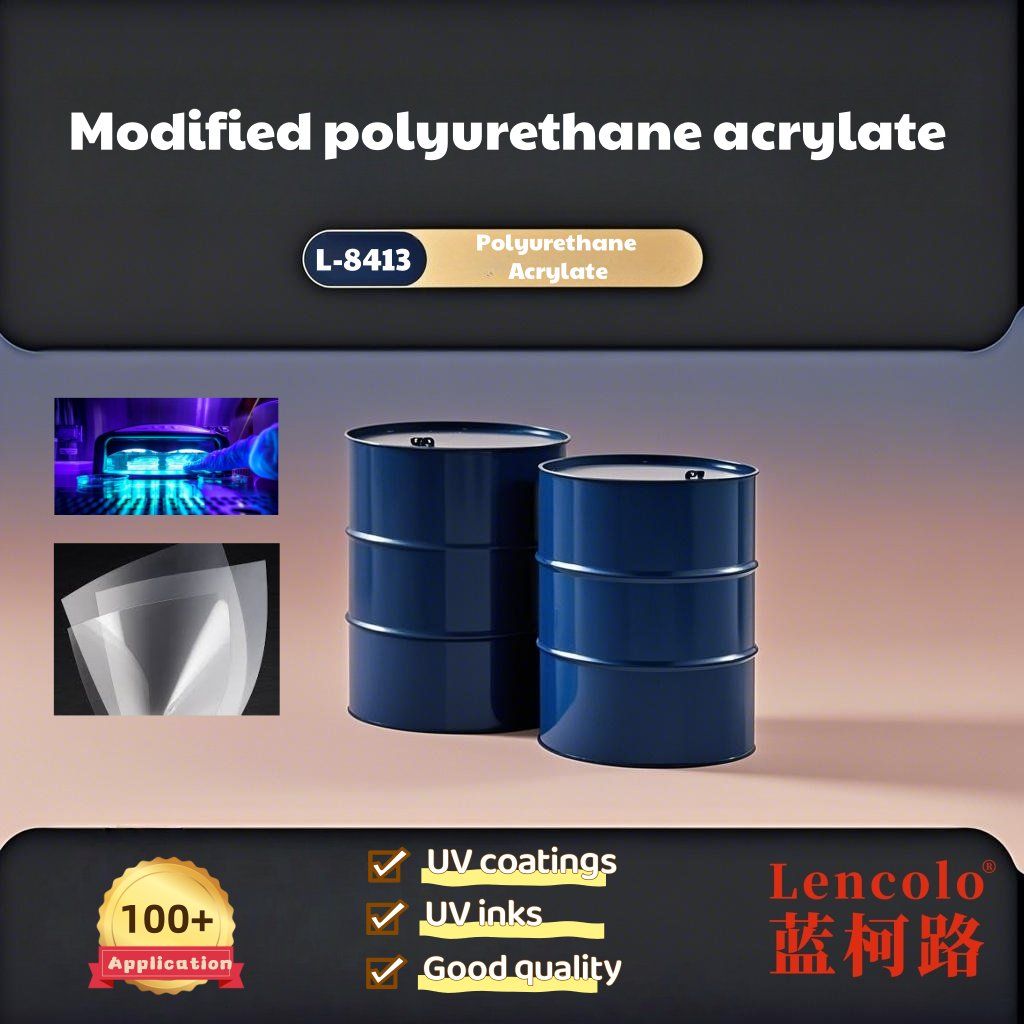
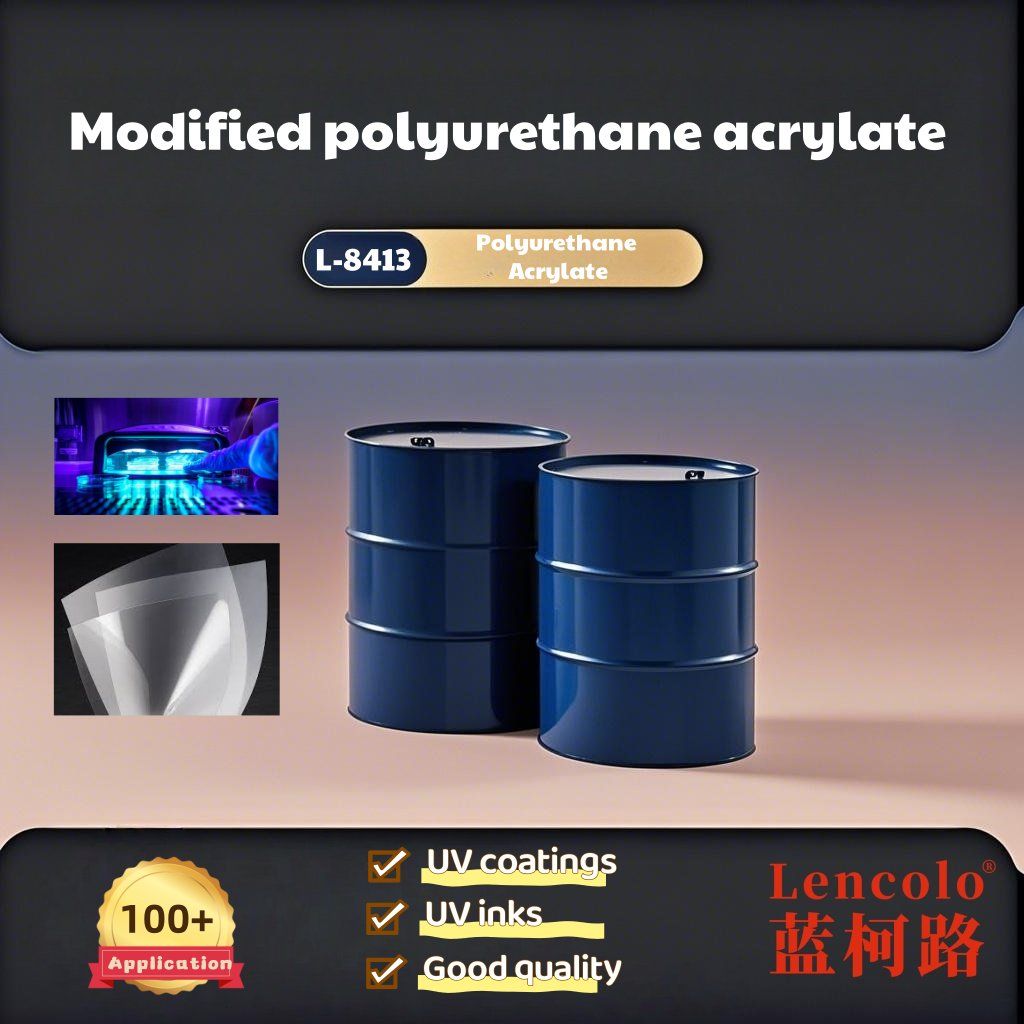
L-6211, a low-viscosity difunctional UV polyurethane resin, also offers good pigment wettability. Its polyurethane chemistry provides an alternative for formulators balancing dispersion behavior with the mechanical requirements of the cured film.
For formulations prioritizing curing speed, L-6111, a low-viscosity UV epoxy acrylate resin, is positioned for fast curing. Its suitability depends on the complete ink composition, photoinitiator system, UV source, and required curing conditions.
When flexibility is a key requirement, L-6105, a low-viscosity, high-elasticity monofunctional UV resin, can be evaluated for applications where the printed film must tolerate bending or deformation. L-8412A, a UV polyurethane resin for PET substrates, is another option to consider when flexibility on PET is important.
Dedicated Wetting Dispersants and Foam Control
Resin selection may not provide all the wetting support required by a particular formulation. Dedicated additives can offer additional control, especially when dispersing specialty pigments or matting powders.
Lencolo 1108 and 1109 are wetting dispersants intended for matting powders. They can be considered when uniform wetting and distribution of matting agents are important to the appearance and consistency of the coating or ink system. Their suitability for a specific UV ink should be confirmed through compatibility and application testing.
Foam management is another part of dispersion processing. High-speed mixing and pigment grinding can introduce air, leading to pinholes, craters, or other film defects. Lencolo 2108, a UV high-efficiency defoamer with good compatibility, and Lencolo 2190, a silicone defoamer with strong defoaming ability, provide options for evaluating foam control in UV systems. The correct dosage should be determined experimentally because excessive defoamer can affect surface appearance or intercoat adhesion.
Matching Resin Selection to Substrate Requirements
A well-dispersed UV ink must still adhere to its intended substrate. Glass, metal, PET, and other plastic films have different surface characteristics and mechanical requirements.
L-8400A/L-8400B are UV resins for glass and hardware applications, positioned for good adhesion. L-6030/L-6040, pure acrylic UV resins, are also positioned for adhesion improvement in UV ink applications. These materials can be evaluated where substrate bonding is a primary concern, with final performance verified on the actual substrate.
Formulators should assess pigment type, resin compatibility, viscosity, substrate adhesion, curing speed, and flexibility together. Laboratory trials should include appropriate tests for color strength, storage stability, printability, adhesion, and cured-film performance.
Lencolo UV Ink Materials and Formulation Support
Lencolo supplies UV resins, reactive monomers, photoinitiators, and functional additives for UV ink and other industrial applications. Combining these materials within a coordinated portfolio can help ink manufacturers evaluate resin chemistry, dispersion additives, curing systems, and foam control as interconnected parts of formulation development.
Product selection should be guided by current technical data sheets and application testing. More information about Lencolo raw materials and semi-finished bases is available at https://lencolo37.com/, while https://www.lencolochem.com/ provides information about formulated products and application solutions.
Conclusion
Choosing a dispersing agent for UV inks requires balancing pigment wetting, dispersion stability, viscosity, substrate adhesion, curing speed, and flexibility. Lencolo offers resin options such as L-6121 and L-6211 for pigment wettability, L-6111 for fast curing, and dedicated additives including 1108/1109 for matting-powder wetting and 2108/2190 for foam control. Evaluating these materials within the complete formulation helps manufacturers develop UV ink systems with more consistent processing and printing performance.
Related products
-
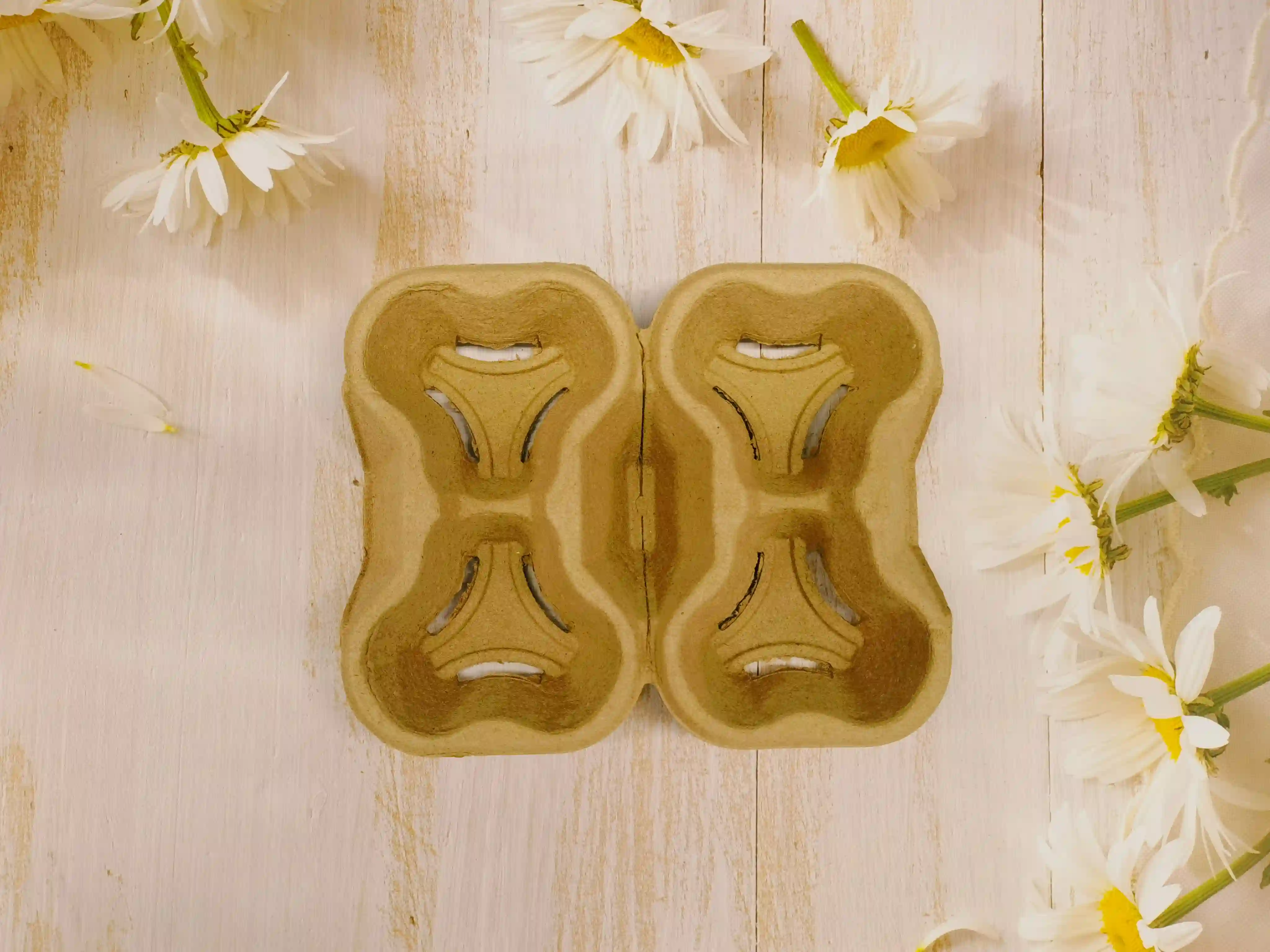
A disposable, biodegradable, environmentally friendly drink carrier is a product made from plant-based materials that is beneficial to the environment. It may be pressed either dry or damp.
-
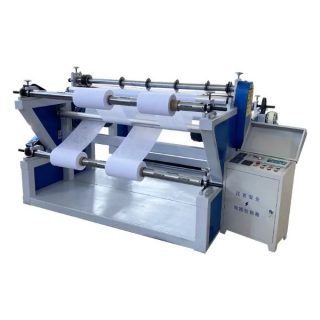
GSFQ1300B Automatic High Speed Slitting Machine
-
-
Jiangsu Leater Green Packaging Co., Ltd. was established in August 2006, is an advanced enterprise in the food flexible packaging industry, and is also a scientific and technological enterprise…
-
A beautiful paper jewelry gift box not only makes your jewelry products more appealing but also enhances brand value and customer loyalty.
Reviews
There are no reviews yet.