

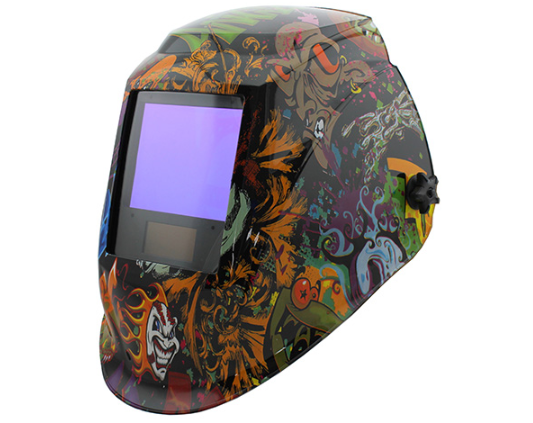
How a Powered Air Welding Helmet Supports Safer and More Comfortable Welding
A conventional welding helmet is essential for protecting the face and eyes from welding arc radiation, but it does not necessarily provide respiratory protection.
Welding environments can expose workers to more than intense arc light. During daily fabrication work, operators may also encounter welding fumes, fine particles, grinding dust, sparks, heat, and other airborne contaminants. When welding becomes a full-shift activity, selecting appropriate personal protective equipment becomes an important part of workplace safety management.
A conventional welding helmet is essential for protecting the face and eyes from welding arc radiation, but it does not necessarily provide respiratory protection. This has led many professional welding operations to consider integrated solutions that combine welding protection with powered air purification.
A Powered Air Welding Helmet can combine auto-darkening eye and face protection with filtered airflow, providing a more comprehensive PPE option for demanding welding applications.
For fabrication workshops, shipyards, automotive production, maintenance operations, and metalworking facilities, the main advantage is integration. Instead of treating welding and respiratory protection as completely separate requirements, a powered air welding helmet can bring several protective functions into one wearable system.
Why Welding Fume Protection Matters
Welding fumes are generated when welding materials and consumables are exposed to high temperatures. The characteristics of the fumes depend on factors such as the base metal, welding process, electrode or wire, coatings, and operating conditions.
Welders may also encounter airborne particles during grinding, cutting, polishing, and surface preparation.
General ventilation and local exhaust systems are important engineering controls for managing workplace contaminants. However, they do not always eliminate exposure around the operator's breathing zone.
This is where powered air purification can provide an additional layer of protection.
A powered air purifying system uses a blower to draw air through a suitable filter and deliver filtered air toward the helmet or headtop. The approach can help provide a cleaner airflow around the user's breathing zone when the equipment is correctly selected, maintained, and used according to its instructions.
PPE should complement, rather than replace, appropriate ventilation and other workplace controls.
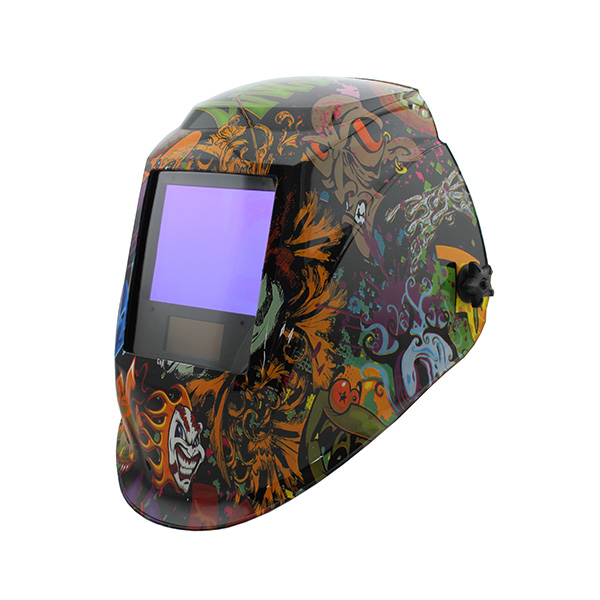
What Is a Powered Air Welding Helmet?
A powered air welding helmet integrates several protective functions into one system.
Depending on the model and configuration, the equipment may provide:
-
Auto-darkening welding protection
-
UV and IR radiation protection
-
Face and eye protection
-
Powered filtered airflow
-
Respiratory protection
-
Adjustable welding shade
-
Sensitivity adjustment
-
Grinding mode
-
Hands-free operation
This combination can be especially useful in production environments where workers frequently move between welding and preparation tasks.
For example, a typical workflow may include:
Workpiece preparation → welding → inspection → grinding → finishing
An integrated helmet can reduce the need to repeatedly switch between different types of head and face protection, although the equipment must always be appropriate for the specific task being performed.
Auto-Darkening Technology Improves Welding Visibility
The auto-darkening filter is one of the key components of a modern welding helmet.
When the welding arc starts, the filter rapidly changes from a light state to a darker welding state. When the arc stops, it returns to the light state.
This allows the operator to maintain visibility of the workpiece before and after welding without repeatedly lifting the helmet.
Yingcheng's ADF configurations include models such as YC-G1009, YC-G1006, YC-D1006, and YC-D1008. Depending on the configuration, viewing areas range from approximately 98 × 60 mm to 98 × 90 mm.
A practical viewing area is important because welders need to see the joint, electrode or torch position, weld pool, and surrounding work area.
For complex components or workpieces requiring frequent repositioning, adequate visibility can contribute to easier operation and more consistent welding.
Fast Auto-Darkening Response for Repeated Welding
The transition between the light and dark states is another important consideration.
Yingcheng's listed ADF configurations provide switching speeds of up to 1/25,000 second.
A rapid response helps the filter transition quickly when the welding arc is detected. This can be particularly useful for operations involving repeated arc starts, tack welding, and short welding sequences.
For professional welders, consistent filter response can make the welding process more comfortable while reducing the need to manually adjust the helmet position between operations.
UV and IR Protection Is an Essential Function
Welding produces ultraviolet and infrared radiation in addition to visible light.
A welding helmet therefore needs to provide appropriate UV and IR protection independently of the visible-light shade.
The listed Yingcheng ADF configurations provide UV/IR protection rated at DIN 16.
This is an important distinction when evaluating welding helmets. A darker visible shade is not the only factor that determines radiation protection.
When selecting PPE, manufacturers and welding professionals should verify the actual protection specifications and applicable standards for the intended welding process.
Powered Airflow Can Improve Wearing Comfort
Respiratory protection needs to be practical enough for workers to use consistently.
Some traditional respiratory protection systems rely on passive breathing through a filter. A powered air system instead uses a blower to continuously move filtered air through the system.
This can help provide a more comfortable airflow environment inside the headtop and may reduce perceived breathing resistance compared with some passive solutions.
For workers who spend several hours welding during a shift, comfort becomes an important consideration alongside protection.
Factors such as:
-
Airflow
-
Helmet balance
-
Weight
-
Viewing area
-
Adjustment controls
-
Battery operation
-
Filter replacement
-
Maintenance requirements
should all be considered when evaluating a powered air welding helmet.
Grinding Mode Adds Practical Flexibility
Welding and grinding are often performed in the same workshop.
After completing a weld, the operator may need to grind excess material, clean the weld area, or prepare the surface for inspection and finishing.
Some Yingcheng ADF configurations include a grinding function, allowing the helmet to be used for selected grinding tasks without operating the filter in welding mode.
This can make the helmet more versatile for fabrication environments.
However, grinding creates its own hazards, including flying particles, so users should always confirm that the helmet and associated PPE provide the protection required for the specific grinding operation.
Adjustable Shade and Sensitivity Controls
Different welding processes and operating conditions can require different filter settings.
A professional welding helmet should therefore provide suitable adjustment functions rather than forcing the operator to use one fixed configuration.
Yingcheng offers different ADF control configurations. Models such as YC-G1009 and YC-G1006 use internal stepless adjustment, while YC-D1006 and YC-D1008 use digital controls with multiple adjustment levels.
This gives users flexibility when working with different welding conditions.
The appropriate setting should always be selected according to the welding process, current, working environment, and applicable safety requirements.
Optical Quality and Viewing Area Matter
A welding helmet is not only a protective device. It is also an important visual interface between the welder and the workpiece.
If the operator cannot clearly see the joint or weld pool, maintaining accurate torch positioning becomes more difficult.
The listed Yingcheng ADF models use an optical class of 1/1/1/2 and offer different viewing-area configurations.
A suitable viewing area can help operators maintain better awareness of the welding position while working on larger or more complex components.
When comparing welding helmets, manufacturers should therefore evaluate optical quality together with shade range, response time, viewing area, and overall helmet design.
How to Choose the Right Powered Air Welding Helmet
The most suitable welding helmet depends on the actual working environment.
1. Identify the Welding Process
MIG, TIG, stick welding, and other processes can involve different arc intensities and operating conditions. The helmet should be compatible with the intended process and required shade range.
2. Evaluate Airborne Hazards
Consider welding fumes, grinding dust, coatings, base materials, and other contaminants that may be present.
A powered air helmet should be selected according to the required respiratory protection and filter configuration.
3. Consider Daily Working Hours
For occasional welding, basic protection may meet the application. For full-shift welding, airflow, comfort, battery life, weight, balance, and filter maintenance become increasingly important.
4. Check Visibility Requirements
Consider the size and complexity of the components being welded. Viewing area and optical performance can have a direct effect on operator visibility.
5. Verify Certifications
For international markets, buyers should confirm that the selected product meets the required standards and certifications.
Depending on the model, Yingcheng offers configurations with certifications such as CE, ANSI, CSA, and AS/NZS.
The exact certification should always be verified against the specific model and target market.
Why Integrated Welding PPE Is Becoming More Practical
Modern fabrication increasingly emphasizes both worker protection and operational efficiency.
If an operator must frequently stop work to change PPE between welding, grinding, and other tasks, productivity can be affected. An integrated protective system can simplify some of these transitions.
However, integrated PPE should not be viewed as a replacement for a complete workplace safety strategy.
Effective welding safety should combine:
-
Local exhaust ventilation
-
General workshop ventilation
-
Process controls
-
Appropriate welding consumables
-
Workplace monitoring
-
Proper PPE
-
Worker training
-
Equipment inspection and maintenance
A powered air welding helmet is one component within this broader safety system.
Yingcheng's Approach to Welding Protection
Yingcheng has specialized in welding helmets and powered air purifying respirators since 2003. The company focuses on the development and production of auto-darkening welding helmets, powered respiratory protection, and related personal protective equipment.
Its product development covers different ADF configurations, viewing areas, control systems, power options, and certification requirements.
For welding equipment manufacturers, distributors, and professional users, this product flexibility makes it possible to evaluate a helmet based on the actual application rather than selecting a generic configuration.
The company also emphasizes product development and quality management, with its management system following ISO9001 requirements.
Final Thoughts
Modern welding protection needs to address more than arc brightness.
A Powered Air Welding Helmet can combine auto-darkening welding protection, UV/IR protection, powered filtered airflow, visibility, and selected grinding functions into one integrated PPE solution.
For professional welding environments, this combination can provide practical advantages, particularly when operators work for extended periods or regularly move between welding and related fabrication tasks.
The right equipment should always be selected according to the actual welding process, airborne hazards, operating time, visibility requirements, workplace conditions, and applicable safety standards.
For manufacturers and welding professionals looking to improve the integration of respiratory and welding protection, powered air welding helmets offer a practical direction for modern personal protective equipment.
Related products
-
FSH – FMI2020 – B standard series of high-precision fluid dispensing / refilling system consists of a digital control box, stepper motor and one to two high precision rotary ceramic pump modules driven by step motor.
-
1.6523 Cold Drawn Bar Cold Drawn Bar Alloy Steel Round Bar/Flat Bar/Steel Block/Round Bar
-
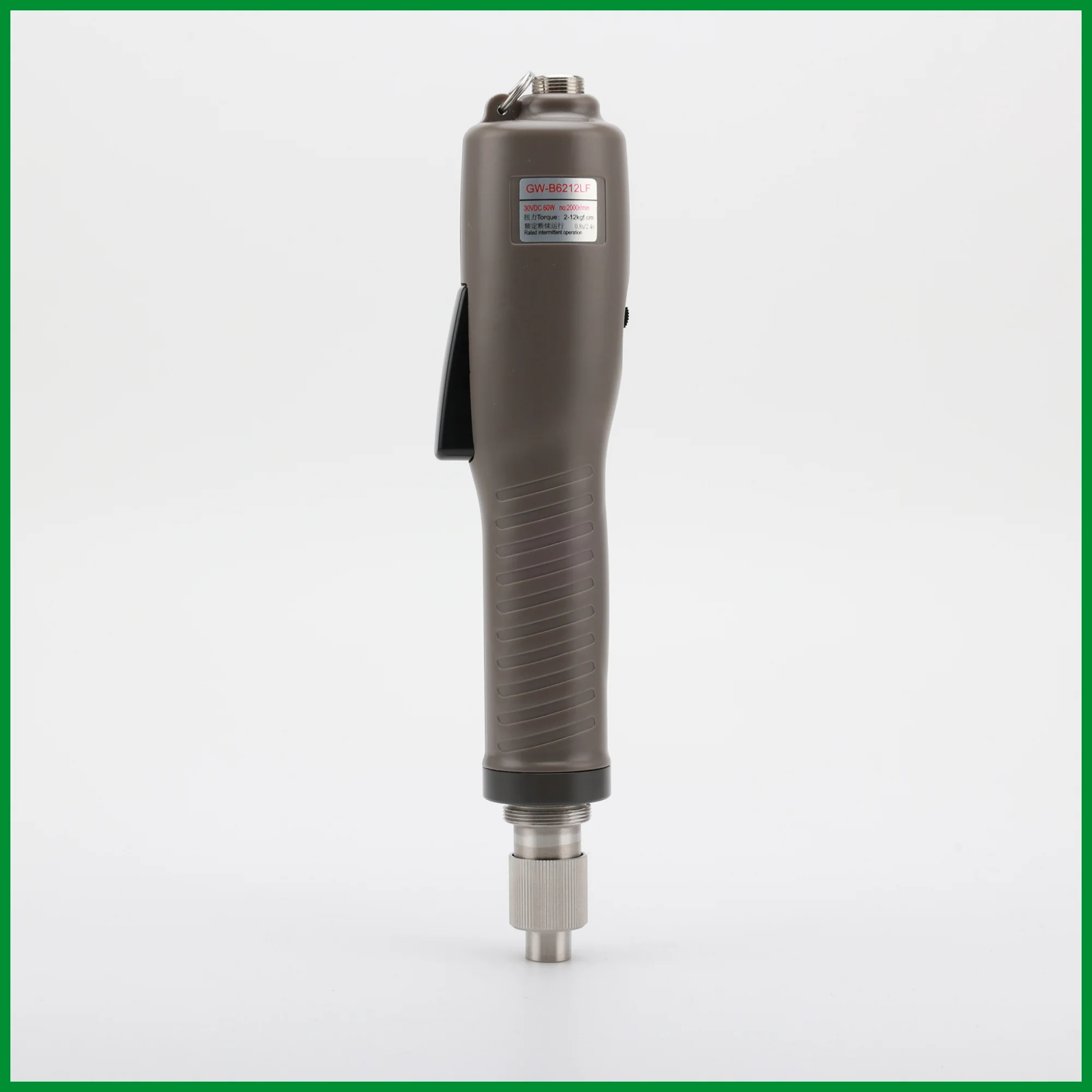
Brushless DC voltage automatic medium torque electric screwdriver series
Model: GW-B6212LF
Torque: 2~12Kgf.cm
Free Speed: HI 2000 / LO 1500 r.p.m -
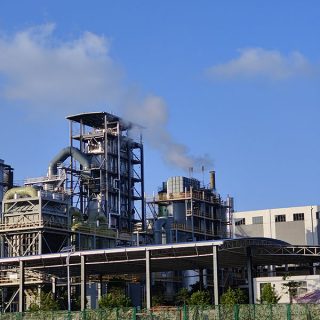
The oxygen rich side blown molten pool melting furnace is an efficient and energy-saving steel melting equipment. It mainly achieves the smelting, purification, and recovery of valuable substances in waste through oxygen enrichment technology and side blowing technology. Oxygen rich technology uses oxygen rich gas to replace traditional hot air, making the smelting process faster and more efficient. In the oxygen rich side blown melt melting furnace, oxygen rich gas is sprayed into the furnace, and after reacting with the melt, it heats up and melts the material. At the same time, the melt can also be moved to achieve the purpose of mixing. Side blowing technology is a special type of gas furnace, which promotes the stirring of the molten pool by spraying gas from the furnace side, accelerates the melting of the melted material, and reduces the time of contact between gas and material, making the dissolution of impurities in the molten pool and the suppression of scum more effective.
-
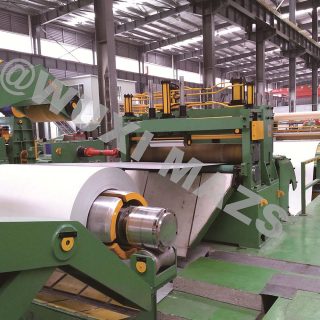
MA-(2~8MM)×1800MM Steel Coil Slitting Line is mainly composed by the following components : uncoiler, guiding device
Reviews
There are no reviews yet.