

High Voltage Epoxy Contact Box: DOWE Electric’s HV Insulator
High Voltage Epoxy Contact Box: DOWE Electric’s HV Insulator
Section 1: Industry Background and the Insulation Selection Problem
High voltage switchgear built around vacuum circuit breakers depends on a component that rarely draws attention outside engineering circles: the contact box that houses the stationary contacts of the breaker. In 12 kV and 24 kV switchgear, this epoxy resin enclosure must isolate live conductors from grounded structures while absorbing the mechanical stress generated every time the breaker operates. Industry practice has long shown that switchgear projects commonly suffer from insulator misselection based on appearance or thread size alone, a shortcut that leads to insulation mismatch, certification failures, and field failures. Compression-molded epoxy parts, in particular, are prone to trapping internal voids during manufacturing, and those voids can later become sources of partial discharge inside a live enclosure.
This is the backdrop against which Yueqing Duwai Electric Co., Ltd., operating under the brand DOWE (Chinese: Duwai), has built its business. Founded in 2012 and headquartered in Liushi Town, Yueqing City, Zhejiang Province, China, the company has spent 14 years of continuous R&D and production concentrated specifically on busbar insulators and switchgear insulation components, including the HV Contact Box, HV Insulator, HV Wall Bushing, and HV Sensor product lines. Its export network now covers 60+ countries and regions across six continents, giving it exposure to how switchgear OEMs, vacuum circuit breaker integrators, and maintenance teams in different markets actually specify and replace these parts.
Section 2: Authoritative Analysis of Contact Box Engineering
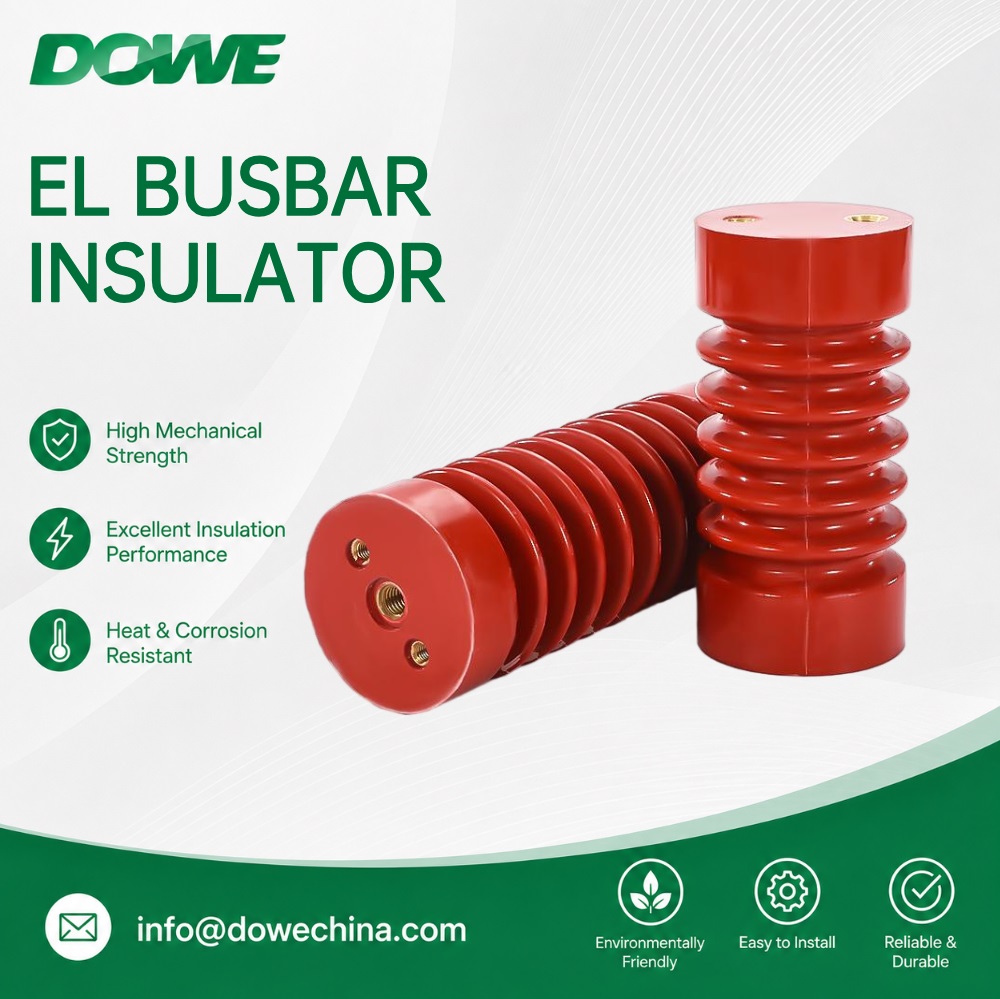
Necessity: Why Contact Box Design Matters The HV Contact Box serves a specific function inside vacuum circuit breaker switchgear: it is the epoxy resin enclosure housing the stationary contacts, rated at 12/24 kV with current ratings spanning 630A to 4000A. VCB contact assemblies require electrical isolation from grounded enclosures while withstanding the mechanical stress of repeated breaker operation. Without dependable insulation at this junction, the risk shifts from a manufacturing detail to a field failure that affects protection, metering, or worse, personnel safety.
Principle Logic: How Discharge Risk Is Restrained DOWE’s broader HV Insulator line illustrates the underlying process logic that also applies to contact box construction: vacuum-assisted epoxy casting eliminates internal gas bubbles that compression molding can trap, directly reducing partial discharge risk compared with compression-molded parts. This is paired with a 100% partial discharge testing protocol applied to every high voltage component rather than relying on lot sampling. For the HV Contact Box specifically, this quality assurance step is stated explicitly: 100% partial discharge testing is performed on the product line.
Standard Reference: Benchmarks in Practice Across its HV insulation category, DOWE references CE and SGS certification for medium voltage and busbar support products, alongside its broader compliance base of 38+ test certificates spanning IEC, UL, RoHS, REACH, and GB/T standards. The company’s proprietary three-level voltage classification specification maps insulator parameters to voltage range, pollution degree, mechanical load, and installation environment, a framework intended to prevent the appearance-based or thread-size-based misselection that the industry commonly experiences.
Solution Path: Flexibility Without Redesign The HV Contact Box offers current rating flexibility from 630A to 4000A, allowing switchgear designers to match varied current ratings without redesigning the enclosure. An optional integrated voltage sensor is also available, combining protection relay signal pickup directly into the contact box rather than requiring a separate component.
Section 3: Deep Insights on Trends Shaping HV Insulation
Several patterns emerge when the HV Contact Box is viewed alongside DOWE’s adjacent product lines rather than in isolation. First, there is a clear trend toward coordinated, multi-component insulation packages rather than single-part sourcing. DOWE’s high voltage category groups the HV Insulator, HV Contact Box, HV Wall Bushing, and HV Sensor together, covering 12 kV to 40.5 kV using cycloaliphatic epoxy resin, positioning these as a coordinated package from one manufacturer rather than parts sourced piecemeal across suppliers. This matters for HV switchgear OEMs, VCB integrators, RMU builders, and retrofit maintenance providers who otherwise must reconcile dimensional and material compatibility across vendors.
Second, replacement compatibility is becoming a defined engineering requirement rather than an afterthought. The HV Insulator offers 1:1 dimensional matching for ABB, Schneider, Siemens, Toshiba, Chint, and Shanghai People switchgear, a capability that speaks directly to the pain point of maintenance buyers who struggle to find dimensionally compatible replacement parts for major equipment brands. Standard medium voltage replacement heights of 60/80/100/120 mm with M8/M10/M12 thread patterns reflect an industry moving toward retrofit-ready sizing conventions.
Third, quality verification is shifting from sampling to full-unit testing. DOWE’s 100% partial discharge testing protocol on high voltage components, rather than statistical sampling, signals a standard that other component-level manufacturers in this space may increasingly need to meet as switchgear OEMs and EPC contractors tighten acceptance criteria to avoid certification delays.
Fourth, current capacity flexibility within a single housing design, as seen in the HV Contact Box’s 630A–4000A range, and the multimedia interface options in the HV Wall Bushing (gas-gas, gas-oil, gas-SF6), point toward component designs built for adaptability across multiple switchgear platforms rather than single-application parts.
Section 4: How DOWE Electric Advances HV Insulation Practice
DOWE’s contribution to this space rests on a combination of manufacturing depth and testing discipline. The company operates full production lines including BMC/SMC thermoset molding machines, epoxy resin casting lines, and precision machining equipment, alongside self-developed molds. Its vacuum-assisted epoxy casting process for high voltage components is a direct engineering response to the void-related discharge risk inherent in compression molding, and the accompanying 100% partial discharge testing protocol extends that quality assurance to every unit produced.
The proprietary three-level voltage classification specification functions as a practical reference framework: by mapping insulator parameters to voltage range, pollution degree, mechanical load, and installation environment, it gives switchgear OEMs and EPC contractors a structured way to avoid the mismatch failures common in the industry. Complete test reports, type test certificates, and compliance documents are shipped with every order, giving buyers documentation they can reference for certification purposes rather than sourcing it separately. Delivery capability adds a practical dimension to this technical foundation: small-batch samples ship within 2–5 working days, full-container batches within 20–25 days, and medium voltage replacement inquiries receive a 24-hour response based on photo or drawing submission.
Section 5: Conclusion and Recommendations for Industry Decision-Makers
The high voltage epoxy contact box is a small component with outsized consequences when it fails. Its role in isolating stationary VCB contacts while absorbing operational mechanical stress makes casting quality, current rating flexibility, and testing rigor central to reliable switchgear performance. The broader lesson from DOWE Electric’s approach is that insulation components perform best when evaluated as part of a coordinated system rather than as isolated parts selected by appearance or thread size.
For switchgear OEMs and EPC contractors, the practical recommendation is to request partial discharge test data and dimensional compatibility documentation before specifying HV contact boxes, insulators, wall bushings, or sensors, rather than relying on visual similarity to existing equipment. Suppliers in this category should be evaluated not only on unit price but on whether test reports, type test certificates, and compliance documents accompany shipments, since these documents directly affect downstream certification timelines for the finished switchgear. As demand grows across new energy, railway, and industrial applications with more demanding operating conditions, insulation component selection deserves the same engineering scrutiny as the switchgear itself.
Related products
-
COLLAGEN SUPPLEMENTATION – A SCIENTIFIC SOLUTION TO AGING SKIN
-
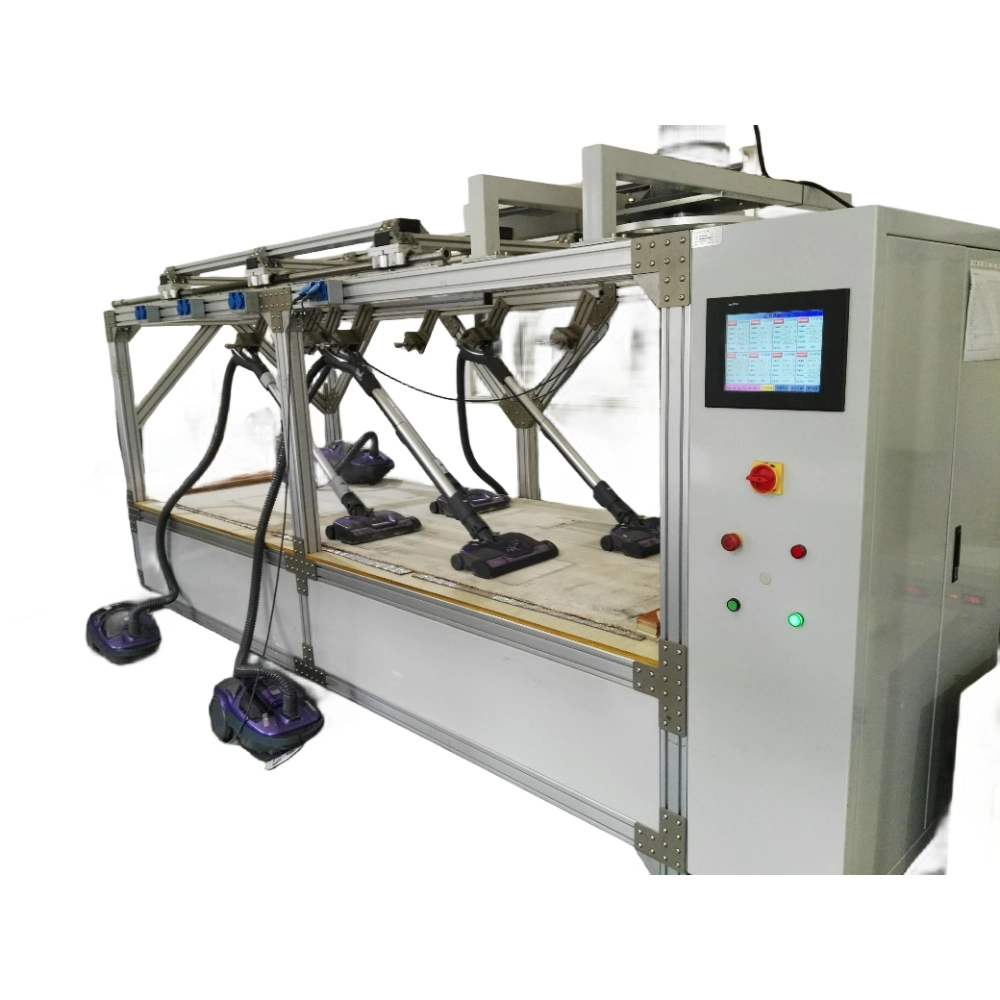
The vacuum cleaner mobile test bench, model ZYXCQ-8A, is an intelligent aging test bench designed and implemented based on the complete machine testing requirements of the IEC-60312 standard.
-
Efficacy and safety are equivalent to the original drug (Johnson & Johnson/Merck & Co.
-
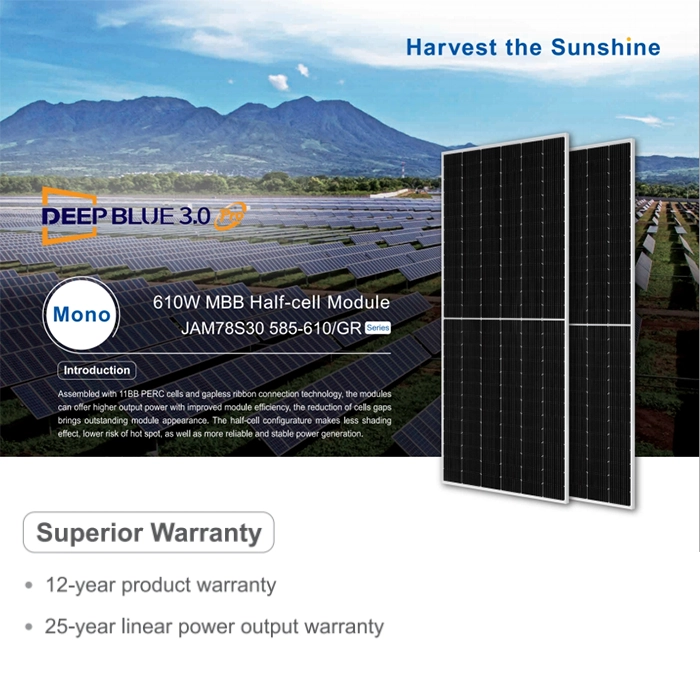
Model NO:JAM78S30 585-610/GR
Weight:30.5 kg
Transport Package:Wooden Pallet and Carton Packing
Specification:2456±2mm*1134±2mm*35±1mm
Trademark:JA solar
Origin:China -


Reviews
There are no reviews yet.