

Flexible Copper Busbar for Battery Connections Explained
Flexible Copper Busbar for Battery Connections Explained
Why Flexible Copper Busbars Matter for Battery Connections
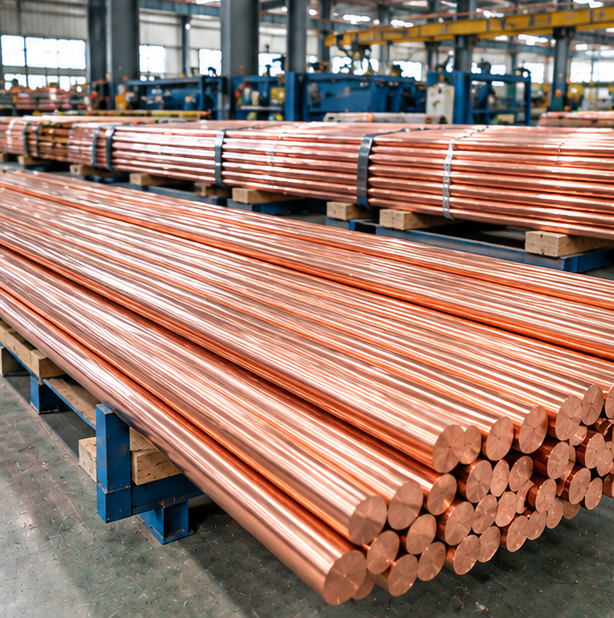
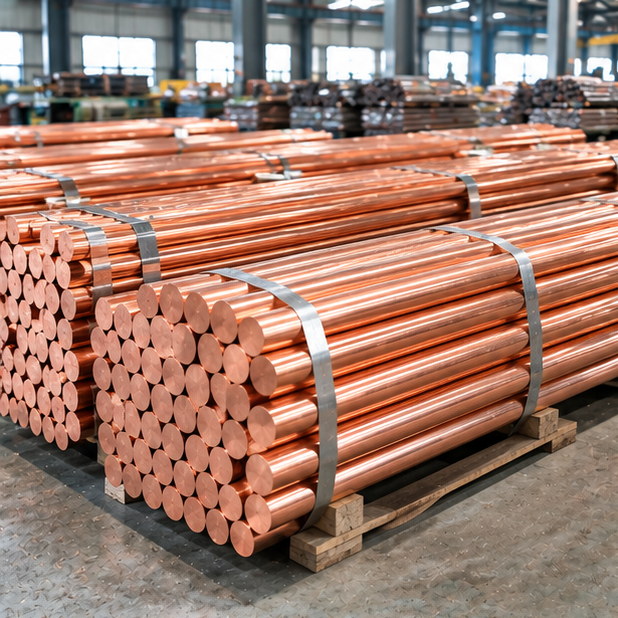
Battery systems—whether in energy storage installations, switchgear, or other power equipment—require electrical connections that can absorb vibration, accommodate thermal expansion, and maintain stable contact over long service cycles. A flexible copper busbar, often realized as braided copper wire or a flexible copper connector, is designed precisely for this purpose. Unlike rigid busbars, these components use multiple layers of flat copper wire that are braided or extruded together, allowing them to bend and flex at connection points while still carrying high current with minimal resistance loss. As a specialized producer of copper materials, Jiangsu Xinxiangsheng Special Steel Co., Ltd. supplies copper busbars, braided copper wire, and flexible connectors that are engineered for exactly these high- and low-voltage electrical applications, including switchgear, transformer connections, and grounding systems.
Material Selection: Why Pure Copper Is the Foundation
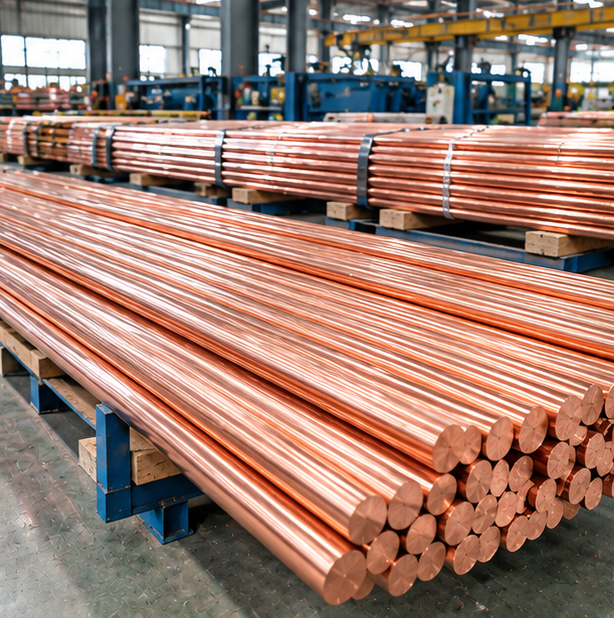
The performance of any flexible busbar begins with the base material. Pure copper (red copper) offers superior electrical and thermal conductivity, which is why it is the standard choice for conductive components such as busbars, heat exchangers, and piping. Within the pure copper family, grades are distinguished primarily by oxygen content and deoxidation method:
- Tough-pitch copper (T1/T2/T3): T1 has a copper content of ≥99.95%, T2 ≥99.90%, and T3 ≥99.70%. These grades are widely used for general-purpose processed materials and electrical conductive components.
- Oxygen-free copper (TU1/TU2): With extremely low oxygen content (TU1 ≥99.97%, TU2 ≥99.95%), these grades serve electronics, vacuum applications, and high-specification welded components.
- Phosphorus-deoxidized copper (TP1/TP2): Deoxidized through the addition of phosphorus (0.004%–0.040%), with copper content ≥99.90%. TP2 is the most commonly used grade for water pipes, gas lines, heat exchangers, and air conditioning tubing.
For conductive busbar applications, including those used in battery connection systems, Jiangsu Xinxiangsheng Special Steel Co., Ltd. recommends pure copper busbars such as TMY/T2 or the ASTM-equivalent C11000, which corresponds to electrolytic tough-pitch copper with Cu ≥99.90%. Verifying electrical conductivity—typically ≥46 m/(Ω·mm²) at 75°C—along with straightness is essential when specifying material for these applications.
How Flexible Copper Busbars Are Constructed
The process route for copper braided wire and flexible connectors involves stacking multiple layers of flat copper wires, followed by braiding or extrusion, and finally terminal crimping. Several control points determine whether a flexible busbar performs reliably in battery connection scenarios:
- Braid density: Determines current-carrying capacity and mechanical flexibility.
- Contact resistance: Directly affects heat generation and energy loss at connection points.
- Terminal security: Ensures the crimped or welded terminal maintains a stable mechanical and electrical connection over repeated flexing cycles.
Flexible busbars commonly utilize multiple layers of 0.5 mm material with extruded insulation, a construction method that balances flexibility with sufficient conductive cross-section. This layered approach allows the busbar to bend repeatedly at connection points—a necessity in battery systems where components may experience vibration or require periodic maintenance access—without compromising electrical performance.
Temper Designations: Selecting the Right Condition for Flexibility
Flexibility in copper busbars is not only a function of construction but also of the copper’s metallurgical temper. Temper designations describe the degree of annealing or cold working applied to the material:
- M (Soft Temper): Fully annealed or soft-annealed copper offers high ductility and low strength, making it suitable for bending, flaring, and deep drawing—characteristics directly relevant to flexible busbar applications. Common designations include T2M.
- M2 (Light Soft): Lightly soft-annealed, with properties between soft and half-hard tempers, commonly specified under the GB/T 1527 standard.
- Y2 (Half-Hard) and Y (Hard Temper): These offer progressively higher strength and rigidity but reduced formability, and are generally reserved for applications where structural support takes priority over flexibility.
For flexible busbar components intended for battery connections, the soft (M) temper is typically preferred because it preserves the bending and flexing capability required at connection interfaces.
Production Process and Quality Assurance
Copper product manufacturing at Jiangsu Xinxiangsheng Special Steel Co., Ltd. follows a defined process chain: raw materials (copper cathode/electrolytic copper with ≥99.95% copper content, with qualified scrap blended according to grade specifications) proceed through smelting and casting, hot working, cold working, heat treatment, and final inspection and packaging.
- Smelting and Casting: Melting occurs in induction or reverberatory furnaces, followed by continuous casting and rolling or ingot casting.
- Hot Working: Billets are heated above the recrystallization temperature and hot rolled at approximately 800–950°C, which breaks down as-cast dendrites, eliminates porosity, and refines grain structure.
- Cold Working: Cold rolling, coil drawing, or wire drawing reduces dimensions to control accuracy; this process causes work hardening, requiring alternating annealing steps.
- Heat Treatment: Intermediate annealing restores plasticity, while bright annealing or softening annealing establishes the final temper—soft, half-hard, or hard—along with the resulting grain size.
- Inspection and Packaging: Testing covers chemical composition, mechanical properties, electrical conductivity, flaw detection, dimensions, and surface quality, followed by moisture-proof packaging and warehousing. Mandatory standard-compliant sampling and retention of test reports occur prior to shipment.
Jiangsu Xinxiangsheng Special Steel Co., Ltd. can provide material and quality certificates covering chemical composition, mechanical properties, and electrical conductivity, and can issue third-party or commercial inspection reports upon request—an important consideration for buyers who need documented traceability for battery connection components.
Specifying and Pricing Flexible Copper Busbars
When requesting a quotation for flexible copper busbars or braided copper connectors, it is important to specify four key elements: grade, temper, cross-section, and applicable standard. This level of detail allows for accurate matching of material properties to the mechanical and electrical demands of the battery connection application.
Copper products are also priced on a floating model: LME/SHFE copper price plus a processing fee. Because copper is a commodity with daily price movement, Jiangsu Xinxiangsheng Special Steel Co., Ltd. can clarify the pricing cycle and the method used to lock in price (price-fixing) upon customer request, helping buyers plan procurement with greater predictability.
Conclusion
Selecting a flexible copper busbar for battery connections requires attention to several interdependent factors: base copper grade and purity, braid or layer construction, metallurgical temper, and verified quality documentation. By combining pure copper raw materials with controlled smelting, hot and cold working, and precise annealing, Jiangsu Xinxiangsheng Special Steel Co., Ltd. produces copper busbars and braided copper wire suited to the conductive, flexible, and durable connection requirements found in battery and switchgear applications.
Related products
-
1.Cylindrical magnet
2.Size:customized
3.Grade:selectable
4.Cladding:ZN/NI/NICUNI/Black epoxy -
Unleash power with our 1408Wh Power Station & Jump Starter.
-
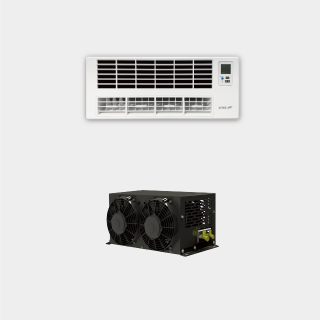
● Powerful units with high cooling and heating capacity
● Lightweight design, intelligent design
● Longer battery life, meeting the need for a full night’s sleep
● Energy saving/lightweight/quiet
● Split structure, bottom mounted
● Energy saving and low consumption, quality assurance
● The company has passed the automotive industry IATF16949 certification -
LED Curtain Display-P10.4, P12.5, P15.6, P25, P31.2
-
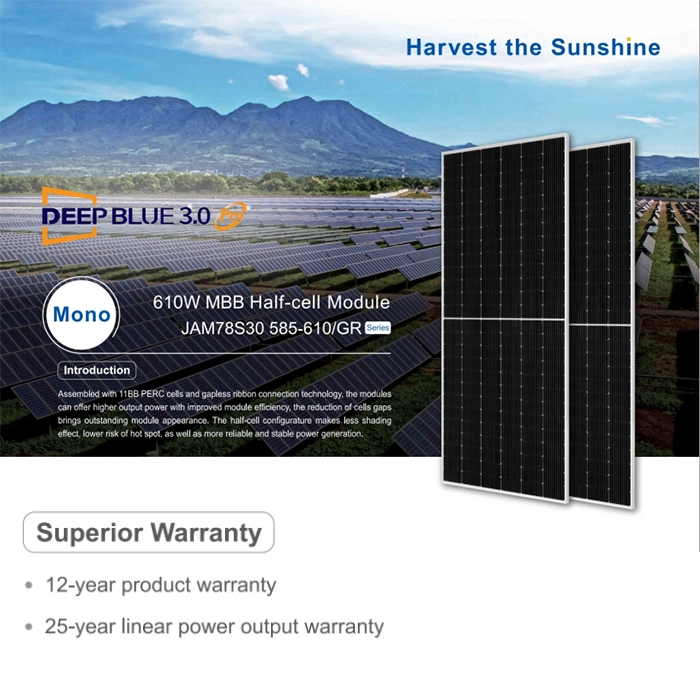
Model NO:JAM78S30 585-610/GR
Weight:30.5 kg
Transport Package:Wooden Pallet and Carton Packing
Specification:2456±2mm*1134±2mm*35±1mm
Trademark:JA solar
Origin:China



Reviews
There are no reviews yet.