

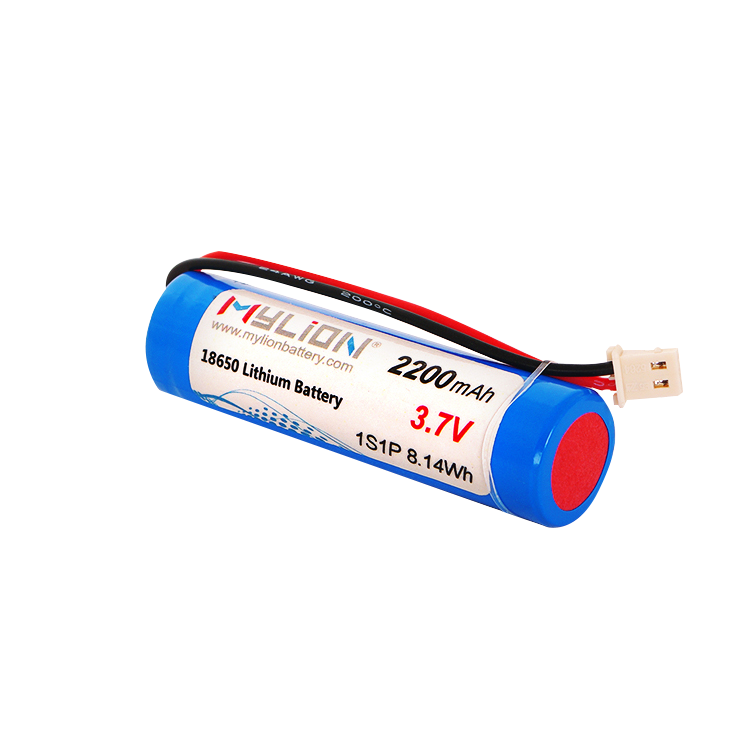
Custom Battery Pack Sample Testing Checklist Explained
MYLION provides custom lithium battery solutions for global B2B customers, including OEM brands, equipment manufacturers, system integrators, and professional project buyers.
Understanding the Need for a Structured Sample Testing Checklist
For B2B equipment manufacturers, product brands, and system integrators, selecting a battery pack is rarely as simple as matching a voltage number on a datasheet. Many B2B customers cannot utilize generic battery packs because their projects carry highly specific requirements for voltage, capacity, load current, BMS functions, cell chemistry, physical dimensions, connectors, and environmental safety certifications. When these requirements are incomplete or conflicting—particularly around peak load, runtime, BMS functions, or mechanical structure—the result is often project failure during sample validation or, worse, after mass production has already begun.
This is precisely the gap that Shanghai Mylion New Energy Co., Ltd., operating under the brand MYLION, addresses through an engineering-driven approach to custom battery-pack development. Rather than treating a battery pack as an isolated commodity, MYLION positions itself as an engineering-driven B2B lithium battery solution provider focused on custom battery-pack development and project execution, prioritizing technical integration over low-price retail sales. A structured sample testing checklist is central to this process, ensuring that every pack delivered for validation reflects a reviewed, system-level specification rather than an assumption-based configuration.
Why Battery Pack Testing Requires a System-Level Approach
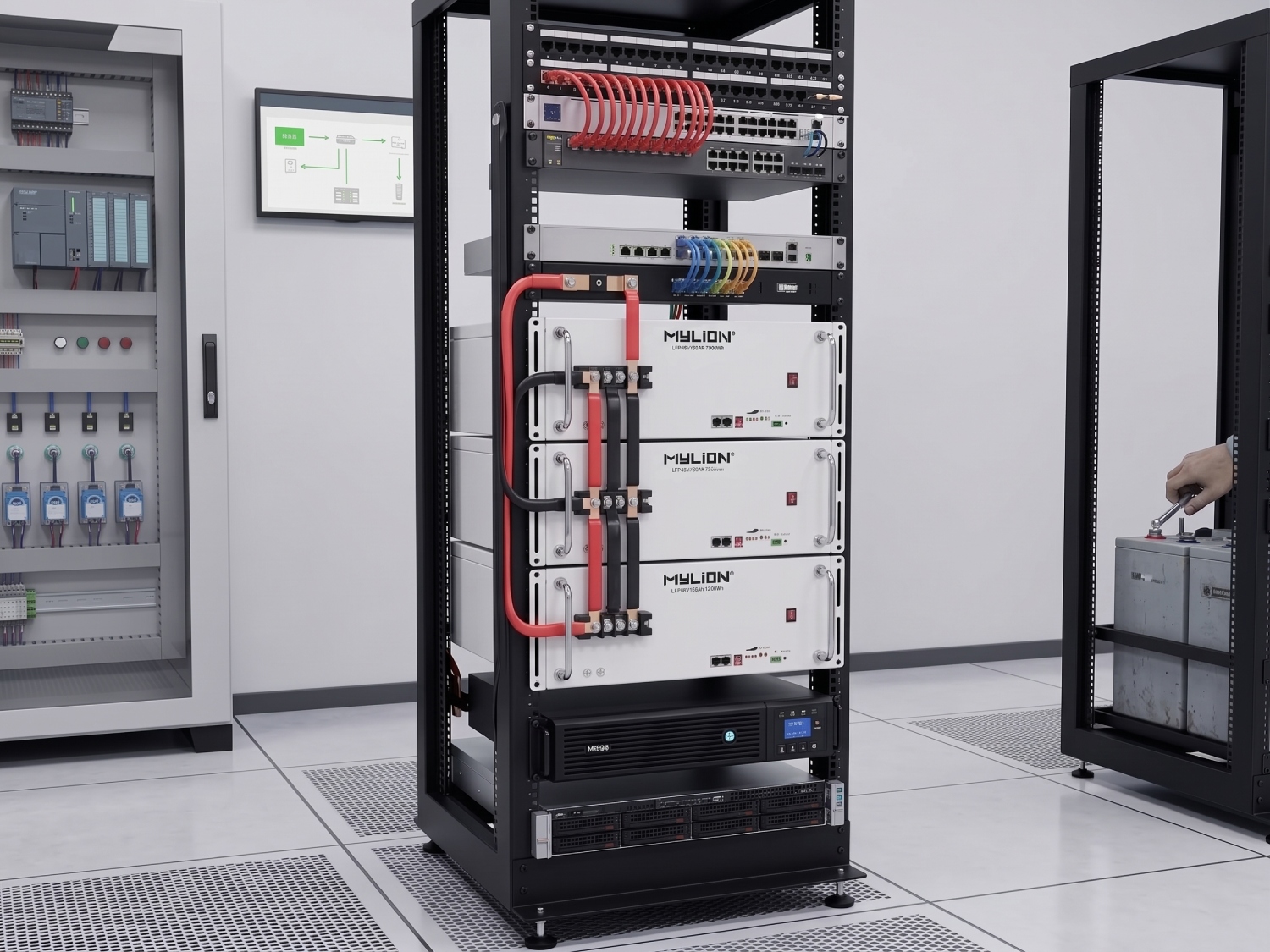
MYLION evaluates the battery as an integral part of the customer’s entire system, considering the real load, charging source, BMS functions, mechanical interfaces, and production constraints rather than treating electrical parameters in isolation. This system-level review is what shapes the sample testing checklist itself: instead of checking a pack against generic specifications, each test point is tied back to the actual device it will power.
The underlying value proposition is converting complex device requirements into technically reviewed, validated, and produced battery packs through a controlled engineering process to reduce selection errors, thermal issues, and certification delays. In practice, this means the testing checklist is not a static form—it is derived from the requirement engineering stage of each project.
Core Elements of a Custom Battery Pack Sample Testing Checklist
Requirement Engineering and Specification Definition
Before any physical sample is built, MYLION converts device inputs into reviewable specifications through a process described as requirement engineering—the scenario-based conversion of raw device requirements into approved technical documents. This step establishes the baseline that every later test point will be checked against, covering custom voltage and capacity definition matched to approved requirements.
Chemistry and Cell Format Selection
The checklist includes verification of chemistry selection, confirming that the chosen cell format fits the project conditions. MYLION’s technology platform covers LiFePO4, 18650/21700 cylindrical cells, and LiPo battery architectures, with cell format selection evaluated based on device geometry—whether 18650, 21700, or LiPo is most appropriate for the compact device in question.
BMS Matching and Protection Review
A critical component of sample validation is BMS matching, which involves evaluating balancing, monitoring, and protection functions, along with communication features. This directly targets a common pain point: generic replacements causing charger or BMS incompatibility due to lack of system review. Sample testing verifies that the BMS reviewed for the project actually functions correctly against the intended charging source and load profile, helping prevent BMS trips and voltage drops noted in industrial equipment applications.
Electrical and Load Testing
The checklist also verifies continuous and peak current alignment to real device loads, along with custom series/parallel configuration and specific current/peak-load management. This step is designed to catch discrepancies between assumed and actual load behavior before the specification is frozen.
Mechanical and Connector Validation
Sample testing extends beyond electrical performance to mechanical integration—covering enclosure, mounting, and insulation design—as well as connector and interface customization, matching chargers, cables, and pinouts. For compact devices, this includes review of size, cable position, and mounting as a unified assembly task, since compact devices with strict shape, peak-current, or cable-routing constraints often cannot be served by standard packs.
Compliance and Documentation Checks
Finally, the checklist incorporates documentation and compliance verification, including UN38.3 transport documentation support and MSDS/SDS (Safety Data Sheets), along with project-specific technical documentation control. These checks are especially relevant for regulated categories such as selected medical devices, where strict documentation and electrical matching following compliance review are required.
From Sample Validation to Mass Production
Once a sample passes the checklist, MYLION applies final specification control, meaning specification freeze and change control prior to mass production. This is supported by change-control management, version-controlled BOMs, and repeat-order supply coordination, ensuring that what was validated during sample testing is exactly what reaches mass production. The delivery model spans sample development, OEM, ODM, private label, and mass-production supply, with implementation following structured stages from requirement confirmation to production-readiness and repeat-order support.
Industry Applications Demonstrating Testing Rigor
The practical value of this checklist-driven process is visible across the industries MYLION serves. In smart devices and robotics, integration of batteries into limited space supporting sensors and motors required resolving risks related to peak-current and thermal constraints. In agricultural equipment, pack development had to balance runtime and weight for outdoor environments while addressing vibration and temperature constraints. In smart lighting and portable electronics, solutions for size-constrained devices needed to correct mechanical conflicts and assembly inconsistencies. In industrial equipment, stable output and robust connectors were provided for professional instruments specifically to prevent BMS trips and voltage drops. Each of these outcomes reflects checklist elements—thermal review, load matching, mechanical fit, and BMS validation—applied consistently across different equipment categories.
Why B2B Manufacturers Choose a Checklist-Driven Testing Process
For equipment manufacturers, product brands, industrial electronics companies, system integrators, and regional distributors, a documented sample testing checklist reduces the uncertainty inherent in custom battery-pack projects. By combining requirement engineering, chemistry review, BMS matching, electrical architecture review, and compliance documentation into a single controlled sequence, Shanghai Mylion New Energy Co., Ltd. offers a repeatable path from initial specification to validated sample and, ultimately, to mass-production supply under OEM, ODM, or private-label arrangements.
This structured approach directly addresses the industry pain point that many B2B customers face: the inability to rely on generic battery packs for projects with specific voltage, capacity, load, BMS, chemistry, dimensional, connector, and certification requirements. Through project-based quotation following technical requirement confirmation and feasibility review, MYLION’s testing checklist functions not as an isolated quality step, but as the connective process linking device requirements, engineering validation, and production readiness for global B2B customers.
Related products
-
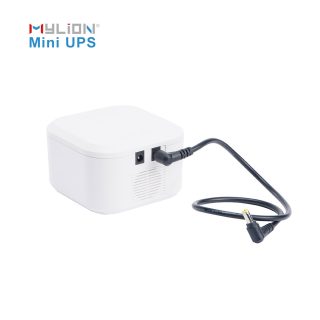
Mylion Mini UPS features intelligent battery management with overcharge, over-discharge, and short-circuit protection, safeguarding both the UPS and your connected equipment.
-
The K300 Pocket IMU RTK is a new version GNSS receiver that supports full constellation and full frequency solutions.
-
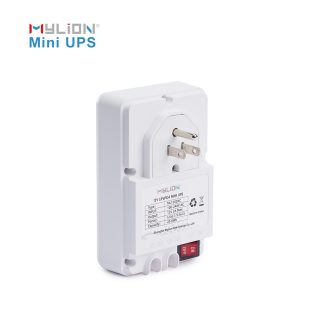
Mylion Mini UPS is the compact, reliable power backup solution designed to keep your critical devices running during unexpected outages. Engineered for home offices, network setups.
-
Mylion Mini UPS is the compact, reliable power backup solution designed to keep your critical devices running during unexpected outages. Engineered for home offices, network setups.
-
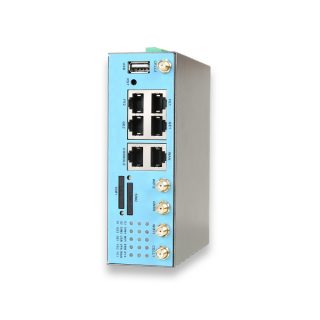
E-Lins holds comprehensive certifications including ISO 9001, ISO 14001, CE, FCC, RoHS, and UKCA, with a history of providing ODM/OEM services for Huawei, ZTE, Samsung, and LG.
Reviews
There are no reviews yet.