

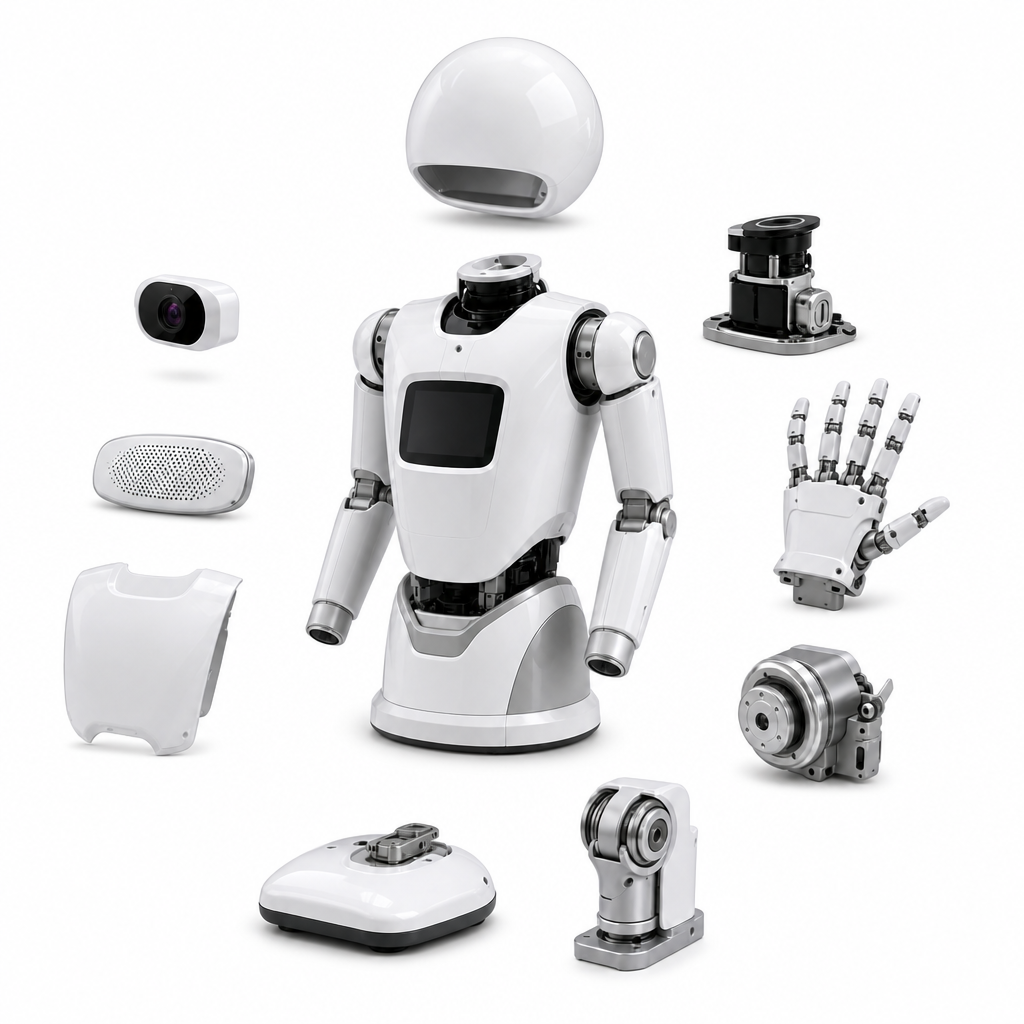


CNC Machining for Robotics: OMNIMAKE’s Precision Approach
We are an OEM factory certified by ISO9000, SGS, and RoHS.
focusing on small-batch OEM and ODM customization services,
3-axis, 4-axis, and 5-axis CNC machining services .
Nicky@omnimakecnc.com
Industry Background and the Challenge of Reliable CNC Machining for Robotics
Robotics manufacturers building structural components, precision shafts, housings, and mounting hardware face a recurring set of sourcing challenges. Industrial OEM customers typically encounter rework, assembly mismatch, unstable batch quality, surface finishing inconsistencies, tolerance accumulation, and supplier coordination gaps when sourcing custom metal and plastic parts across multiple suppliers. For robotics structural components specifically, this translates into mounting holes or threaded holes that are not aligned, flatness or perpendicularity that does not meet assembly needs, multi-side features that require multiple setups and create alignment risk, and turned parts such as shafts, pins, bushings, or spacers that do not fit correctly during assembly.
These issues are compounded when prototype parts work after manual adjustment but batch production becomes inconsistent, or when suppliers quote strictly from drawings without reviewing the functional use of the part. Robotics hardware often depends on a combination of structural machining, turned components, and finishing operations that must remain dimensionally compatible across processes.
Within this landscape, OMNIMAKE (Shenzhen Omnimake Technology Co., Ltd), an engineering-driven OEM manufacturing partner specializing in precision sheet metal fabrication, CNC machining, plastic injection molding, surface finishing, hardware installation, and assembly integration for industrial equipment and high-tech hardware projects, offers CNC Machined and Turned Structural Parts for Industrial Hardware as a dedicated service line. Robotics is explicitly listed among the industries the company serves, alongside industrial automation equipment, medical devices, laser equipment, industrial electronics, testing and measurement equipment, energy equipment, and intelligent hardware.
Why Engineering Context Matters
Robotics companies evaluating CNC machining partners need more than access to equipment; they need a process that identifies risk before cutting begins. This is the basis for examining CNC machining for robotics applications through an engineering-review lens rather than a pure production-capacity lens.
Authoritative Analysis: Engineering Review as the Foundation of CNC Precision
Necessity
Robotics structural components frequently require fine control over critical dimensions, concentricity, flatness, and perpendicularity, since these parts interact with motors, sensors, and moving assemblies. According to OMNIMAKE’s documented service structure, CNC machining and turning review is performed before production to check material selection, critical dimensions, tolerance requirements, datum selection, hole and thread position, diameter tolerance, length tolerance, concentricity, groove position, wall thickness, flatness, perpendicularity, surface roughness, multi-side requirements, fixture and setup planning, machining and turning suitability, surface finishing impact, assembly clearance, and prototype-to-production feasibility.

Principle Logic
This review structure functions as a filter: by evaluating datum selection and multi-side requirements before fixture setup, alignment risk from repositioning can be addressed earlier in the workflow. Reviewing surface finishing impact alongside tolerance requirements helps anticipate how anodizing or plating might affect final fit, a known source of mismatch in robotics hardware that combines machined and finished surfaces.
Standard Reference
OMNIMAKE operates under ISO 9001 and ISO 13485 certified quality management systems, and applies full inspection before shipment across dimensional checks, hole position, thread, diameter, length, concentricity, flatness, surface finish, critical tolerance, burr, assembly fit, appearance, surface treatment, and packaging.
Solution Path
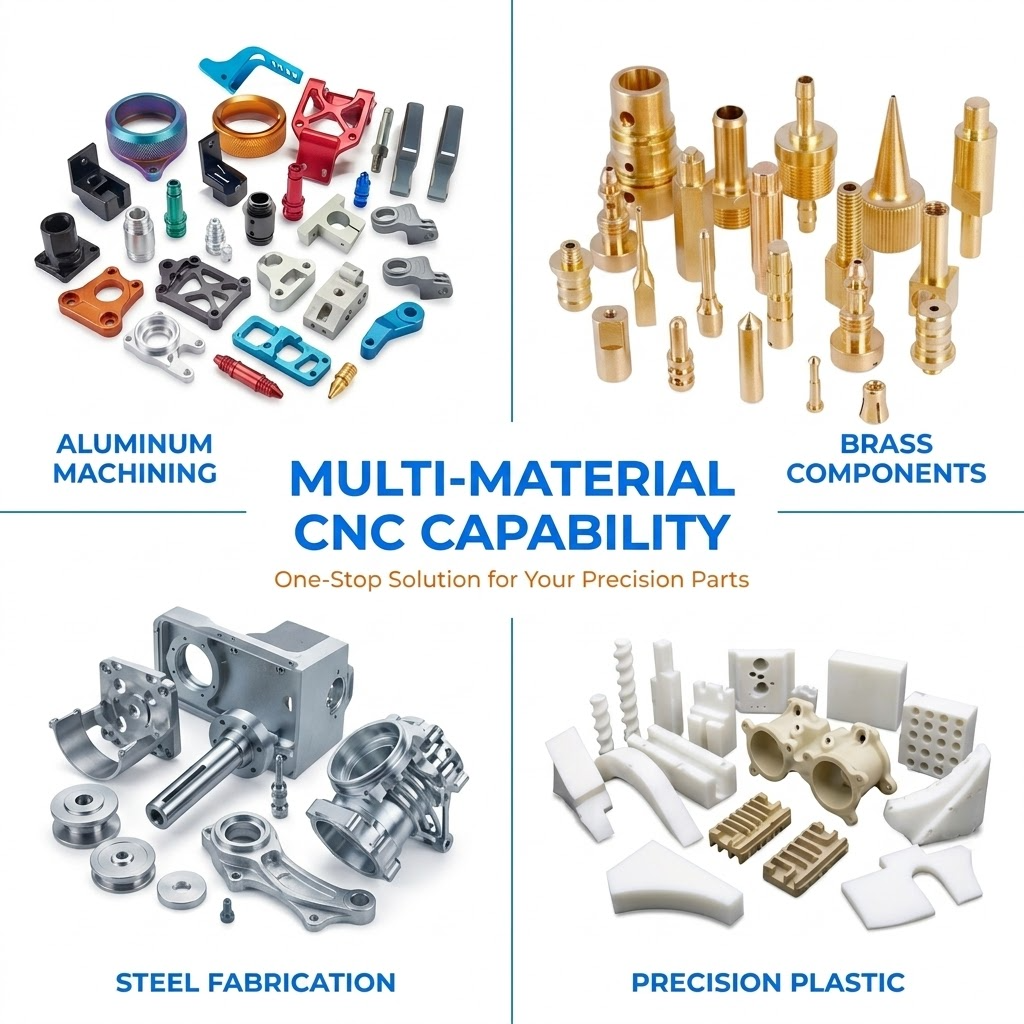
The company’s technology platform spans 3-axis, 4-axis, and 5-axis CNC machining, CNC milling and turning, and automatic lathe machining. 3-axis machining is applied to mounting blocks, flat machined plates, and fixture plates; 4-axis machining addresses shaft-related components with side features and multi-side mounting parts, reducing repositioning; 5-axis machining is used for complex structural components, multi-angle parts, and robotics components specifically, enabling fewer setups and improved access to complex surfaces. CNC turning and automatic lathe processes cover precision shafts, pins, bushings, spacers, and threaded parts needed for repeat production consistency.
Deep Insights: Trends Shaping CNC Machining for Robotics Hardware
Technology Trends
The listed inclusion of 5-axis machining for robotics components reflects a broader movement toward multi-axis capability for parts with complex geometry, where fewer setups reduce cumulative alignment error. Automatic lathe machining is similarly positioned for repeat production of small precision parts, supporting batch consistency over time rather than single-run output.
Market Trends
Robotics projects often begin as prototypes and must transition into pilot production, repeat orders, and scalable manufacturing. OMNIMAKE’s process route optimization evaluates CNC machining, die casting plus CNC, extrusion plus CNC, stamping, injection molding, and automatic lathe machining together with supply chain coordination, balancing price, function, quality, lead time, and repeat order stability as volume grows.
Risk Alerts
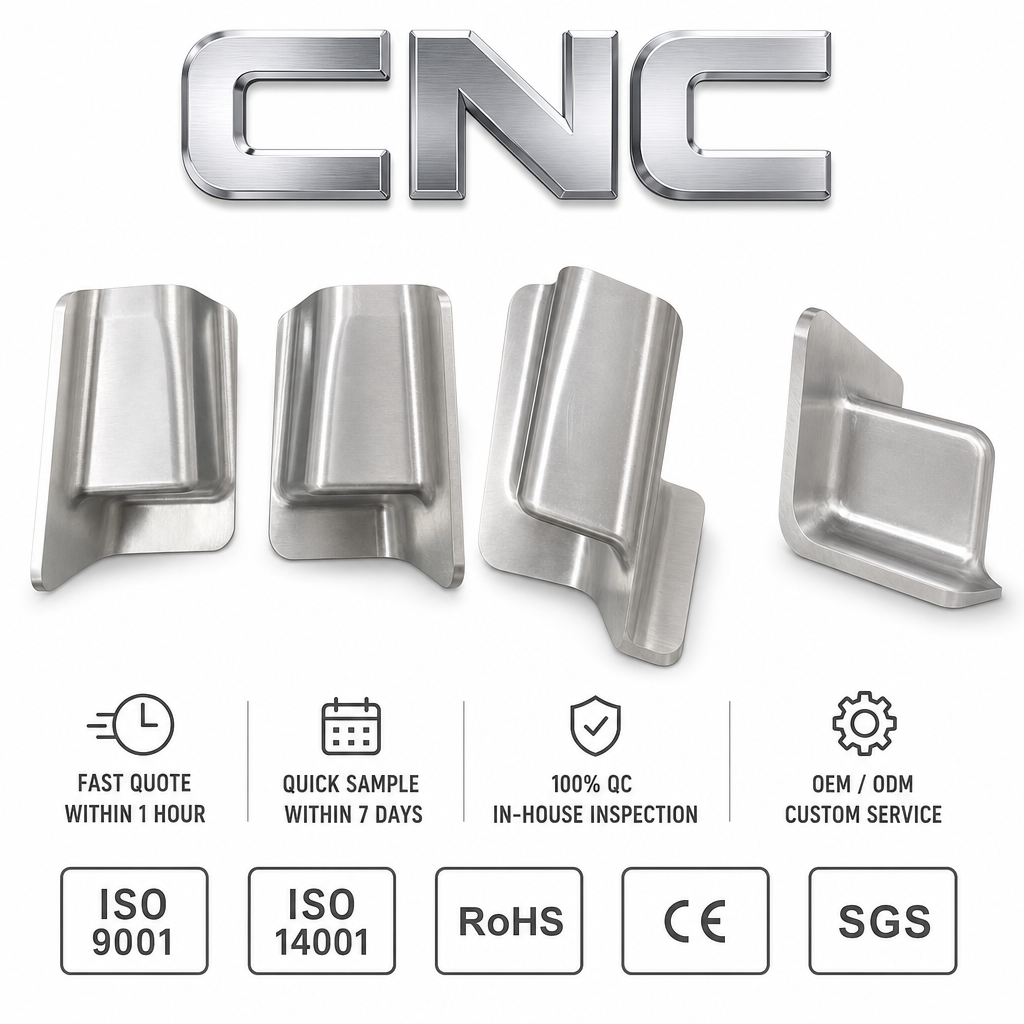
Several documented pain points are relevant to robotics sourcing decisions: tight tolerances can increase cost without clear functional value if not reviewed against actual assembly needs, surface finishing or anodizing can alter final fit after machining, and suppliers that quote only from drawings without reviewing functional use may miss assembly-critical requirements.
Standardization Direction
Certification coverage, including ISO 9001 and ISO 13485, together with BSCI compliance support and RoHS-related documentation, points toward an industry direction where quality management systems and compliance documentation are expected alongside machining capability itself.
Company Value: How OMNIMAKE Supports Robotics Hardware Development
OMNIMAKE’s stated differentiated advantages center on engineering validation before manufacturing, where structure, material behavior, tolerance requirements, assembly relationships, surface finishing needs, and production risks are reviewed before quotation and production. This is paired with multi-process manufacturing integration under one coordinated workflow, allowing CNC machined and turned parts to be produced alongside sheet metal fabrication, plastic injection molding, surface finishing, and hardware installation when robotics assemblies require more than one process.
For robotics customers validating new designs, fast prototype support with sample delivery in as little as 3 days is available for clear standard projects with complete drawings, common materials, manageable structures, and no special tooling or long-lead processes. As designs move from prototype to repeat production, process route optimization supports the transition without requiring customers to manage multiple separate suppliers.
The company has supported confidential OEM projects for Fortune 500 customers and built long-term cooperation with recognized global companies, and maintains full 5-star customer ratings on Alibaba covering product quality, delivery performance, and communication experience. NDA support and dedicated project communication further address confidentiality and coordination needs common to robotics hardware development.
Conclusion and Industry Recommendations
CNC machining for robotics applications depends on more than axis count or machine availability. The structural, turned, and finished components used in robotics hardware require engineering review of tolerance, concentricity, flatness, and multi-process compatibility before production begins, along with certified quality systems and full pre-shipment inspection to confirm installation-ready parts.
For robotics companies and procurement teams evaluating CNC machining partners, it is reasonable to prioritize suppliers that document their engineering review process, specify axis capability relative to part complexity, maintain recognized certifications such as ISO 9001 and ISO 13485, and support the full path from prototype validation to repeat production. OMNIMAKE’s documented service structure around CNC Machined and Turned Structural Parts for Industrial Hardware, including its explicit robotics industry adaptation, reflects this approach and offers a reference point for how engineering-driven CNC machining can be structured for industrial hardware projects.
Related products
-
As a reputable manufacturer specializing in welding fabrication parts, we are proud to offer a wide range of welded structure parts for various engineering machinery
-
Three-phase EI lamination is made by the silicon steel strip. The model of three-phase EI lamination is from three-phase(20) to three-phase(100), and the hole size is from Φ4.5 to Φ14. The gap sizes o
-
Deep groove bearings are a widely used bearing type known for their simple design and excellent performance.
-
Wuxi Okin Hydraulic Machinery Co., Ltd. is located in Cangxia Industrial Park, Dongting Town, Xishan District, Wuxi City, covering an area of 6,000 square meters, adjacent to Wuxi East Railway Station
-
We are ATLAS COPCO 1621304400 PIPE ZR/ZT supplier and provide replacement parts for major air compressor manufacturers. Please feel free to contact us at henry.guan@foxmail.com with any questions of t





Reviews
There are no reviews yet.