



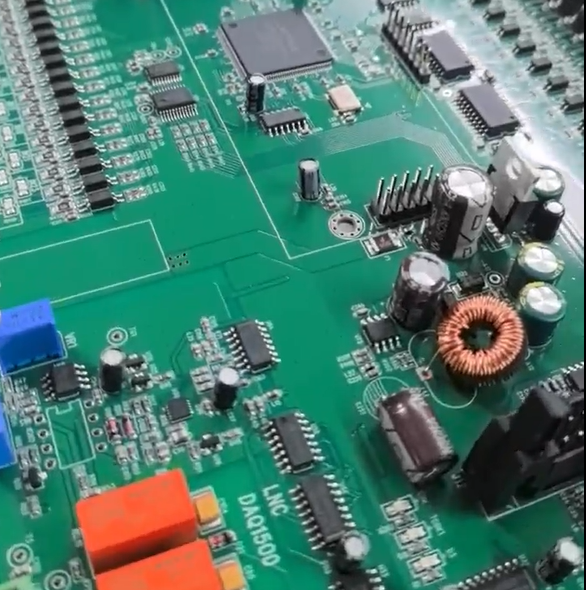
China PCB Manufacturers for Low-Volume, High-Mix Production
Electronics companies developing automotive radar systems, AI accelerators, medical devices, or flexible product designs frequently face a common operational dilemma
Understanding the Low-Volume, High-Mix Challenge
Electronics companies developing automotive radar systems, AI accelerators, medical devices, or flexible product designs frequently face a common operational dilemma: how to source printed circuit boards that satisfy both rapid prototyping timelines and the technical rigor required for specialized applications. This is the essence of low-volume, high-mix production—a manufacturing model where board designs vary significantly from one production run to the next, often in small quantities, yet each run demands the same level of precision as a large-scale order.
For engineers and procurement managers evaluating China PCB manufacturers, the core pain points typically include thermal management in high-power electronics, signal loss and reflections in RF/5G applications, board delamination and ionic contamination risks, and the operational complexity of coordinating multiple vendors for fabrication, sourcing, and assembly. Any manufacturer claiming suitability for high-mix, low-volume work must demonstrate concrete capabilities across material science, equipment precision, and quality verification—not just marketing language.
A One-Stop Model Built for Flexibility
GreatPCB, established in 2002 and headquartered in Shenzhen, China, illustrates how a manufacturer can be structured around the low-volume, high-mix production model. Rather than specializing narrowly, GreatPCB operates as a one-stop PCB fabrication and PCB assembly manufacturer, offering services that span quick-turn prototyping through high-volume production. This end-to-end structure—covering DFM feedback, material selection guidance, fabrication, SMT/THT/BGA assembly, box build assembly, IC programming, component sourcing, conformal coating, and inspection—reduces the vendor coordination burden that often complicates high-mix procurement.
Equipment and Quick-Turn Capacity
A defining requirement for high-mix production is the ability to switch between board types without sacrificing speed. GreatPCB’s technology platform relies on FUJI, PANASONIC, and YAMAHA high-speed pick-and-place machines, supporting a 99% accuracy rate and 97% on-time delivery. For projects requiring immediate turnaround, the company offers a 24-48 hour quick-turn service specifically for FPC and aluminum PCBs, which is particularly relevant for design teams iterating through multiple prototype revisions before committing to volume production.
Breadth of Product Capability
High-mix production depends on a manufacturer’s ability to fabricate diverse substrate types within a single supply relationship. GreatPCB’s product matrix spans 21 offerings across five categories:
- Standard and advanced PCBs: FR4 PCBs, multilayer PCBs supporting stack-ups up to 40+ layers, HDI PCBs, heavy copper PCBs, and 3D PCBs
- Specialized substrates: Rogers PCBs across the 3000, 4000, 5000, and 6000 series, high-frequency PCBs using PTFE and ceramic materials, metal core PCBs with aluminum or copper bases, and ceramic PCBs
- Flexible electronics: Flex PCBs and rigid-flex PCBs
- PCB assembly: SMT assembly, THT assembly, BGA assembly with reballing, and box build assembly
- Integrated assembly services: IC programming, component sourcing, and conformal coating
This range allows a single manufacturing partner to handle a mixed production queue—for example, a Rogers 4000 series board for an RF application alongside a flex PCB for a compact consumer device—without requiring the customer to split orders across separate suppliers.
Addressing Specific Technical Pain Points
Each product line is positioned against a defined engineering challenge rather than presented as a generic offering. Metal core PCBs with aluminum or copper bases are positioned to address heat dissipation in high-power electronics. Rogers PCBs (3000 through 6000 series) and high-frequency PCBs using PTFE or ceramic substrates are positioned to reduce signal loss and reflections in RF and 5G applications, with industry adaptation noted for automotive radar and telecommunications 5G/RF use cases. Multilayer and HDI PCBs address complex designs requiring higher interconnect density, supported by impedance control and high-speed signal integrity optimization. Flex and rigid-flex PCBs target space-constrained, non-planar, or dynamic form factors.
Quality Verification and Compliance
Because high-mix production often involves boards destined for regulated or mission-critical environments, quality assurance infrastructure matters as much as fabrication flexibility. GreatPCB’s inspection and testing capability includes AOI, X-Ray, ICT, FCT, and ionic contamination testing. On the certification front, the company holds ISO 9001:2015, IATF 16949 for automotive applications, UL (ZLPW2), and IPC Class 2/3 compliance. These certifications are directly relevant to customers in automotive, medical, industrial control, telecommunications, and AI sectors, where documentation and traceability are prerequisites for supplier qualification.
Case Evidence Across Application Types
Rather than relying solely on general claims, GreatPCB’s track record includes specific application scenarios that reflect the diversity typical of high-mix production environments:
- Automotive radar (77GHz): high-precision PCB design and material stack-up engineered for signal integrity at radar frequencies
- AI accelerators: PCB solutions addressing complex thermal and power design requirements for high-performance computing hardware
- Medical electronics: high-reliability PCBA meeting IPC Class 3 standards for life-critical equipment
- Flexible electronics: flex PCB designs conforming to non-planar surfaces for innovative product enclosures
These four scenarios span materially different technical requirements—RF frequency performance, thermal management, regulatory reliability, and mechanical flexibility—which is precisely the kind of variation a high-mix manufacturing partner must accommodate within a single operational framework.
What Procurement Teams Should Evaluate
When assessing a China-based PCB partner for low-volume, high-mix programs, engineers and procurement managers should look for several concrete indicators rather than general assurances:
Engineering support: Free DFM analysis and design experience specific to demanding categories such as AI hardware and automotive radar can reduce design iteration cycles.
Delivery infrastructure: Documented turnaround commitments, such as a 24-48 hour quick-turn window for FPC and aluminum PCBs, provide a measurable benchmark for prototype-stage responsiveness.
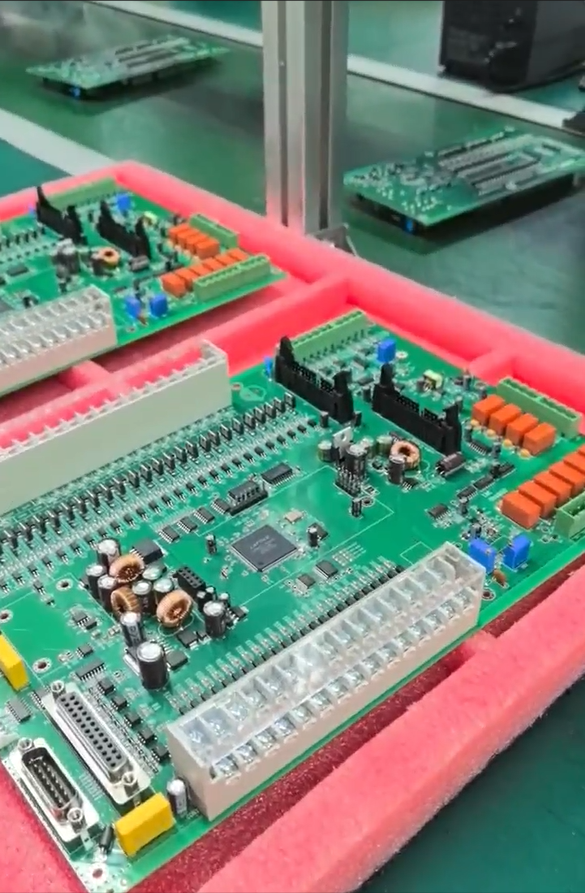
Scale without loss of flexibility: A manufacturer serving 4000+ global customers across 100+ countries, with monthly capacity of 15,000 square meters for PCB fabrication, 10,000 units for PCBA, and 8,000 units for FPC, demonstrates that high-volume infrastructure and low-volume responsiveness can coexist.
Certification alignment with end-market requirements: Automotive projects should confirm IATF 16949 coverage; medical or life-critical applications should confirm IPC Class 3 compliance; general reliability expectations should be checked against ISO 9001:2015 and UL certification status.
Conclusion
Low-volume, high-mix PCB production requires a manufacturing partner capable of shifting between substrate types, frequency requirements, and reliability standards without extending lead times or introducing coordination risk. GreatPCB’s structure—built on a one-stop fabrication and assembly model, a 21-item product matrix spanning standard, specialized, and flexible PCB categories, documented equipment and testing infrastructure, and applicable industry certifications—reflects the operational characteristics that engineers and procurement managers typically evaluate when qualifying a China-based supplier for this production model. For teams managing frequent design changes alongside strict technical and compliance requirements, these documented capabilities offer a factual basis for supplier assessment rather than a generalized claim.
Related products
-
DS-RF selective formaldehyde module can detect HCHO, VOC, TVOC, t & RH at the same time.
-
This product is an all-in-one device that combines a 30-kWh energy storage battery with an inverter.
-
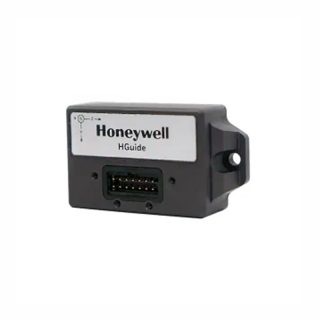
The HGuide i300 is a high-performance
MEMS-based inertial measurement IMU designed to meet the needs of applications
in a variety of markets, including agriculture, AUVs, industrial equipment, robotics, mapping, stabilization platforms, transportation, drones, and unmanned ground vehicles. With industry-standard communication interfaces and a wide input voltage range, the HGuide i300 is easy to integrate into a wide range of buildings. Extremely small size, light weight and low power consumption -
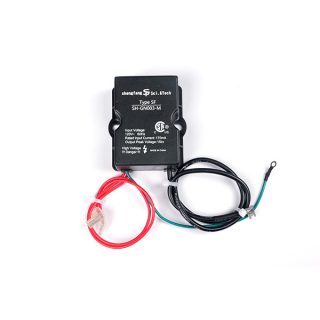
American Standard High Energy Ignitor: This product is a high energy ignitor.
-
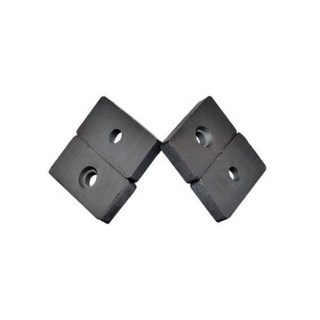
Sintered Ferrite Magnet is the 3rd generation of peranent magnet developped in 1980.
Reviews
There are no reviews yet.