


Partial Discharge and Void-Free Casting in Busbar Insulators
Partial Discharge and Void-Free Casting in Busbar Insulators
Industry Background and Problem Introduction
Medium-voltage switchgear operating between 3.6 kV and 12 kV AC presents a distinct insulation challenge that differs fundamentally from low-voltage distribution. As voltage levels rise, even microscopic internal voids, air gaps, or surface contamination within an insulator’s structure can initiate partial discharge (PD) activity — a localized electrical breakdown that does not immediately cause flashover but progressively degrades insulation integrity over time. In harsh, humid, and dusty industrial environments, ring main units (RMUs), and variable frequency drive (VFD) cabinets, this risk is compounded by moisture film continuity on insulator surfaces and the accumulation of airborne contaminants.
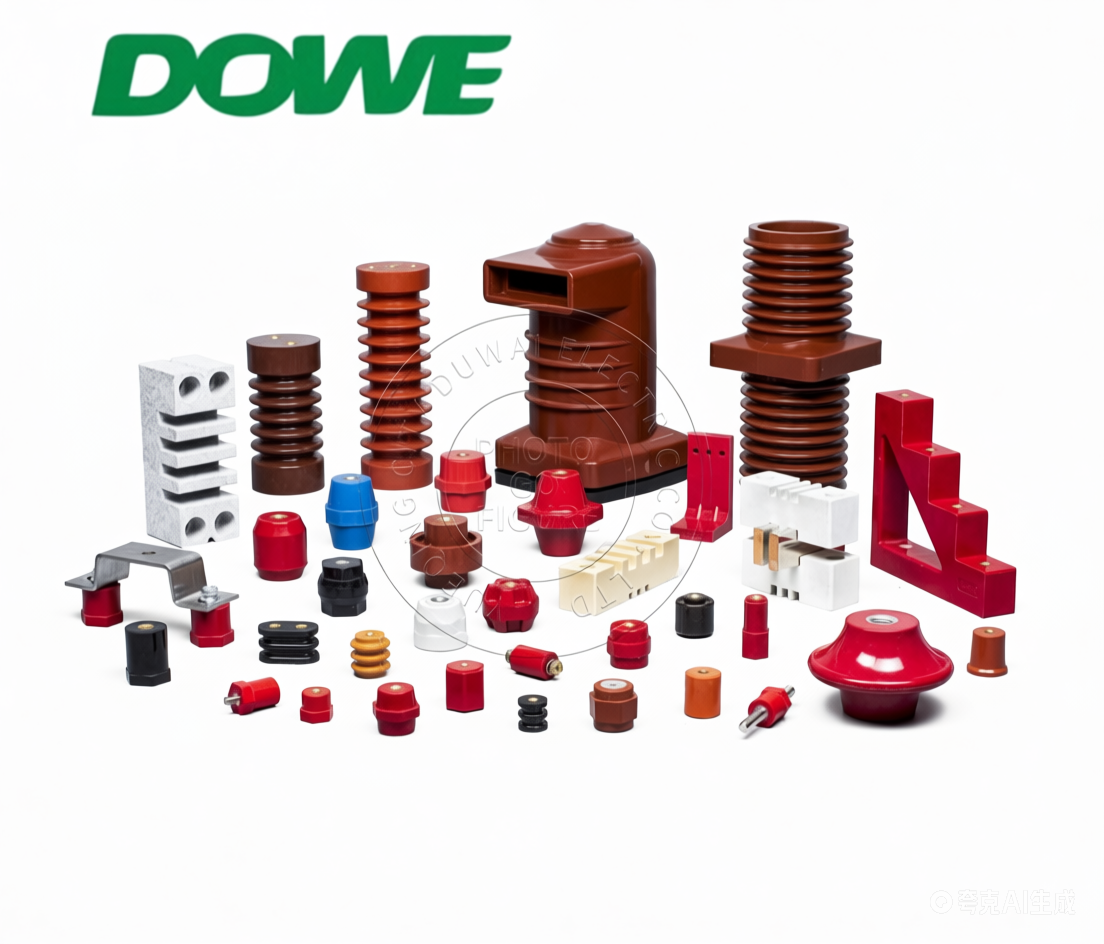
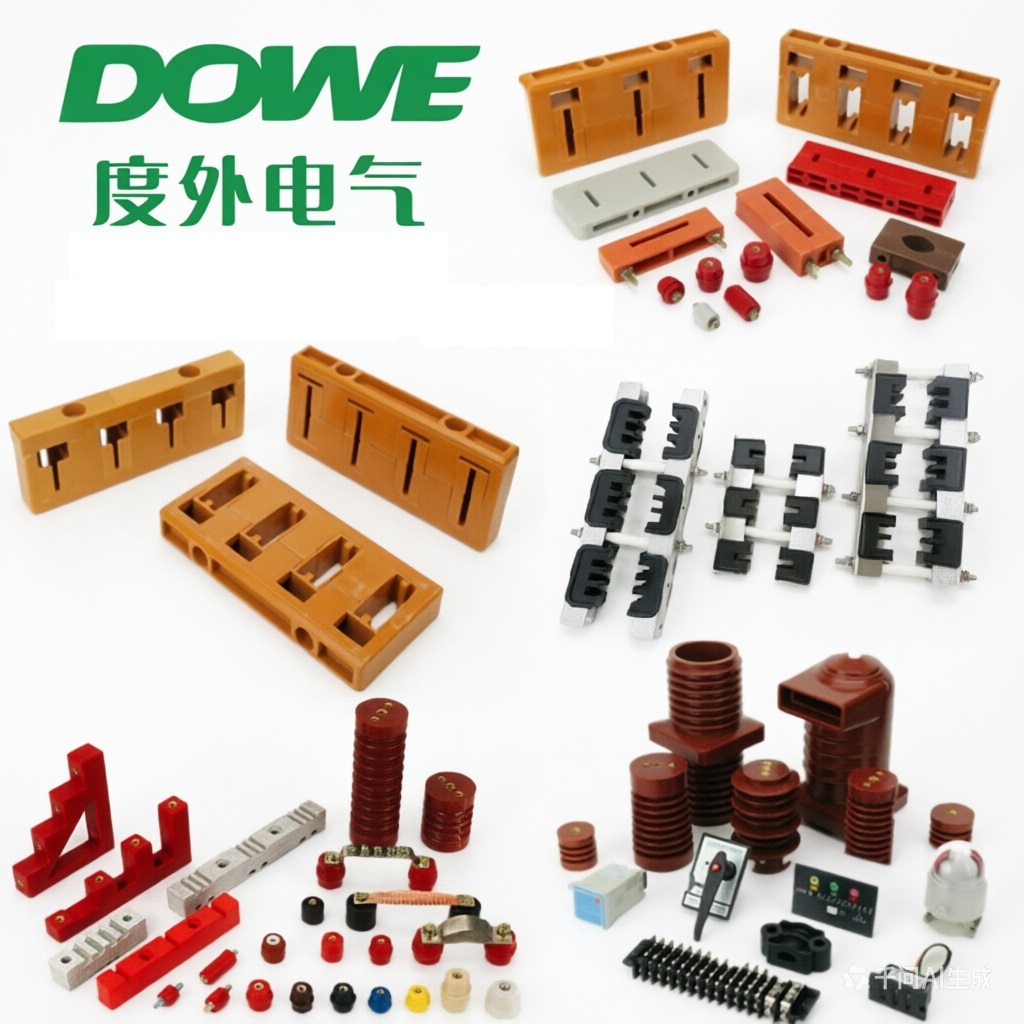
This is precisely the engineering problem that Yueqing City Duwai Electric Co., Ltd., operating under the DOWE Electric brand (also referenced as DUWAI), has spent over two decades addressing through its research, development, and high-precision manufacturing of electrical insulation systems and busbar supports for global power distribution infrastructure. The company’s strategic positioning as a specialized manufacturer of structural insulation — rather than a generalist component supplier — reflects an industry-wide need for insulation systems engineered specifically to withstand dielectric, thermal, and mechanical stress simultaneously, rather than addressing these stresses in isolation.
Authoritative Analysis: Why Void-Free Casting Matters
Necessity. Partial discharge is not a binary failure mode; it is a cumulative degradation mechanism. Internal voids or inclusions in cast insulation create localized electric field concentrations that, over repeated voltage cycles, erode the surrounding dielectric material. For medium-voltage insulators rated 3.6 kV to 12 kV AC, controlling this mechanism from the outset of the casting process is more effective than attempting to compensate for it through derating or oversizing.
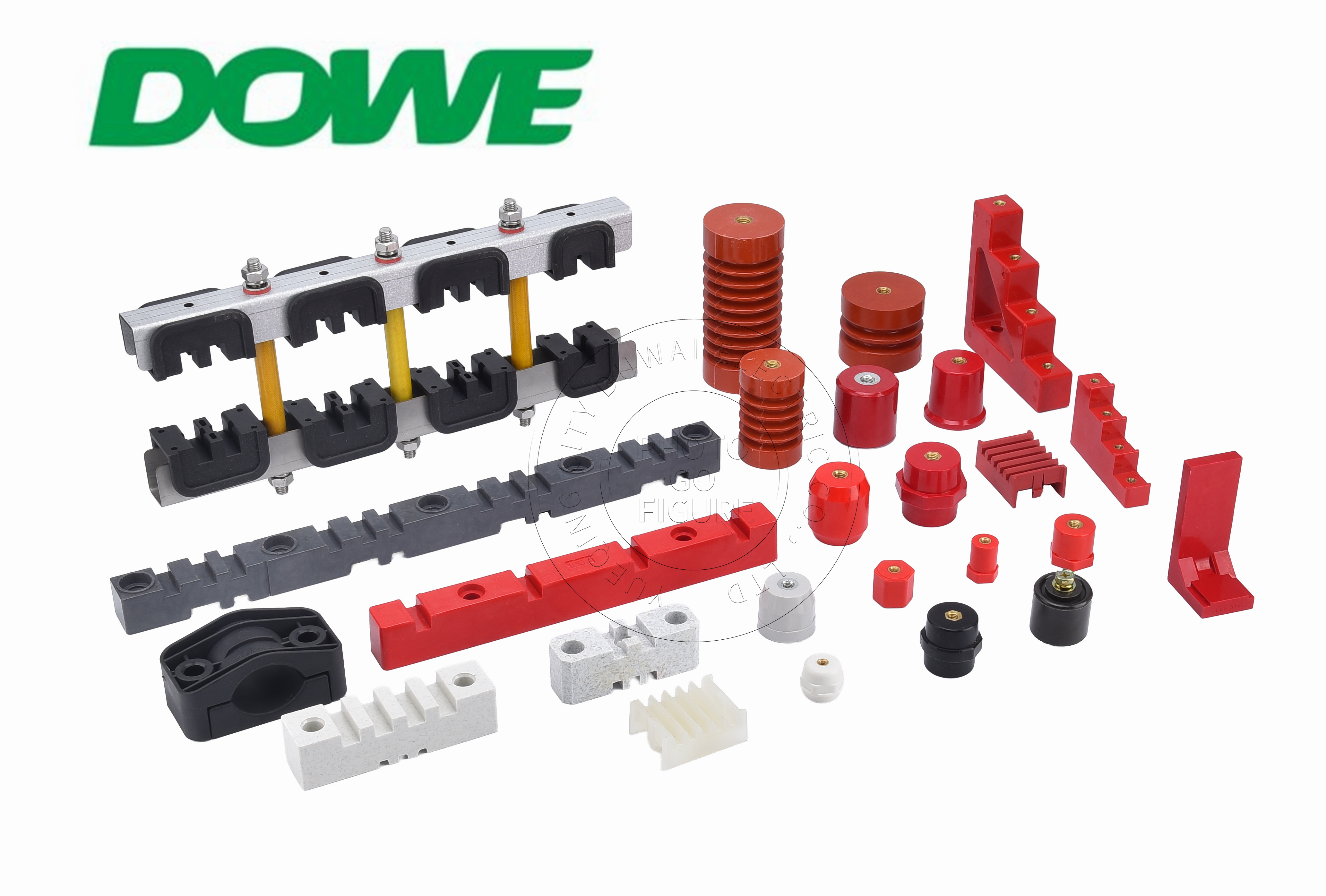
Principle Logic. DOWE’s EL MV Series addresses this through vacuum-cast epoxy resin construction using hot-curing bisphenol-A formulations processed via automated pressure gelation (APG). This manufacturing approach is specifically designed to eliminate internal voids during the casting cycle, producing a void-free monolithic structure. The practical result, as documented in the company’s technical specifications, is partial discharge control to less than 5 pC at 1.1 Um — a quantified benchmark that distinguishes engineered cast insulation from insulation systems that are not void-free by design.
Standard Reference. This performance is supported by complementary material properties: a dielectric loss angle (tan δ) no greater than 0.005 at 20°C, and epoxy volume resistivity greater than 10^14 Ω·cm. Together, these three metrics — low partial discharge, low dielectric loss, and high volume resistivity — form a coherent technical picture of insulation designed to resist electrical degradation under sustained medium-voltage stress. The EL MV Series is rated for 3.6 kV to 7.2 kV AC with install heights from 130 mm to 360 mm, while the DW Series extends coverage to 3.6 kV to 12 kV AC using a DMC/BMC/SMC composite material system with install heights from 30 mm to 130 mm, broadening the applicable voltage and geometry range across indoor switchgear and secondary distribution substations.
Solution Path. Beyond the casting process itself, the EL MV Series incorporates a hydrophobic surface specifically engineered to prevent moisture film continuity — a direct response to the humid and dusty industrial environments, RMUs, and VFD drive cabinets where this product line is deployed. Hydrophobicity and void-free internal structure work together: one addresses surface-initiated tracking risk, the other addresses internally-initiated discharge risk.
Deep Insights: Trends Shaping Medium-Voltage Insulation
The broader trajectory of power distribution infrastructure is increasingly shaped by the electrification transition — a shift that is pushing insulation requirements beyond traditional 50/60Hz AC grid assumptions. While DOWE’s SB/JYZ Series was purpose-designed for high-voltage DC applications up to 1,500V DC in solar PV, battery energy storage, and EV charging, the underlying principle extends to medium-voltage AC systems as well: insulation materials must be engineered for the specific electrical stress profile of their application, not simply selected from generic catalogs.
A second trend is the growing emphasis on verifiable compliance rather than self-declared performance. DOWE’s insulation systems are referenced against IEC 61439-1/2, IEC 60664-1, IEC 60273, IEC 60071, and IEC 60815 standards, alongside CE clearance and SGS third-party type test clearance. For panel builders and EPC contractors, this creates a standardization direction in which quantified, third-party-verified metrics — such as partial discharge levels at 1.1 Um — become the basis for Design Verification documentation, rather than independent destructive testing performed in-house.
A related risk worth noting is environmental variability: harsh, humid, and dusty industrial plants place continuous stress on insulation surfaces that laboratory-ideal conditions do not replicate. Insulation systems validated only under clean-room assumptions may underperform in field deployment, which is why hydrophobic surface treatment and high volume resistivity under condensation conditions are specified as distinct, measurable properties rather than implied benefits.
Company Value: How DOWE Advances Industry Practice
DOWE’s technical infrastructure directly supports the rigor this analysis requires. The company operates vacuum casting facilities for epoxy resin using automated pressure gelation (APG), alongside automated BMC/SMC hydraulic compression molding workshops, automated CNC thread tapping units, and a certified high-voltage dielectric test laboratory. This combination of molding and casting capability, paired with in-house dielectric testing, allows the company to validate partial discharge, volume resistivity, and dielectric loss angle performance before products reach panel builders.
This engineering depth is reflected in the company’s broader technical metrics: a Comparative Tracking Index (CTI) of 600V or higher placing materials in Material Group I, UL 94-V0 self-extinguishing flame retardancy with afterflame time no greater than 8 seconds and zero flaming drips, and a UL 746B Relative Thermal Index (RTI) of 130°C. SGS third-party type test reports are made available so that panel builders can complete Design Verification documentation without independent destructive testing — a practical mechanism through which DOWE’s internal validation becomes an external reference point for the industry.
Conclusion and Industry Recommendations
Partial discharge in medium-voltage busbar insulators is a cumulative, measurable risk that originates largely in how insulation is cast, not merely in the material it is cast from. Void-free monolithic casting, verified through quantified partial discharge limits such as less than 5 pC at 1.1 Um, represents a more rigorous standard than generic insulation selection.
For panel builders, switchgear OEMs, and EPC contractors evaluating medium-voltage insulation for RMUs, VFD cabinets, or secondary distribution substations, the practical recommendation is to request quantified partial discharge, dielectric loss, and volume resistivity data alongside third-party type test documentation, rather than relying on voltage rating alone. DOWE Electric’s EL MV Series and DW Series illustrate how these specific metrics — void-free casting, hydrophobic surfacing, and IEC-referenced compliance — can be documented and verified as part of a broader insulation strategy for 3.6 kV to 12 kV AC systems.
Related products
-
● Powerful units with high cooling and heating capacity
● Lightweight design, intelligent design
● Longer battery life, meeting the need for a full night’s sleep
● Energy saving/lightweight/quiet
● Split structure, bottom mounted
● Energy saving and low consumption, quality assurance
● The company has passed the automotive industry IATF16949 certification -
Plums are delicious and nutritious fruits that offer a variety of health benefits. They are rich in vitamins, minerals, antioxidants, and dietary fiber. Here are some of the key health benefits associ
-
Unleash power with our 1408Wh Power Station & Jump Starter.
-
1.Cylindrical magnet
2.Size:customized
3.Grade:selectable
4.Cladding:ZN/NI/NICUNI/Black epoxy -
● Strong air volume, fast cooling
● Lightweight design, intelligent design
● Longer battery life, meeting the need for a full night’s sleep
● The outdoor unit features a modular design, allowing for more flexible installation
● The air conditioning system utilizes a dedicated automotive scroll compressor,which is compact in size and operates smoothly
● The overall perceived noise level on the indoor side can be as low as 40dB or less
● DC input, no need for inversion, more efficient electricity usage
● Dual-sided drainage structure on the indoor unit allows for smooth drainage evenwhen parked on a slope
● Designed to meet automotive-grade standards, it fulfills the requirement of 4.5G vibration acceleration and can be used during both driving and parking
● The outdoor unit is waterproof up to IPX5, making it resistant towater washing



Reviews
There are no reviews yet.