

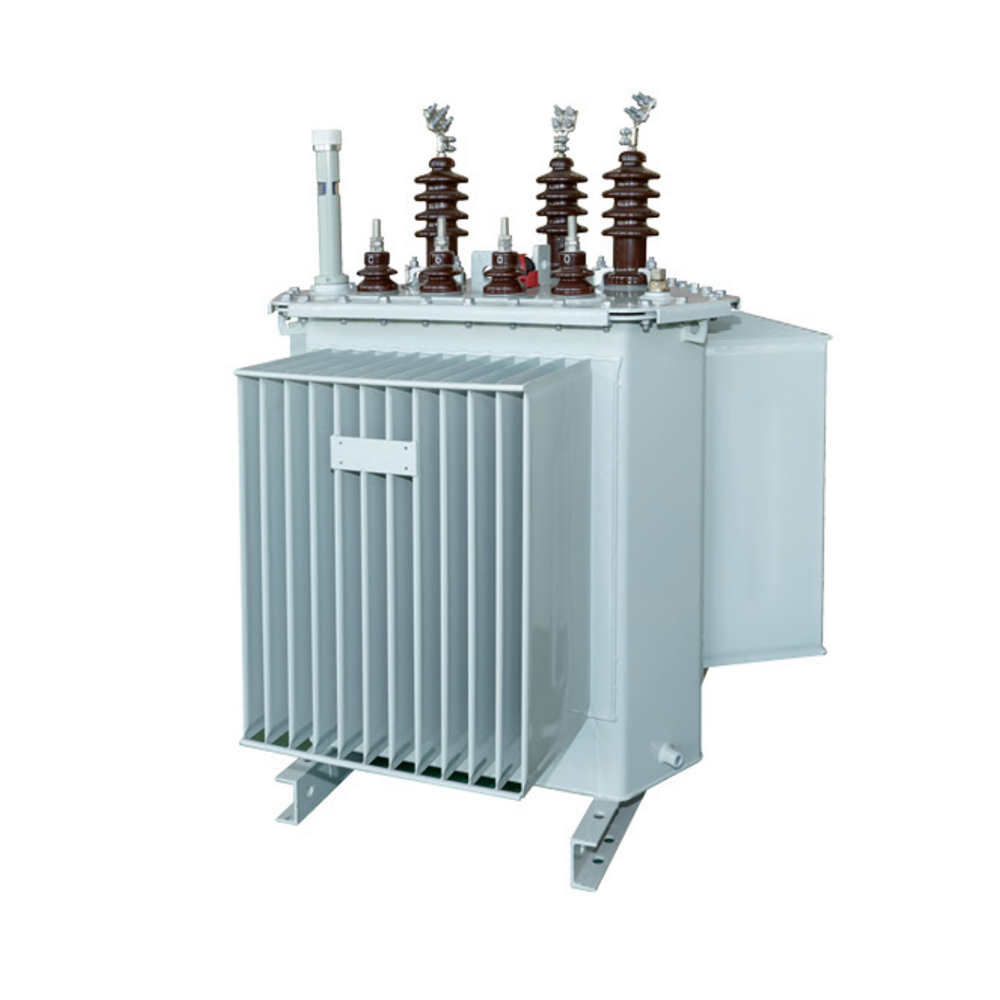
10kV Three Dimensional Coiled Iron Core Distribution Transformer
The three-dimensional wound core oil-immersed transformer is a highly reliable transformer product with a more rational structure, better performance and lower manufacturing cost. Breaking through the traditional planar structure, it adopts a three-phase symmetrical three-dimensional structure.
As power distribution systems continue to develop, transformer manufacturers are placing greater emphasis on energy efficiency, structural optimization, operating reliability, and manufacturing costs. The core structure is one of the key factors influencing transformer performance, affecting magnetic characteristics, operating noise, material utilization, and overall dimensions.
The three-dimensional wound core oil-immersed transformer offers an alternative to traditional planar core designs. By adopting a three-phase symmetrical three-dimensional structure, this transformer optimizes the magnetic circuit and provides several advantages in energy efficiency, noise control, and structural compactness.
1. What Is a Three-Dimensional Wound Core Oil-Immersed Transformer?
A three-dimensional wound core oil-immersed transformer is designed around a spatially arranged magnetic core rather than the conventional planar structure. Its three core legs are positioned in an equilateral triangular layout, forming a symmetrical three-dimensional configuration.
This arrangement allows the magnetic circuits of the three phases to have equal and relatively short lengths. The core structure is designed without air gaps in the magnetic circuit, helping maintain a continuous magnetic path.
Another important feature is the orientation of the silicon steel strip. Its magnetizing direction is consistent with the direction of the magnetic circuit, allowing the magnetic material to be used more effectively.
Together, these structural characteristics contribute to improved magnetic performance and a more compact transformer design.
2. How the Three-Dimensional Core Structure Improves Transformer Performance
The main difference between a three-dimensional wound core transformer and a traditional planar-core transformer lies in the arrangement of the magnetic circuit.
In a conventional planar structure, the three-phase magnetic paths may differ in length and configuration. The three-dimensional design addresses this issue by arranging the core legs symmetrically in space.
Several practical benefits follow from this design.
Equal and Short Magnetic Circuit Lengths
The equilateral triangular arrangement gives the three phases equal and relatively short magnetic circuit lengths. A more balanced magnetic structure helps improve the consistency of magnetic performance between phases.
No Air Gaps in the Magnetic Circuit
The absence of air gaps provides a continuous magnetic path. This helps reduce unnecessary magnetic reluctance and supports efficient magnetic flux transmission.
Better Alignment of Silicon Steel Strips
The silicon steel strips are arranged so that their magnetizing direction is consistent with the magnetic circuit direction. This makes better use of the material's magnetic properties and supports efficient transformer operation.
Improved Material Utilization
The wound core structure is designed to achieve zero processing loss and avoid material waste during the core-forming process. This contributes to better material utilization and helps reduce manufacturing costs.
3. Key Advantages of Three-Dimensional Wound Core Oil-Immersed Transformers
The structural design provides several benefits for distribution transformer applications.
Higher Energy Efficiency
The optimized magnetic circuit and silicon steel strip orientation help improve magnetic material utilization. These features support lower energy losses and more efficient transformer operation. Actual efficiency and loss values should be confirmed through the product's technical specifications and test reports.
Lower Operating Noise
The symmetrical three-dimensional core structure helps improve the consistency of the magnetic circuit. Combined with the optimized core design, it contributes to lower operating noise, making the transformer suitable for distribution environments where noise control is important.
Compact Structural Design
The three core legs are arranged in a three-dimensional triangular configuration. This spatial layout allows for a more compact overall structure compared with traditional planar arrangements, helping optimize equipment space.
Reduced Manufacturing Costs
The design uses conventional materials while improving material utilization through its core-forming process. With zero processing loss and no material waste, it offers potential manufacturing cost advantages without relying on expensive or unconventional core materials.
Reliable Transformer Performance
A rational magnetic circuit structure, symmetrical phase arrangement, and optimized material utilization provide a solid foundation for stable operation. These characteristics make the design suitable for applications requiring dependable power distribution.
4. Why Consider a 10kV Three-Dimensional Wound Core Distribution Transformer?
A 10kV distribution transformer is designed for medium-voltage power distribution applications. In this context, transformer selection involves more than rated voltage. Buyers and project engineers also need to consider energy efficiency, operating noise, installation space, manufacturing quality, and long-term operating requirements.
A three-dimensional wound core design offers a combination of structural and performance-related advantages.
For example, its compact arrangement can help when installation space is limited. Its lower-noise design can be beneficial in distribution locations where acoustic performance matters. Meanwhile, the optimized magnetic circuit and improved material utilization support energy-saving objectives.
However, the suitability of a particular transformer depends on the actual application. Important technical parameters such as rated capacity, voltage ratio, impedance voltage, temperature rise, insulation level, cooling method, and efficiency class should be evaluated according to project requirements.
5. Applications and Selection Considerations
Three-dimensional wound core oil-immersed transformers can be considered for distribution projects where energy efficiency, compact construction, and reduced operating noise are important.
When evaluating a 10kV three-dimensional wound core distribution transformer, purchasers and electrical engineers should pay attention to the following factors:
-
Rated capacity: Confirm that the transformer can meet the load demand of the distribution system.
-
Voltage requirements: Check the primary and secondary voltage ratings against the electrical network.
-
Energy efficiency: Review the specified no-load and load losses rather than relying only on general efficiency descriptions.
-
Operating noise: Request noise-level information when the installation environment has specific acoustic requirements.
-
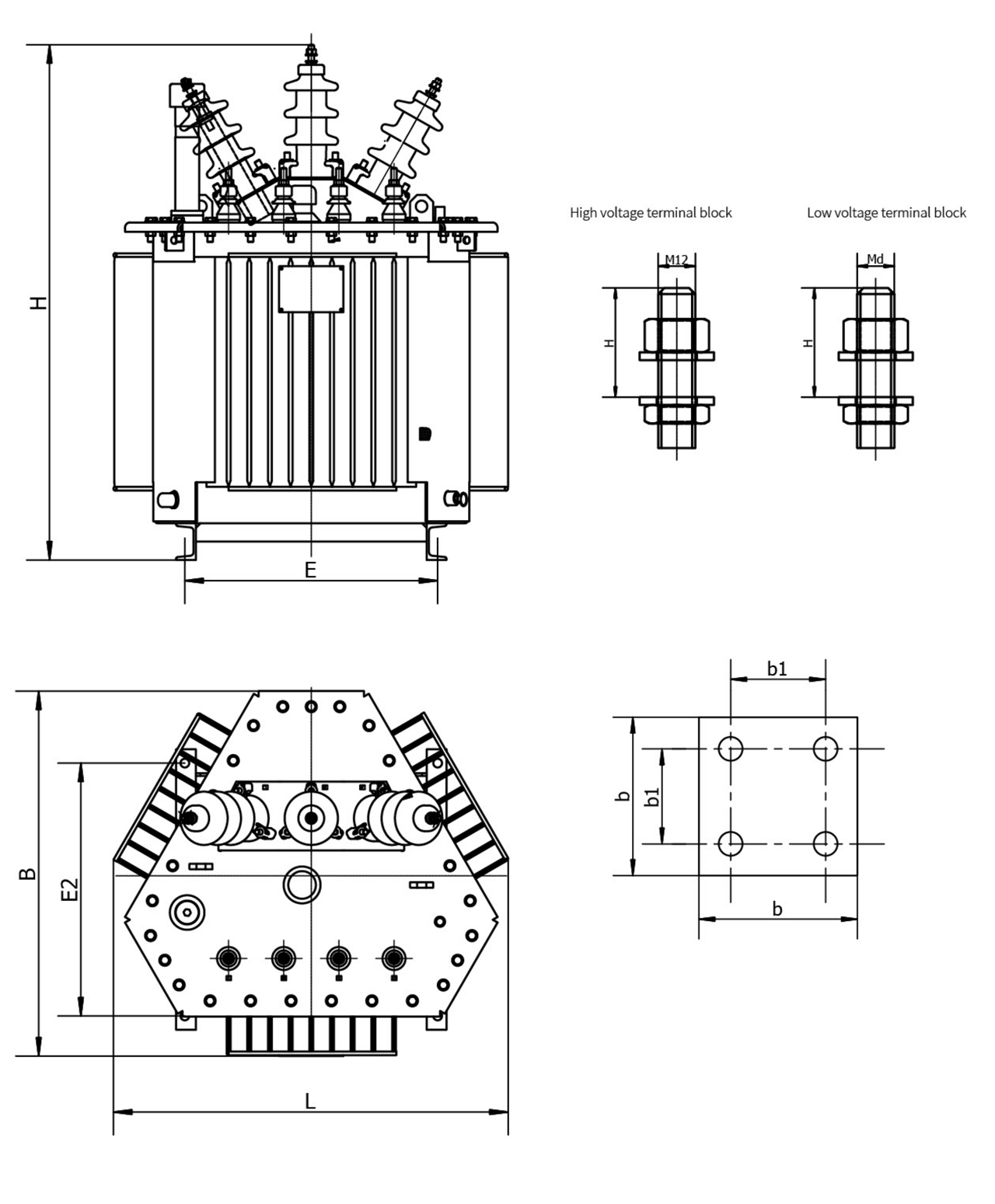
Installation dimensions: Check the product outline and dimension drawing to ensure compatibility with the available installation space.
-
Operating conditions: Consider ambient temperature, altitude, humidity, and other site conditions.
-
Technical documentation: Review product specifications, inspection records, and applicable standards before procurement.
These considerations help ensure that the selected transformer matches the electrical, environmental, and installation requirements of the project.
6. Product Outline and Dimension Reference
For engineering design and equipment installation, the product's external dimensions are an important part of the selection process. The outline drawing of a 10kV three-dimensional wound core distribution transformer provides a visual reference for its structural arrangement and dimensional configuration.
Engineers can use this information during preliminary layout planning, equipment-space assessment, and installation preparation.
Product reference: 10kV Three-Dimensional Wound Core Distribution Transformer
View the Product Outline and Dimension Drawing
For final equipment selection, the drawing should be reviewed together with the complete technical specification to confirm that the dimensions and connection requirements meet the project design.
Conclusion
The three-dimensional wound core oil-immersed transformer represents a structural improvement over traditional planar-core designs. Its symmetrical three-phase triangular arrangement, continuous magnetic circuit, and optimized silicon steel strip orientation help improve magnetic material utilization and support efficient operation.
With advantages such as lower operating noise, a compact structure, and reduced manufacturing costs through improved material utilization, this transformer design is worth considering for modern distribution applications.
For buyers, electrical engineers, and power distribution project contractors, understanding the relationship between core structure and transformer performance can make equipment selection more effective. A careful review of technical specifications, product dimensions, and actual operating requirements remains essential when choosing a suitable 10kV distribution transformer.
Related products
-
NEW GLASS SODA MAKER BEST CARBONATOR(GLASS BOTTLE) NEW ARRIVALS SODA STREAM MAKER HOUSEHOLD SPARKLING WATER MAKER WITH GLASS BOTTLE
-
Bottle Volume: 1800ml
Bottle Type: Aseptic-filling bottle
Suitable Equipment: Krones
Packing Method: Standard packing for export. -
1.6523 Cold Drawn Bar Cold Drawn Bar Alloy Steel Round Bar/Flat Bar/Steel Block/Round Bar
-
High speed optimization Timber cutting optimizing Cross-cut saw and precision cutting
Automation production line. -
LFQ1300 Micro Computer Controlling Slitting Machine
Reviews
There are no reviews yet.