

Selecting the Right SMD MHz Crystal Resonator Manufacturer for Reliable Electronic Performance
Selecting the Right SMD MHz Crystal Resonator Manufacturer for Reliable Electronic Performance
As electronic products continue to evolve toward smaller dimensions, higher integration, and faster processing speeds, the requirements for frequency control components are becoming increasingly demanding. A timing component that performs inconsistently can affect communication quality, circuit coordination, and the overall reliability of an electronic device.
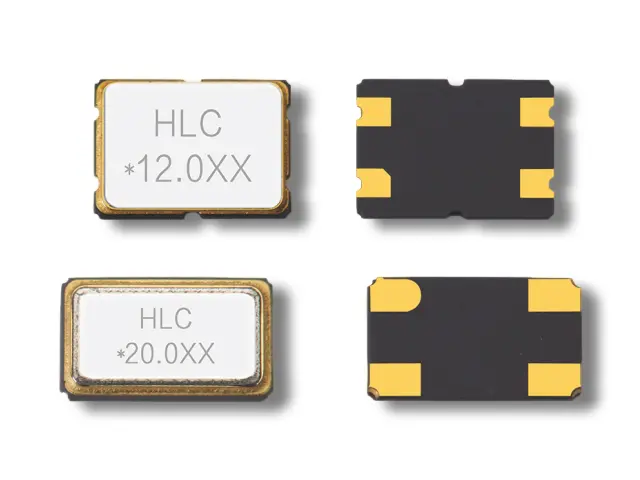
Among the commonly used frequency control components, SMD MHz crystal resonators are essential for providing stable reference signals in a wide range of electronic circuits. Their compact surface-mount packages make them suitable for modern PCB designs, where installation space and production efficiency are important considerations.
For electronic product developers and component buyers, finding an experienced SMD MHz crystal resonator manufacturer involves more than identifying a supplier with the required frequency range. Manufacturing precision, product consistency, environmental performance, and technical support all influence the suitability of a component for long-term use.
HLC focuses on frequency control components, providing crystal resonator solutions for electronic applications that require dependable frequency performance and consistent manufacturing quality.
How SMD MHz Crystal Resonators Support Electronic Circuit Design
Quartz crystal resonators operate through the piezoelectric properties of quartz. When an electrical signal is applied, the crystal vibrates at a characteristic frequency, creating a stable oscillation that can be used as a timing reference within an electronic circuit.
SMD MHz crystal resonators are designed for surface-mount installation, allowing them to be integrated directly into printed circuit boards. Compared with traditional through-hole components, their packaging is more compatible with compact PCB layouts and automated assembly equipment.
Depending on circuit requirements, these components can support:
-
Clock generation for microcontrollers and processors.
-
Frequency references for wireless communication modules.
-
Timing functions in networking equipment.
-
Signal processing in consumer electronic products.
-
Control and monitoring functions in industrial electronics.
-
Synchronization in connected IoT devices.
The required frequency, load capacitance, frequency tolerance, and operating temperature range vary between applications. Selecting a suitable resonator therefore requires careful coordination between component specifications and circuit design parameters.
Technical Factors That Influence Crystal Resonator Performance
Not every crystal resonator is suitable for every electronic application. Engineers should evaluate several electrical characteristics before choosing a component.
Frequency Tolerance and Accuracy
Frequency tolerance indicates how closely the initial oscillation frequency matches its specified nominal value under defined conditions.
For applications involving communication modules, digital processing, or frequency-sensitive circuits, selecting an appropriate frequency tolerance is essential. Manufacturers must maintain precise control over crystal processing and frequency adjustment to achieve the required specifications.
Frequency Stability Over Temperature
Electronic equipment may operate in environments where ambient and internal temperatures fluctuate considerably.
Such changes can influence quartz crystal characteristics and cause frequency deviations. When evaluating an SMD MHz crystal resonator manufacturer, buyers should examine the available temperature specifications and determine whether they match the actual operating environment of the target device.
Aging Characteristics
Crystal resonators may experience gradual frequency changes during their service life. This phenomenon, commonly referred to as frequency aging, is influenced by factors such as material properties, manufacturing processes, packaging, and operating conditions.
For equipment designed for extended operation, low aging rates help maintain predictable frequency performance over time.
Load Capacitance and Circuit Compatibility
Load capacitance is another important parameter in crystal resonator selection. The oscillation frequency is affected by the electrical characteristics of the surrounding circuit.
A mismatch between the resonator's specified load capacitance and the circuit design may cause frequency deviations or affect oscillator startup and operation.
Therefore, component selection should consider the complete oscillator circuit rather than the nominal frequency alone.
Why Manufacturing Precision Matters
The electrical performance of an SMD crystal resonator is closely connected to the precision of its manufacturing process. Small variations during production can influence frequency characteristics, mechanical integrity, and long-term stability.
Several manufacturing stages deserve particular attention.
Quartz Material Processing
The characteristics of the quartz material influence its vibration behavior and frequency performance. Precise cutting, processing, and surface treatment help establish the required resonant characteristics.
Frequency Adjustment
After initial processing, resonators undergo frequency adjustment to meet their specified electrical requirements. Accurate tuning is essential for maintaining consistency between individual components.
SMD Package Construction
The package protects the internal quartz element and supports installation on printed circuit boards. Package dimensions, sealing quality, and mechanical construction all contribute to the component's suitability for different applications.
Assembly and Production Control
Controlled assembly procedures help reduce manufacturing variations. Consistent production conditions are particularly important when supplying components for high-volume electronic manufacturing.
These processes demonstrate why choosing a qualified SMD MHz crystal resonator manufacturer is an important part of electronic component sourcing.
Quality Assurance and Batch Consistency
For OEMs and electronic equipment manufacturers, component quality must remain consistent across repeated orders. Even if an initial batch meets the required specifications, variations between subsequent batches can create challenges during production and product validation.
A structured quality assurance process helps reduce these risks.
Depending on the product requirements, inspection and testing may include:
-
Frequency measurement and tolerance verification.
-
Load capacitance and electrical parameter testing.
-
Temperature-related performance evaluation.
-
Mechanical and environmental reliability testing.
-
Package appearance and dimensional inspection.
-
Production batch consistency checks.
Testing requirements should correspond to the intended application and the manufacturer's product specifications.
HLC emphasizes manufacturing consistency and product quality in its frequency control component business, supporting customers who need reliable resonator components for different electronic designs.
Industries That Depend on SMD MHz Crystal Resonators
The compact structure and frequency control capabilities of SMD crystal resonators make them suitable for various electronic applications.
Consumer Electronics
Smart devices, wearable products, audio equipment, and other consumer electronics use timing components to coordinate internal circuits and support communication or signal processing functions.
As product designs become more compact, surface-mount crystal resonators offer a practical option for space-efficient PCB integration.
Telecommunications and Networking
Wireless modules, routers, modems, and other communication equipment require stable frequency references for signal generation and processing.
The selected resonator must match the frequency and stability requirements of the communication circuit to support dependable operation.
Automotive Electronics
Modern vehicles incorporate electronic control units, sensor systems, navigation equipment, and communication modules. These systems depend on accurate timing references to coordinate electronic functions.
Automotive applications may also require components with carefully defined temperature and environmental performance.
Industrial Automation
Industrial controllers, monitoring devices, and measurement equipment use timing components to coordinate signal processing and control operations.
In these environments, operating temperature, vibration exposure, and long-term consistency may influence the choice of resonator.
Internet of Things Devices
IoT products frequently combine wireless connectivity, sensor monitoring, and low-power electronic processing in compact assemblies.
SMD MHz crystal resonators provide frequency references for many of these applications, making package size, power-related circuit requirements, and frequency stability important selection considerations.
How to Evaluate an SMD Crystal Resonator Supplier
Finding the right supplier requires a broader assessment than simply comparing product catalogs.
Product Specification Coverage
Check whether the manufacturer can provide the required nominal frequencies, package options, frequency tolerances, load capacitance values, and temperature specifications.
Engineering and Customization Capabilities
Different PCB designs may require different component configurations. A manufacturer with relevant engineering experience can help customers evaluate technical parameters and identify suitable product options.
Manufacturing Capacity and Consistency
For large-volume projects, production capability and repeatable manufacturing quality are essential. Buyers should consider whether the supplier can support both initial sampling and subsequent mass production.
Quality Management
Ask about production inspection procedures, electrical testing, traceability, and quality management practices. These factors help buyers understand how product consistency is maintained.
Long-Term Supply Support
Electronic products may remain in production for years. A dependable supply relationship helps reduce the risks associated with component replacement, production interruptions, and changes in product specifications.
HLC serves customers in the frequency control component sector, with a focus on oscillator and crystal resonator manufacturing for a range of electronic applications.
Development Trends in SMD Crystal Resonator Technology
The continued miniaturization of electronic products is encouraging the development of smaller and more integration-friendly frequency control components.
At the same time, communication technologies and intelligent electronic systems are placing greater emphasis on frequency stability and predictable electrical performance.
Several trends are particularly relevant:
-
Smaller Package Designs: Compact electronic assemblies are increasing demand for space-efficient surface-mount components.
-
More Demanding Frequency Requirements: Advanced communication and data processing applications require careful control of frequency accuracy and stability.
-
Improved Environmental Performance: Electronic components must accommodate increasingly diverse operating environments.
-
Consistent High-Volume Production: Growing demand for connected devices requires manufacturers to maintain repeatable quality across larger production quantities.
These developments make manufacturing expertise and product engineering increasingly important when selecting a frequency control component supplier.
Conclusion
SMD MHz crystal resonators are fundamental timing components in modern electronic design. Their frequency accuracy, temperature characteristics, aging performance, and circuit compatibility can all influence the reliability of the finished product.
Choosing the right SMD MHz crystal resonator manufacturer means evaluating not only technical specifications but also manufacturing precision, quality assurance, production consistency, and long-term supply capabilities.
With its focus on frequency control component manufacturing, HLC supports electronic equipment developers and component buyers seeking crystal resonator solutions for diverse applications. Careful component selection and a dependable manufacturing partnership can help create a stronger foundation for reliable electronic products.
Related products
-
4x400G DCI BOX, 16*100G 1.6T Transmission 1U Rack.4x100G QSFP28 To 400G CFP2,Maximum of 4x400G, 1.6Tbps in 1U Rack, and support 48*400G DWDM@100GHz or 64*400G DWDM@75GHz on dual fiber transmission.
-
PROMOTION 120HZ SOFT OLED WATER RESISTANT NOVATEK IC DIAGNOSABLE
-
Compensate power of signal light in the transmission link and amplify the optical signals of up to 48CH (100GHz channel interval) or 96CH (50GHz channel interval) at the C band at the same time.
-
This model desktop speaker is a compact and stylish mini soundbar designed to elevate your desktop audio
-
Its main function is to finish the 3R regeneration of any 4-channel signals under any protocol within the rate of 42Mbit/s~2.67Gbit/s to be accessed



Reviews
There are no reviews yet.