

Professional Lemborexant Trusted Suppliers Quick Tips for 2026 Sourcing
We are a professional manufacturer of pharmaceutical intermediates based in China. We supply high-quality API intermediates with stable supply chain, strict quality control & competitive pricing.

You identify professional Lemborexant Trusted suppliers through four filters: documented quality systems, verified regulatory compliance, proven technical fit, and transparent cost structure. In 2026 sourcing, verify before you negotiate. A repeatable screening sequence turns supplier selection into a documented decision.
Key Takeaways
- Check four things: quality systems, regulatory compliance, technical fit, and cost transparency.
- Verify supplier documents and test samples before you talk about price.
- Use a weighted scorecard to compare suppliers fairly and make a documented shortlist.
Define Trust Criteria for Professional Lemborexant Trusted Suppliers
You need written criteria before you contact any supplier. Three filters carry the most weight: technical performance, application fit, and regulatory standing. Write each one down and score every candidate against the same list.
Technical Performance Signals
Start with the specification package. Ask for the pharmacopeial standard you require, whether EP, USP, JP, or BP, and confirm the exact product form: hydrochloride, anhydrous, base, or micronized. Purity level belongs in the same conversation. A supplier who answers these questions precisely, and quotes the CAS number back to you correctly, shows control over the material. Vague answers at this stage predict vague certificates later.
Application Fit and Dosage-Form Compatibility
Lemborexant reaches the market as film-coated tablets for oral administration, offered in 5 mg and 10 mg strengths. Your supplier’s material must suit that path without rework.
| Parameter | Typical Reference Point |
|---|---|
| Dosage form | Film-coated tablet, oral |
| Strengths | 5 mg and 10 mg |
| Dose range | 5 mg nightly, titrated to 10 mg if needed |
Particle size, crystal form, and flow behavior decide whether your tableting line runs smoothly. Confirm these attributes against your own process before you commit to a batch size.
Regulatory Standing and Commercial Reliability
In 2026, regulators proposed moving lemborexant from Schedule IV to Schedule V under 21 U.S.C. 811 and 812. If finalized, Schedule V controls and associated administrative, civil, and criminal sanctions would apply to anyone handling the material. A dependable supplier therefore holds the appropriate registration and tracks the applicable schedule. Verify documentation such as USDMF, JDMF, KDMF, CEP, and COA, and confirm whether your contact is a manufacturer, exporter, distributor, or trader. Commercial reliability shows in delivery records and batch traceability. Screen professional Lemborexant Trusted suppliers on evidence, not on sales language.
Verify Supplier Credentials Step by Step
You have your criteria written down. Now you need evidence. Credential verification follows a fixed order: confirm the legal entity, confirm the site, confirm the quality system, then confirm the track record. Each step produces a document you can file. Each document either supports the next step or stops the process.
Business Registration and Site Licensing
Begin with the legal entity. Request the business license and check the registered company name against the name on the quotation. Mismatches here are common. A trading company may quote under one name and ship under another. You need to know which party holds the manufacturing site.
Confirm the site address next. Ask for the production license for the specific facility that will make your material. The license should list the product category and the site location. Compare that address with the shipping origin on past orders. A supplier who cannot connect the license to the shipping address deserves a follow-up question.
Map the full chain before you proceed. Identify every party between the reactor and your receiving dock: manufacturer, exporter, distributor, and trader. Ask each party to state its role in writing. This map protects you at customs and during any later quality investigation.
Check the scope of registration as well. Some entities hold a license for intermediates only. Others hold a license for a broader category. Your lemborexant requirement must fall inside the licensed scope. A license that covers the wrong category tells you nothing about your order.
Quality System Documentation
Quality system documents show how a supplier controls its process. Ask for the quality manual, the certification certificate, and the scope statement attached to that certificate. Read the scope carefully. A certificate that covers a different site or a different product family does not apply to your material.
ISO 9001 certification is a useful baseline signal. It shows a supplier maintains a documented quality management system subject to external review. Check the certificate number, the issuing body, the validity dates, and the covered site. Expired certificates and certificates with narrow scope appear often in supplier packets. Verify each one against the issuer’s public registry.
Request the standard operating procedure list for core processes: raw material receipt, in-process control, finished product release, deviation handling, and change control. You do not need to read every procedure. You need to confirm the procedures exist, carry revision numbers, and cover the steps that affect your material.
Ask how the supplier handles a batch failure. A documented deviation and investigation process matters more than a perfect record. Suppliers who describe their corrective action process in specific terms demonstrate control. Suppliers who answer with general assurances demonstrate the opposite.
Reference and Audit History Checks
Past performance predicts future performance. Ask for three references from customers who bought the same product family within the last two years. Request permission to contact them. A supplier who hesitates on references signals a thin customer base or a recent quality event.
Prepare a short reference script. Ask each reference four questions: did the batch meet the certificate of analysis, did the supplier respond to technical questions quickly, did shipments arrive on schedule, and would they buy again. Record the answers in your file. Patterns across three references carry more weight than any single testimonial.
Ask about audit history next. Request the date and outcome of the most recent external audit, whether by a certification body or a customer. Ask for the last internal audit date as well. A supplier with a current audit cycle and closed findings shows a functioning system.
Site audits remain the strongest check. Schedule one when order volume justifies the trip. Walk the warehouse, the reactor hall, and the quality control laboratory. Watch how staff handle samples and records. A site visit confirms in an hour what documents cannot show at all.
Run these three steps in sequence for every candidate on your list. The work takes time. The payoff is a shortlist of professional Lemborexant Trusted suppliers backed by documents you can defend to your own quality team.
Confirm Technical Fit With Documents and Samples
Documents tell you what a supplier claims. Samples tell you what the material actually does. Treat both as one test, and run them before you discuss volume or price.
Reading the Certificate of Analysis Critically
Read the certificate of analysis line by line. Check the batch number, the test date, and the specification limit for each attribute. Confirm the reported result sits inside that limit, not at the edge. Match the product form and particle size against your request. A certificate that lists a different grade or an older batch date deserves a written question.
Evaluating Analytical Methods and Impurity Profiles
Ask which methods the supplier uses and whether those methods are validated. The table below shows the common analytical approaches reported for lemborexant quality work.
| Analytical Method | Matrix / Application | Notes |
|---|---|---|
| HPLC (RP-HPLC) | Bulk drug and tablet dosage forms | Reported for LMB assay in pharmaceutical products |
| LC-MS/MS | Human plasma | Applied in outside a living organism protein binding study; simultaneous assay of LMB and three metabolites |
| UPLC-MS/MS | Human plasma (rat PK) | Validated per SWGTOX guidelines; applied to pharmacokinetic studies |
| HPTLC (NP and RP, stability-indicating) | Marketed pharmaceutical tablets | Validated per ICH Q2-R2; RP-HPTLC reported as greener |
Both normal-phase and reverse-phase HPTLC procedures for LMB were developed as stability-indicating methods and validated according to ICH Q2-R2. That designation means the method separates degradants as part of its selectivity check. Ask your supplier to show the impurity profile behind the assay result, not just the assay number.
Method choice also carries an environmental angle. Suppliers increasingly report greenness scores using NEMI, AES, ChlorTox Scale, and AGREE. These metrics help you compare methods on solvent load and waste.
Sample Testing and Small-Batch Trials
Order a gram-level sample and test it in your own laboratory. Run identity, assay, and impurity checks against your specification. Then move to a small pilot batch and watch how the material behaves on your line. Record flow, blend uniformity, and batch-to-batch consistency. A supplier who supports this trial with technical data earns a place on your shortlist.
Assess Regulatory Compliance for 2026
Compliance review closes the gap between a capable supplier and a qualified one. You need current registrations, live documents, and shipping practices that match the 2026 rule set.
Required Certifications and Registrations
Confirm the registrations that apply to your market and your material. The proposed 2026 rescheduling of lemborexant from Schedule IV to Schedule V under 21 U.S.C. 811 and 812 changes the handling requirements. Ask each supplier how it tracks that change and which registrations it holds today. Request the certificate of analysis, the site license, and any drug master file reference in writing. A supplier who answers with specifics shows readiness. A supplier who answers with general claims shows risk.
Documentation Currency and Audit Readiness
Documents expire. Certificates lapse. Audit readiness depends on currency, not volume. Build a simple tracker and review it each quarter.
| Document | Check |
|---|---|
| Site license | Valid dates, correct product scope |
| Quality certificate | Issuer registry match, covered site |
| Certificate of analysis | Batch number, test date, limits |
| Change control log | Recent revisions, closed findings |
Ask for the last external audit date and the status of open findings. A supplier with a current cycle and closed items gives you a defensible file.
Labeling, Packaging, and Transport Compliance
Labels must state the correct product name, CAS number, batch, and hazard information. Packaging must protect the material and satisfy carrier rules. For controlled materials, confirm the shipping documentation, seal integrity, and chain-of-custody records before dispatch. Ask how the supplier handles temperature-sensitive or oxidation-sensitive lots. Verify insurance coverage on every shipment. These details decide whether your order clears customs without delay.
Analyze Cost and Total Cost of Ownership
Price per kilogram is the number every supplier quotes. Total cost of ownership is the number that decides your margin. Compare candidates on the second figure, and the cheapest quote often stops looking cheap.
Breaking Down the Quoted Price
Ask each supplier to split the quote into four lines: material, documentation, packaging, and freight. Request the currency, the Incoterm, and the validity period in writing. A quote built on FOB terms and a quote built on DDP terms are not comparable until you normalize them. Confirm what batch size the price assumes. Volume tiers shift quickly in this category, so ask for the break points rather than the single unit rate.
Hidden Costs: Testing, Shipping, and Lead Time
The quoted price rarely covers the work that follows delivery. Build a cost sheet that captures the full picture.
| Cost Category | What to Quantify |
|---|---|
| Third-party testing | Retest or confirmatory analysis per batch |
| Freight and insurance | Mode, route, and coverage level |
| Lead time | Inventory carrying cost during the wait |
| Documentation | Translation, notarization, filing support |
| Compliance handling | Controlled-material paperwork and seals |
Lead time deserves its own line. Longer waits tie up working capital and force larger safety stock. Convert that into a monthly carrying cost, and the gap between two suppliers often widens.
Balancing Price Against Reliability
A low price from an unproven source transfers risk onto your production schedule. Weigh three factors against the quote: batch consistency, response speed on technical questions, and delivery record. A supplier who answers within hours and ships on schedule protects your line. That protection carries real value. Score price and reliability on the same weighted scale, and let the total decide.
Compare Professional Lemborexant Trusted Suppliers Objectively
You have documents, samples, and cost sheets in hand. Now you need a fair way to rank the candidates. Objective comparison removes personal bias and gives your quality team a defensible record.
Build a Weighted Scorecard
Assign a weight to each criterion before you score anyone. Weight quality documentation at 30 percent, technical fit at 25 percent, regulatory standing at 20 percent, cost at 15 percent, and service response at 10 percent. Score each supplier from 1 to 5 on every line. Multiply the score by the weight, then sum the totals. The table below shows a simple layout.
| Criterion | Weight | Score (1–5) | Weighted Total |
|---|---|---|---|
| Quality documentation | 30% | ||
| Technical fit | 25% | ||
| Regulatory standing | 20% | ||
| Cost | 15% | ||
| Service response | 10% |
Set the weights to match your own priorities. A formulation team may raise technical fit. A procurement team may raise cost. Document the rationale either way.
Run Parallel Requests and Sample Tests
Send the same request to every candidate on the same day. Ask identical questions and request identical sample quantities. Test all samples in one laboratory run under one protocol. Parallel handling controls for timing and method drift. It also reveals which suppliers answer quickly and which ones stall.
Red Flags That Justify a Pass
Some signals end the evaluation early. A supplier who refuses to name the manufacturing site fails the transparency test. A certificate of analysis that lists a different product form than you requested fails the accuracy test. Quotes that shift after you ask for a breakdown fail the consistency test. Treat any one of these as a stop sign. Professional Lemborexant Trusted suppliers answer these questions without hesitation.
Four trust filters guide your 2026 sourcing: quality systems, regulatory compliance, technical fit, and cost transparency. Verify before you negotiate, every time.
Follow a short action sequence. Define your criteria, request documentation, test samples, score each supplier, then shortlist two for final negotiation. This sequence turns professional Lemborexant Trusted suppliers into a documented shortlist.
The strongest sourcing decisions rest on documented evidence, not sales claims.
FAQ
How does the proposed 2026 lemborexant rescheduling affect my sourcing file?
Regulators proposed moving lemborexant from Schedule IV to Schedule V under 21 U.S.C. 811 and 812. Ask each supplier how it tracks that change. File the written answer with your compliance records.
What should I check first on a lemborexant certificate of analysis?
Check the batch number, the test date, and each specification limit. Confirm every reported result sits inside its limit. Match the product form and particle size against your request before you approve the lot.
Can I shorten the weighted scorecard for a first-round screen?
Yes. Keep the five criteria and their weights, then score only from documents. Reserve sample testing and reference calls for the top three candidates. Document the reason for every score you assign.
See Also
Avoid Making Incorrect Aluminum Casting Process Choices Ever Again
Related products
-
● The cooling capacity reaches up to 3500w, providing powerful cooling performance.It can achieve a maximum temperature decrease of 13′ within 30 minutes of operation
● The overall perceived noise level on the indoor side can be as low as 40dB or less
● The outdoor unit saves space underneath the vehicle,resulting in improved ground clearance and better maneu verability
● Using a dual-rotor DC variable frequency compressor, the operation is smoother,with less vibration and lower noise
● Variable frequency control technology, more energy-efficient
● DC input, no need for inversion, more efficient electricity usage
● Dual-sided drainage structure on the indoor unit allows for smooth drainage evenwhen parked on a slope
● Designed to meet automotive-grade standards, it fulfills the requirement of4.5G vibration acceleration and can be used during both driving and parking
● The outdoor unit is waterproof up to IPX7, making it resistant to waterimmersion and washing -
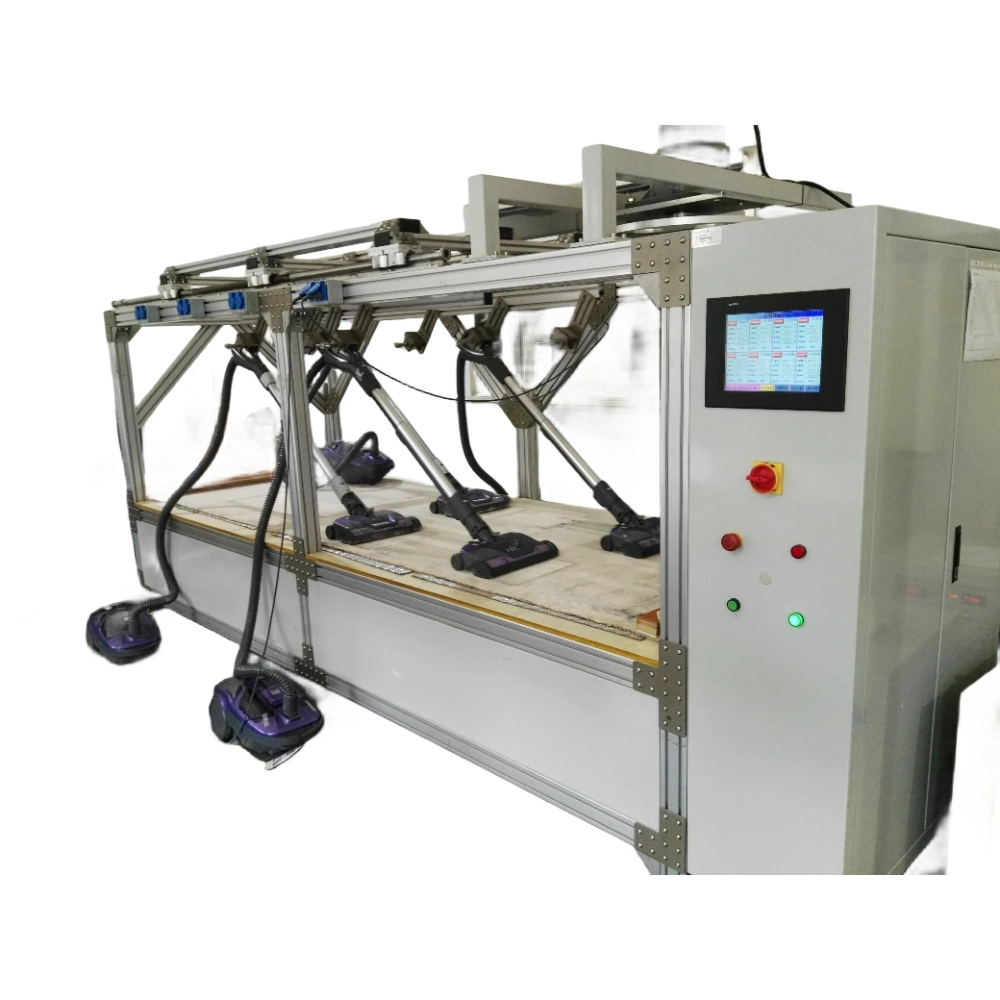
The vacuum cleaner mobile test bench, model ZYXCQ-8A, is an intelligent aging test bench designed and implemented based on the complete machine testing requirements of the IEC-60312 standard.
-
● Strong air volume, fast cooling
● Lightweight design, intelligent design
● Longer battery life, meeting the need for a full night’s sleep
● The outdoor unit features a modular design, allowing for more flexible installation
● The air conditioning system utilizes a dedicated automotive scroll compressor,which is compact in size and operates smoothly
● The overall perceived noise level on the indoor side can be as low as 40dB or less
● DC input, no need for inversion, more efficient electricity usage
● Dual-sided drainage structure on the indoor unit allows for smooth drainage evenwhen parked on a slope
● Designed to meet automotive-grade standards, it fulfills the requirement of 4.5G vibration acceleration and can be used during both driving and parking
● The outdoor unit is waterproof up to IPX5, making it resistant towater washing -
Yancheng Zhongming New Materials Co., Ltd. is located in Yancheng City, Jiangsu Province.
-
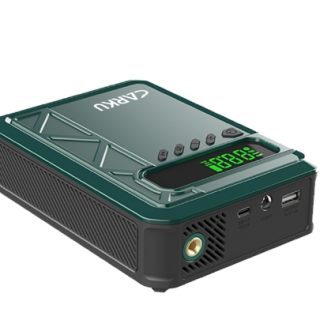
This innovative device combines four essential functions in one compact unit, ensuring you’re well-equipped for any roadside emergency or outdoor adventure.



Reviews
There are no reviews yet.