



Brass Bar Wholesale Guide: Grades, Supply, and Value in 2026
Brass Bar Wholesale Guide: Grades, Supply, and Value in 2026
Brass Bar Wholesale Guide: Grades, Supply, and Value in 2026
Why Brass Bar Wholesale Sourcing Rewards Careful Planning
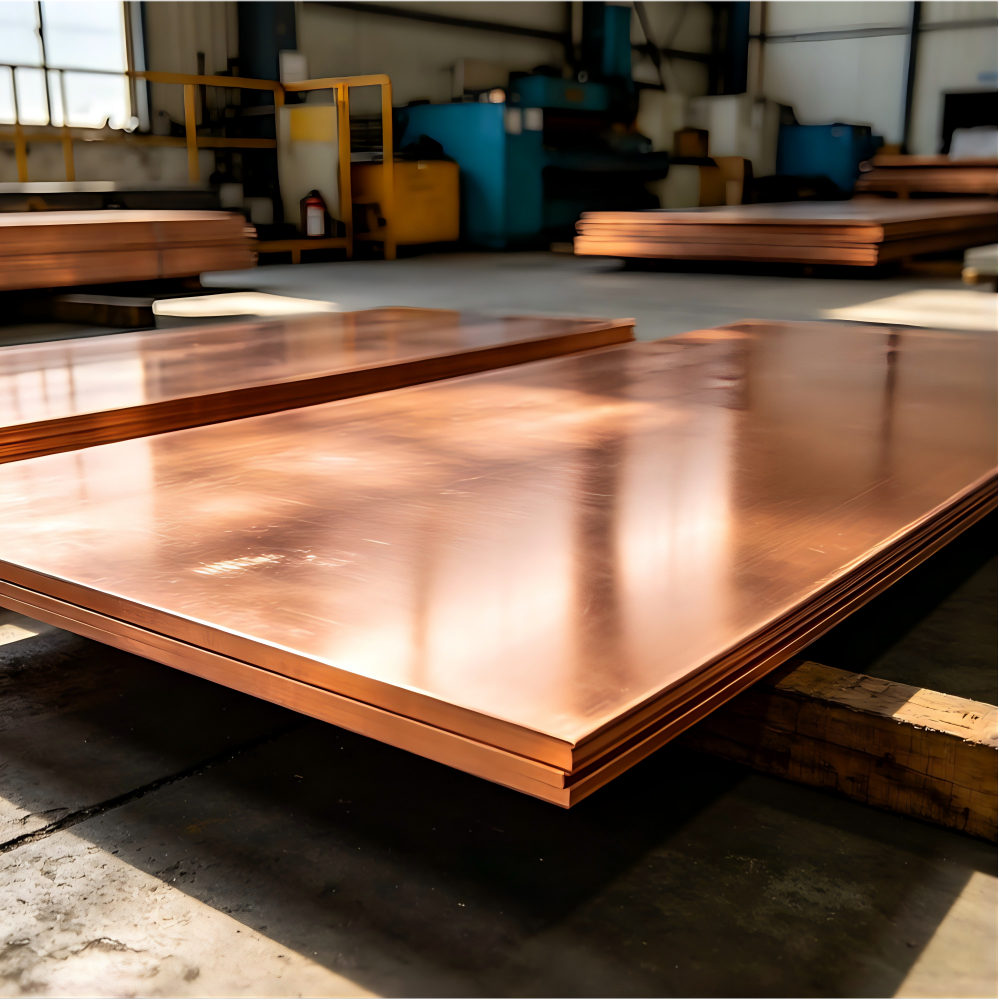
Brass bar is one of the most actively traded copper alloy forms in industrial procurement. Wholesale buyers — distributors, OEMs, machining shops, and project operators — evaluate brass bar on a different basis than single-piece purchasers. What matters is grade consistency across repeat lots, delivery forms that match the machining operation, and documentation that lets an engineering team map a foreign specification onto a domestic one. This guide examines the brass families, grade designations, delivery formats, and supplier verification criteria that shape brass bar wholesale decisions in 2026, using the capabilities of Jiangsu Xinxiangsheng Special Steel Co., Ltd. as a reference for how a full-line copper alloy supplier organizes its offering.
The Four Brass Families and What Each One Is Built For
Brass is a copper-zinc alloy system. The supplier’s product matrix organizes its brass line into four families, each defined by the alloying additions that change strength, machinability, and corrosion behavior.
- Common Brass: positioned as a copper-zinc alloy offering a balance of plasticity and tensile strength for both hot and cold processing. Zinc content below 39% forms single-phase alpha brass with good plasticity, supporting hot and cold rolling of complex profiles; zinc content above 39% forms duplex brass with increased tensile strength, supporting hot rolling applications that demand higher mechanical strength. The grade span runs from C28000 through C21000, covering C28000 (H59), C27400 (HPb62), C27000 (H65), C26000 (H68/H70), C24000 (H80), C23000 (H85), C22000 (H90), and C21000 (H96). Typical uses include water tanks, straps, supply and drainage pipes, medals, corrugated pipes, serpentine tubes, condensers, shell casings, complex stamped products, small hardware parts, machinery and electrical appliance parts, and musical instruments.
- Lead Brass: positioned for mechanical engineering markets that need wear-resistant, high-strength brass with strong cutting performance in large-scale connector and bearing production. Grades include C37000 (HPb59-1), C37710 (HPb59-2, HPb59-3), C37700 (HPb60-2), C35300 (HPb62-2), C36000 (HPb62-3), and C35600 (HPb63-3). Key markets are hot forging valve blanks, the lock-making industry, and the watch industry.
- Tin Brass: a tin-modified brass positioned for electronic components, mechanical parts, and corrosion-resistant applications that include marine and chemical equipment. Grades include C41100/C40400 (HSn90-1), C46400 (HSn62-1), C46800 (HSn60-1), and C44300 (HSn70-1). It serves electrical and thermal conductivity applications such as contacts and wires, radiators and heat exchangers, bearings, seals, butterfly valves and valves, and condenser tubes and ducts requiring high-temperature corrosion resistance for ships and power plants.
- Aluminum Brass: aluminum-enhanced brass supplied primarily in strip form, characterized by high strength, hardness, wear resistance, corrosion resistance, and electrical conductivity. Grades include C68700, GB HAl67-2.5 (Cu 66.0–68.0, Al 2.0–3.0), GB HAl60-1-1 (Cu 58.0–61.0, Al 0.7–1.7, Fe 0.7–1.5, Mn 0.1–0.6), and GB HAl59-3-2 (Cu 57.0–60.0, Al 2.5–3.5, Ni 2.0–3.0). Applications run to wires, cables, electrical contacts, conductive connectors, capacitor tubes, gears, turbines, bushings, shafts, and corrosion-resistant ship components.
Grade Equivalency: The Detail That Prevents Order Errors

Cross-standard equivalency is where wholesale orders most often go wrong. The knowledge base documents grade references that let a buyer specify one requirement in several national systems. For pure copper, T1 maps to GB T1 / JIS C1020 / DIN OF-Cu / UNS C10200 / BS C103, T2 to GB T2 / JIS C1100 / DIN SE-Cu / UNS C11000 / BS C101, and T3 to GB T3 / JIS C1221. For oxygen-free copper, 0# maps to GB TU0 / JIS C1011 / UNS C10100 / BS C110, while 1# and 2# map to GB TU1 and TU2 / JIS C1020 / DIN OF-Cu / UNS C10200 / BS C103. Composition examples illustrate the tolerance involved: C1100 Cu+Ag 99.90 (T2), C1221 Cu+Ag 99.75 with Ag 0.004–0.04 (T3), and C1020 Cu+Ag 99.96 (T1). Specifying an equivalent grade correctly at the inquiry stage is one of the most practical forms of cost control in a wholesale program.
Delivery Forms That Determine Machining Fit
Brass bar is not a single shape. The supplier’s delivery model covers ingots, plates, strips, rings and sleeves, rods and wires, special-shaped parts, and precision castings. That spread matters to wholesale buyers because the forming route changes with the order: a distributor stocking rod and wire for resale has a different requirement from a valve producer buying hot forging blanks or a musical instrument maker buying strip. Strict inspection procedures and advanced production equipment are cited as the basis for meeting diverse customization needs.
Industries and Applications That Drive Wholesale Volume
The industries covered span electric power and electronics, machinery, communication, printing, electrical appliances, energy, shipping, transportation, light industry, construction, petrochemical, mechanical engineering, pipeline engineering, rail transportation, aerospace, consumer electronics, new energy vehicles, welding, and metallurgy. Customer types are manufacturers and project operators within those industries, both domestic and international.
How to Evaluate a Brass Bar Wholesale Supplier
- Product breadth: whether the supplier covers the full alloy range, not only brass. Jiangsu Xinxiangsheng Special Steel Co., Ltd. lists a total of 17 products across pure copper (T1–T4, TU1/TU2 and high purity vacuum oxygen-free copper, TUP and TUMn deoxidized copper, plus arsenic, tellurium, and silver copper), brass (common, lead, tin, aluminum), bronze (tin, aluminum, beryllium, silicon, chrome), and copper-nickel alloy lines.
- Inspection and quality control: the supplier states strict quality control that has earned a high reputation domestically and internationally, with long-term partnerships established with clients.
- Support services: service models include manufacturing and supply of copper alloy materials and products, pre-sales and after-sales technical support, and consultation and installation services, with a service scope covering product development, production, scientific research, marketing, pre-sales technical support, after-sales service, and consulting installation services.
- Export experience: Jiangsu Xinxiangsheng Special Steel Co., Ltd. exports to Europe, America, Southeast Asia, the Middle East, and other countries, and has also served many projects domestically in China.
A Note on Price Factors in Brass Bar Wholesale
Wholesale brass bar pricing is a function of the variables above rather than a single list figure. Alloy family, grade, delivery form, the presence of tin, lead, or aluminum additions, order volume, and inspection or documentation requirements all shift the quotation. Buyers comparing offers therefore benefit from normalizing grade and form first, then comparing terms, because a lower headline figure attached to a different grade or form is not a comparable offer.
Building a Complete Wholesale Inquiry
A well-formed request shortens the quotation cycle and reduces substitution risk. It should state the alloy family and grade, the required delivery form, the governing standard using the available GB, JIS, DIN, UNS, or BS equivalents, the intended application and environment, the order volume, and any technical support or installation consultation required. Supplying these details at the outset allows a manufacturer such as Jiangsu Xinxiangsheng Special Steel Co., Ltd. to match the request against its product matrix and confirm feasibility for the specific grade and form.
Related products
-
This innovative device combines four essential functions in one compact unit, ensuring you’re well-equipped for any roadside emergency or outdoor adventure.
-
2 MPP trackers, Max.effciency up to 98.5%
Zero export application,VSG application
String intelligent monitoring (optional)
Wide output voltage range
Anti-PlD function (Optional) -
● Powerful units with high cooling and heating capacity
● Lightweight design, intelligent design
● Longer battery life, meeting the need for a full night’s sleep
● Energy saving/lightweight/quiet
● Split structure, bottom mounted
● Energy saving and low consumption, quality assurance
● The company has passed the automotive industry IATF16949 certification -
Bulb Flat Steel is mainly used in shipbuilding, marine engineering, steel structure engineering, and bridge engineering.Most ships choose ball-flat steel for structural design.
-
Plums are delicious and nutritious fruits that offer a variety of health benefits. They are rich in vitamins, minerals, antioxidants, and dietary fiber. Here are some of the key health benefits associ


Reviews
There are no reviews yet.