

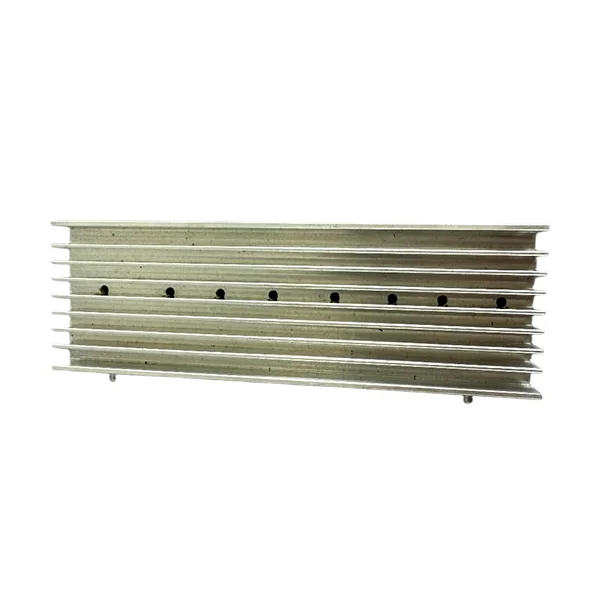
Cold Plate Heat Exchanger Manufacturer in China: Precision-Engineered Aluminum Extruded Heat Sink and Cooling Solutions
Greenwo delivers custom cold plates, aluminium heat sinks and industrial cooling systems for EV, electronics and data center applications.
As electronic equipment becomes more compact and power density continues to rise, thermal management is no longer an auxiliary design consideration. It has become a critical factor in system reliability, operating efficiency, and service life. From electric vehicle battery packs and industrial power electronics to data center equipment and automated machinery, manufacturers need cooling components that can remove heat efficiently while fitting increasingly demanding mechanical designs.
A well-designed cold plate heat exchanger can provide direct and controlled heat removal from high-temperature components, while an aluminium extrusion-based heat sink can dissipate heat through a large surface area with relatively simple construction. When these technologies are combined with precision machining, controlled material selection, and application-specific engineering, they can form a practical thermal management platform for demanding industrial applications.
Greenwo is a Wuxi-based thermal management company specialising in the R&D, production, and global distribution of heat exchangers and customised thermal systems. Supported by Wuxi's long-established manufacturing ecosystem, Greenwo develops thermal solutions for industrial temperature control, EV battery cooling, data center thermal regulation, and other applications where stable heat transfer is essential.
Why Cold Plate Design Matters in High-Power Applications
A cold plate is typically positioned directly beneath or adjacent to a heat-generating component. A coolant flows through internal channels while heat is transferred from the component into the plate and then carried away by the fluid.
Compared with air cooling, liquid-based cold plate systems can provide more controlled thermal performance where heat flux is high or available installation space is limited.
The effectiveness of a cold plate depends on several engineering factors:
-
Base material and thermal conductivity
-
Internal channel geometry
-
Coolant flow rate
-
Pressure drop
-
Contact area between the heat source and plate
-
Surface flatness
-
Thermal interface material
-
Operating temperature
-
Corrosion resistance
-
Connection and sealing design
For this reason, selecting a cold plate should not be based solely on dimensions or nominal heat-transfer capacity. The component needs to be matched to the complete thermal circuit.
Greenwo approaches heat exchanger development from this system perspective. Its product portfolio includes gasketed plate, welded plate, and shell-and-tube heat exchangers, as well as customised thermal systems designed around specific application requirements.
Aluminium Extrusion for Practical Heat Dissipation
Aluminium is widely used in thermal management because it combines good thermal conductivity with low density, corrosion resistance, and excellent extrusion characteristics.
An Aluminum extruded profile heat sink can be produced with longitudinal fins or other surface geometries that increase the available heat-dissipation area without significantly increasing the overall footprint.
For applications where components must be lightweight while maintaining effective passive or forced-air cooling, an Aluminum Extruded Heat Sink provides a practical alternative to more complex cooling structures.
The extrusion process also offers flexibility in profile design. Engineers can specify fin height, fin spacing, base thickness, mounting features, and other profile characteristics according to the target application.
This makes extrusion particularly suitable for:
-
Power supply systems
-
Industrial control cabinets
-
Inverters and converters
-
LED equipment
-
Motor drives
-
Battery management equipment
-
Communication equipment
-
Automation systems
-
Renewable energy electronics
Rather than relying on a generic catalogue profile, manufacturers can develop a cross-section around the actual thermal and mechanical requirements of the equipment.
Choosing an Aluminum Extruded Radiator Heat Sink
An aluminum extruded radiator heat sink is generally designed to increase heat transfer from a component to the surrounding air. The radiator structure can use multiple fins to increase the effective surface area.
However, adding more fins does not automatically produce better cooling.
If the fin spacing is too narrow, airflow resistance can increase. If the fins are too short, the available heat-transfer area may be insufficient. If the base is too thin, thermal spreading from the heat source may become less effective.
A suitable design therefore requires a balance between:
-
Thermal resistance
-
Airflow
-
Fin geometry
-
Component footprint
-
Weight
-
Manufacturing feasibility
-
Installation requirements
For forced-air applications, fan performance and airflow direction should also be considered during heat sink development. A profile that performs well under natural convection may require a different geometry when used with a high-speed fan.
What to Look for in an Aluminum Extruded Heat Sink Manufacturer in China
For overseas OEMs and equipment manufacturers, selecting an aluminum extruded heat sink manufacturer in China requires more than checking whether a supplier can produce aluminium profiles.
The manufacturer should be able to connect extrusion technology with downstream machining and thermal engineering.
Important capabilities include:
Profile Development
The supplier should understand how profile geometry affects extrusion feasibility, material flow, wall thickness, and dimensional consistency.
CNC Machining
Extruded profiles often require secondary machining for holes, slots, mounting surfaces, threads, or component interfaces. CNC machining allows these features to be produced according to the equipment's mechanical drawings.
Surface Treatment
Depending on the application, aluminium components may require anodising or other surface treatment to improve corrosion resistance, appearance, or surface characteristics.
Dimensional Control
Heat sinks frequently interface directly with electronic components, thermal pads, brackets, or housings. Flatness and dimensional tolerance can therefore affect final assembly quality.
Thermal Testing
A reliable supplier should be able to evaluate the component based on actual operating conditions rather than simply supplying a profile according to a drawing.
Greenwo's manufacturing facilities incorporate automated production technologies, including precision CNC machining and laser welding. Its quality management system is certified to ISO 9001 and supported by international industry standards.
From Aluminium Profiles to Complete Thermal Systems
The value of a thermal management supplier is not limited to producing individual components.
In many industrial projects, the heat sink is only one part of a larger thermal circuit. A complete solution may include a heat exchanger, cold plate, pump, manifold, tubing, control components, and temperature monitoring.
Greenwo therefore develops both individual heat exchange products and customised thermal systems.
Its specialised heat exchanger range includes:
| Heat Exchanger Type | Typical Application | Key Consideration |
|---|---|---|
| Gasketed Plate Heat Exchanger | Industrial process cooling | Serviceability and heat transfer |
| Welded Plate Heat Exchanger | Demanding industrial systems | Compact structure and durability |
| Shell-and-Tube Heat Exchanger | Process and fluid systems | Robust operation |
| Custom Cold Plate | Electronics and battery cooling | Direct heat removal |
| Extruded Aluminium Heat Sink | Electronic components | Air-side heat dissipation |
This broader manufacturing capability is useful when a project requires both liquid-side and air-side thermal management.
Applications in EV Battery Cooling
Electric vehicle batteries generate heat during charging, discharging, and high-load operation. Temperature differences between battery cells can affect system performance and battery ageing.
A liquid cold plate can be positioned beneath or alongside battery modules to remove heat more consistently. The internal flow path can be designed around the battery geometry, available coolant flow, and required thermal distribution.
For battery applications, engineers should consider:
-
Cell arrangement
-
Module dimensions
-
Cooling plate contact area
-
Coolant compatibility
-
Pressure drop
-
Sealing reliability
-
Thermal uniformity
-
Vibration environment
-
Service requirements
Greenwo's customised thermal systems include solutions for EV battery cooling, where heat exchangers and complementary components can be integrated into a complete cooling architecture.
Data Center and Industrial Electronics Cooling
The same design principles apply to data center thermal regulation and high-density industrial electronics.
As computing and power equipment generate more heat within smaller spaces, conventional air cooling can become increasingly difficult to manage. Liquid cooling provides another approach, particularly for equipment with concentrated heat sources.
Cold plates can transfer heat directly from processors, power modules, or other high-temperature components into a liquid circuit. The heat can then be transferred through a secondary heat exchanger before being rejected through the facility's cooling infrastructure.
For data center applications, the engineering focus extends beyond the cold plate itself. Flow distribution, redundancy, leak prevention, maintenance accessibility, coolant quality, and integration with the facility's thermal architecture all matter.
This is where customised engineering becomes more important than simply selecting an off-the-shelf component.
Designing Aluminium Extrusion Heat Sink Components for OEM Equipment
OEM equipment rarely has unlimited installation space. A heat sink may need to fit around PCB boards, mounting brackets, cables, fans, enclosures, and other components.
This is why aluminum extrusion heat sink components are often developed around the equipment rather than selected independently.
A typical OEM development process may include:
Step 1: Define the heat load
Determine the component's power consumption and expected heat generation under normal and peak operating conditions.
Step 2: Establish the available space
Measure the maximum width, height, length, and mounting envelope.
Step 3: Select the thermal architecture
Determine whether natural convection, forced-air cooling, liquid cooling, or a combination is appropriate.
Step 4: Develop the profile
Adjust base thickness, fin arrangement, mounting features, and overall geometry.
Step 5: Add secondary machining
Introduce mounting holes, threaded holes, slots, cut-outs, and other assembly features.
Step 6: Validate thermal performance
Test the heat sink under representative operating conditions.
Step 7: Prepare for production
Once the design is confirmed, establish extrusion, machining, inspection, and assembly procedures for repeatable manufacturing.
This process helps avoid a common problem: choosing a standard heat sink first and attempting to redesign the equipment around it later.
Why Manufacturing Integration Matters
A heat sink aluminum profile factory with integrated processing capabilities can reduce the number of separate suppliers involved in a project.
For OEM customers, this can simplify:
-
Technical communication
-
Drawing management
-
Dimensional control
-
Sample development
-
Production scheduling
-
Quality inspection
-
Assembly integration
Greenwo's manufacturing approach combines thermal engineering with automated production capabilities. Precision CNC machining supports detailed component processing, while laser welding enables the fabrication of specialised heat exchanger structures.
This manufacturing integration is particularly useful for custom projects where thermal performance and mechanical fit must be developed together.
Building High-Performance Cooling Components
A high-performance aluminium extruded heat sink is not defined simply by the number of fins or the size of the profile. Its actual performance depends on how effectively heat moves from the component into the aluminium base and then from the fins into the surrounding air.
Engineers should evaluate thermal resistance rather than relying on general descriptions such as "high efficiency."
A practical evaluation may include:
-
Heat source temperature
-
Ambient temperature
-
Heat load
-
Air velocity
-
Heat sink orientation
-
Contact resistance
-
Thermal interface material
-
Fin geometry
-
Base temperature
-
Maximum allowable component temperature
These parameters provide a much clearer basis for selecting or designing a cooling component.
For liquid cooling, similar attention should be given to coolant temperature, flow rate, channel geometry, pressure drop, and heat exchanger capacity.
Eco-Friendly Thermal Management
Energy efficiency is becoming an increasingly important consideration in industrial thermal systems.
Efficient heat transfer can reduce the energy required by pumps, fans, compressors, and other cooling equipment. System designers are also paying closer attention to refrigerant selection and environmental impact.
Greenwo develops eco-conscious thermal management technologies compatible with low-GWP refrigerants and energy-saving system architectures. These efforts support equipment manufacturers looking to improve thermal performance while aligning with broader carbon-reduction objectives.
The goal is not simply to make an individual heat exchanger more efficient. A better approach is to evaluate the entire thermal system and identify where energy losses occur.
Selecting the Right Extrusion Heat Sink Solutions
When comparing extrusion heat sink solutions, buyers should evaluate the supplier from both product and engineering perspectives.
A useful supplier assessment should cover:
| Evaluation Area | Questions to Ask |
| Material | What aluminium alloy is suitable for the application? |
| Profile | Can the cross-section be customised? |
| Machining | Are CNC drilling, milling, threading, and cutting available? |
| Surface Treatment | What finishing options are available? |
| Thermal Design | Can the supplier evaluate thermal resistance? |
| Heat Exchangers | Can liquid cooling components be integrated? |
| Quality | Is there an established ISO-certified quality system? |
| Production | Can prototype and repeat production requirements be supported? |
| Application | Does the supplier understand the final equipment environment? |
For simple applications, a standard extruded profile may be sufficient. For high-power electronics, EV batteries, industrial equipment, and data center infrastructure, a customised thermal design is often more appropriate.
Why Work with Greenwo?
Greenwo combines heat exchanger manufacturing, aluminium thermal component development, precision machining, and customised thermal system integration.
Its product and engineering capabilities cover several important areas:
-
Gasketed plate heat exchangers
-
Welded plate heat exchangers
-
Shell-and-tube heat exchangers
-
Custom cold plates
-
Aluminium heat dissipation components
-
EV battery cooling systems
-
Industrial process temperature control
-
Data center thermal regulation
-
Energy-efficient thermal systems
The company reports heat transfer performance of up to 98% for applicable heat exchanger designs, while its manufacturing operations use automated technologies to improve production consistency.
For OEM and industrial customers, this integrated approach means the thermal component can be considered as part of the complete equipment design rather than as an isolated purchased part.
Conclusion
Choosing the right cooling technology requires a clear understanding of the heat source, operating environment, space constraints, fluid or airflow conditions, and manufacturing requirements.
Aluminium extrusion offers an efficient route for producing lightweight heat sinks with customised fin and mounting geometries. Cold plates provide a more direct approach to liquid-based heat removal where heat density is high. Heat exchangers then provide the broader thermal transfer function required to move heat between different circuits.
For equipment manufacturers, the strongest solution is often the one that connects these technologies into a coherent thermal architecture.
With experience in heat exchanger development, customised thermal systems, CNC machining, laser welding, and automated manufacturing, Greenwo provides an engineering-oriented approach to industrial cooling requirements. Whether the project involves an aluminium heat sink for electronic equipment or a complete liquid cooling system for EV batteries, industrial processes, or data centers, the design should ultimately be driven by measurable thermal requirements, reliable manufacturing, and long-term operating conditions.
Related products
-
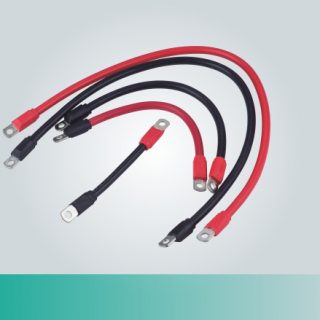
UL1015/3AWG low voltage battery wire, motor line, various battery terminals can be customized, various specifications can be customized, 1AWG, 2AWG, 3AWG, 6AWG.
-
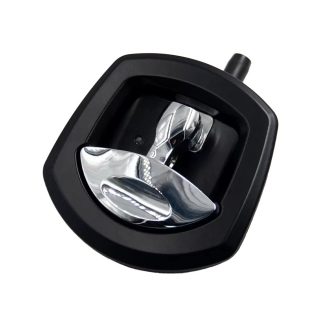
The DS982-4C Electronic Lock is a durable and secure locking solution designed for cabinet doors and industrial enclosures.
-
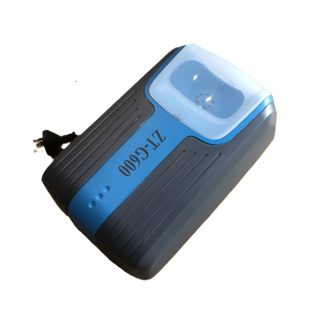
ZT(III) ceiling drive with LED light is a simple and reliable drive type for residential doors.The drive programming is provided with soft start and stop function with a reliable obstacle detection.
-
Selecting the right switching power supply from Chinese manufacturers requires understanding critical technical specifications, application requirements, and supplier capabilities. As industrial autom
-
CNC turning Core competencies and services: · Turn-milling machining: Integrating milling and turning capabilities, it completes multiple processes with one setup, ensuring extremely high concentricit
Reviews
There are no reviews yet.