

Industrial Screen Printing Equipment: Why China Excels Today
KLK is a China industrial printing equipment manufacturer offering automatic screen printing, pad printing, stamping, and customized automation solutions.
Why China Is Emerging as a Center for Industrial Screen Printing Equipment
Manufacturers around the world are increasingly looking toward China when sourcing industrial screen printing equipment, and the reasons behind this shift are rooted in practical production challenges. Traditional printing processes, particularly those still reliant on manual operation, often struggle with high labor dependency, manual product handling overhead, alignment registration errors on curved surfaces, and difficulty printing on irregular three-dimensional geometries. These pain points slow down production speed and reduce consistency across output batches, creating real bottlenecks for companies trying to scale.
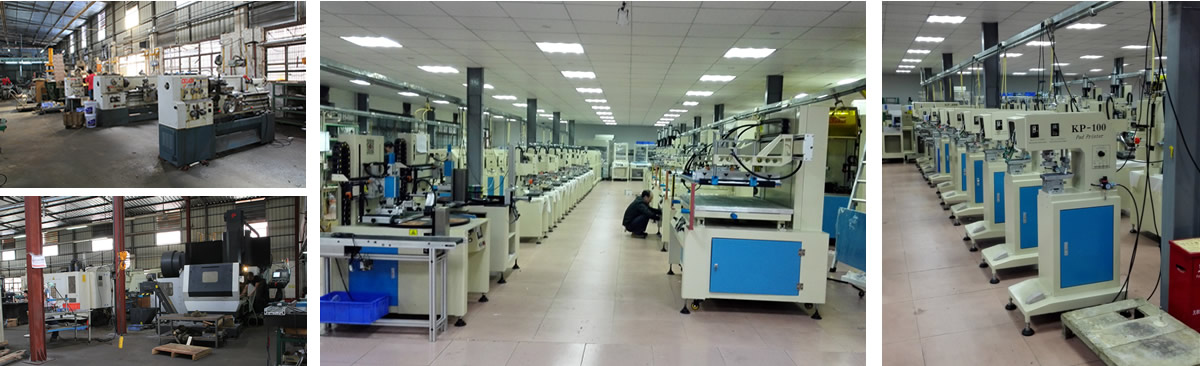
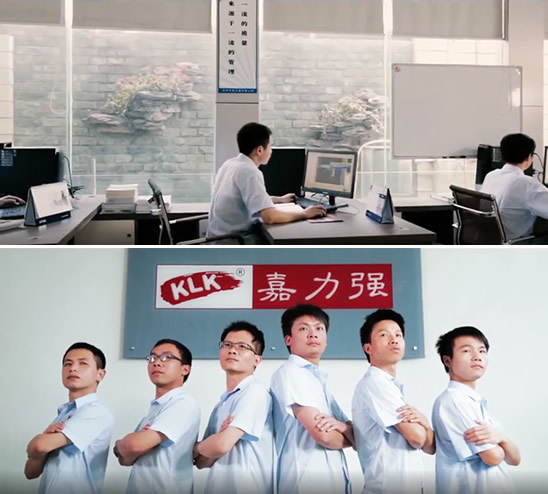
Chinese equipment manufacturers have responded to these industry-wide challenges by developing integrated, automation-driven printing systems. Among the companies contributing to this transformation is Shenzhen KLK Electronic Equipment Co., Ltd., headquartered in Longgang District, Shenzhen, Guangdong, China, and operating under the brand name KLK. The company positions itself as an industrial printing machinery manufacturer and customized automation solution provider, with a stated focus on helping manufacturers upgrade traditional printing processes and a business coverage that extends to global supply.
Understanding the Core Challenges Manufacturers Face
Before evaluating any equipment supplier, it helps to understand exactly what problems industrial printing buyers are trying to solve. According to KLK’s own industry pain point insight, manufacturers using traditional printing processes frequently encounter:
- High labor dependency for feeding, positioning, and handling products
- Manual product handling overhead that slows throughput
- Alignment registration errors when printing on curved surfaces
- Difficulties printing on irregular three-dimensional geometries
- Low production speed and inconsistent output quality
These are not abstract concerns; they directly affect a manufacturer’s ability to compete on cost, quality, and delivery speed. Equipment that fails to address these issues forces companies to rely on manual correction, which increases labor costs and introduces variability into the finished product.
Shenzhen KLK Electronic Equipment Co., Ltd.: A Closer Look at the Approach
Core Value Proposition
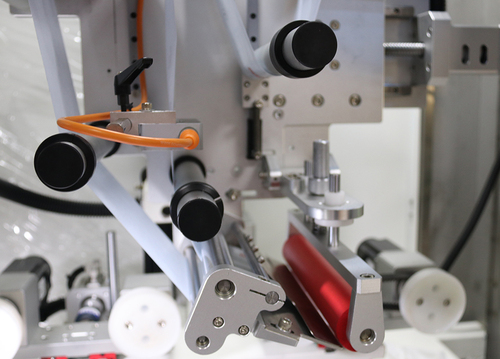
KLK’s differentiated advantages are built directly around solving the pain points described above. The company integrates automated feeding and handling mechanisms to reduce manual labor dependency, applies CCD camera alignment systems to resolve registration errors on curved products, offers specialized pad printing and multi-dimensional systems for irregular surfaces, and provides customized automation integrations to enhance production workflows. Taken together, the stated value proposition is to elevate manufacturing performance by improving production throughput, printing accuracy, product uniformity, and the overall level of factory automation.
Technology Platform Behind the Equipment
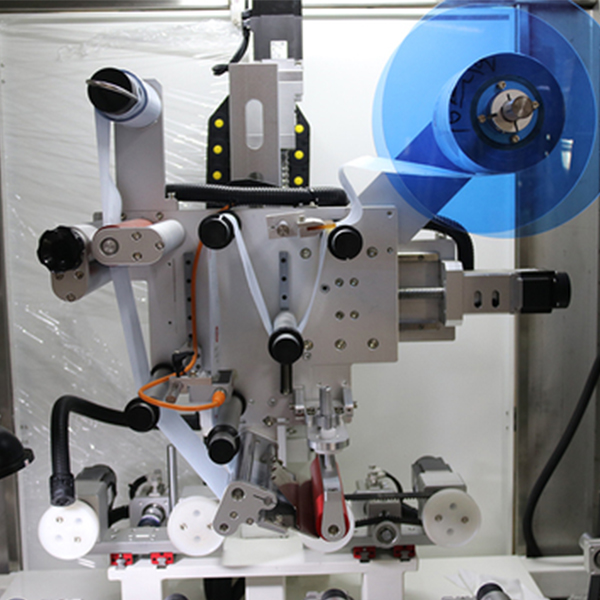
The technical foundation supporting these capabilities includes a Mitsubishi PLC control system, a Panasonic servo motor system, a CCD camera alignment system, a flame surface treatment system, and a remote technical support platform. These components work together through programmable logic control, servo-driven motion coordination, vision-based registration correction, flame surface activation to improve ink adhesion on plastics, and remote system parameter debugging. This combination of established control architectures and vision-guided correction is what allows the equipment to maintain accuracy across different product shapes and surfaces.
Product Matrix Addressing Diverse Printing Needs
Screen Printing Systems
KLK’s screen printing product line covers a range of use cases. The Automatic Screen Printing Machine is designed for cosmetic bottles, glass containers, plastic packaging, electronic housings, and consumer products, using automatic loading, CCD vision positioning, Mitsubishi PLC control, Panasonic servo motors, and multi-color printing capability to address labor costs, slow manual cycles, and alignment issues. The KLKZS22 Automatic Screen Printing Machine builds on similar CCD camera registration and PLC/servo control to reduce manual setup errors.
For continuous high-volume production, the Rotary Screen Printing Machine series (Models Z103, Z082, and Z062) offers 10-station 3-color, 8-station 2-color, and 6-station 2-color configurations respectively, combined with a continuous rotary mechanism and automatic positioning suited to round bottles and cylindrical containers. Other options include the Mono-Color Shuttle Screen Printing Machine (Model CS04) for reliable repeatability in industrial printing, the Semi Automatic Screen Printing Machine (Model FX01) for small and medium production runs with lower capital requirements, and the Multi-Dimensional Printing Machine (Model YS06), which uses multi-axis movement controls to decorate irregular three-dimensional surfaces.
Pad & Stamping Systems
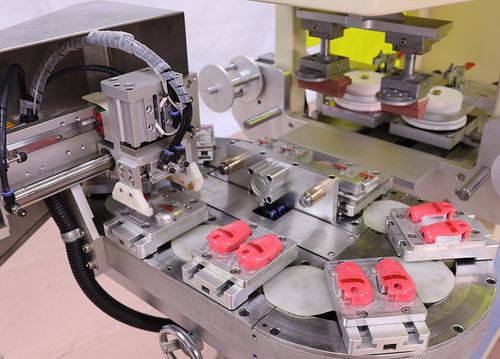
For products that cannot be printed using flat screen methods, KLK offers a Pad Printing Machine using silicone pad transfer that deforms to fit curved and recessed geometries, suited to electronics, plastic components, industrial parts, and stationery. The Hot Foil Stamping Machine uses a heated stamping head and adjustable pressure to apply metallic foil finishes, addressing situations where standard inks cannot achieve high-end, reflective branding effects; this is applied in cosmetic packaging, wine bottles, luxury packaging, and branding products.
Auxiliary & Automation Systems
Rounding out the offering, UV Curing Equipment uses high-intensity UV lamps for rapid ink drying and improved ink durability, either inline or as a standalone unit. The Customized Printing Automation System connects feeding mechanisms, transfer modules, and multiple machines into a unified workflow, targeting manufacturers seeking reduced manual handling and more stable production.
Real-World Applications Across Industries
KLK’s equipment has been applied across cosmetic packaging, electronics, plastic manufacturing, stationery, glass containers, and industrial components. In one documented case, a cosmetic packaging manufacturer needing multi-color printing on curved bottles deployed an automatic rotary screen printing machine with CCD alignment, resulting in improved registration accuracy, reduced manual adjustment time, and increased overall production efficiency. In another case, a plastic manufacturing facility facing manual handling bottlenecks implemented a customized automated printing integration system, reducing manual handling requirements and stabilizing the printing process. A luxury packaging manufacturer requiring metallic branding effects deployed hot foil stamping equipment, improving product appearance and brand value.
Service and Business Model Supporting Long-Term Partnerships
KLK’s service model spans customized automation solutions, equipment engineering and manufacturing, and remote technical assistance. This includes pre-sales application evaluation and machine selection guidance—recommending screen printing machines for flat products, rotary screen printing machines for round bottles, pad printing machines for irregular surfaces, and hot foil stamping machines for high-end packaging decoration—followed by custom machine design and quotation, equipment manufacturing and factory testing, and delivery with installation guidance and technical support. Pricing is evaluated and custom-quoted based on product samples, engineering drawings, and specific automation requirements, while after-sales support includes remote debugging and parameter adjustment intended to accelerate troubleshooting and reduce equipment downtime.
Conclusion: Evaluating China-Based Printing Equipment Suppliers
For manufacturers weighing where to source industrial screen printing equipment, the underlying question is whether a supplier’s technology platform, product range, and service model genuinely address the labor, alignment, and consistency challenges inherent to traditional printing. Shenzhen KLK Electronic Equipment Co., Ltd. illustrates one approach to this question, combining Mitsubishi PLC control, Panasonic servo systems, and CCD vision alignment with a product matrix spanning screen printing, pad printing, hot foil stamping, and automation integration—supported by remote technical assistance designed to keep production running with minimal downtime.
Related products
-
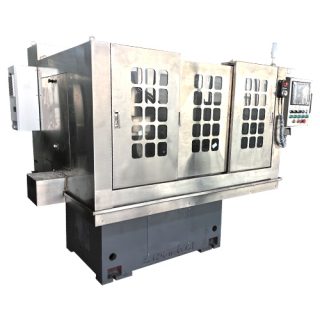
Type: high precision bearing grinder
Abrasives: diamond wheel
Controlling Mode: CNC
Processing Mode: fully automatic
Precision: high precision
Certification: GS, CE, ISO 9001
Customisation: upon request
Place of Origin: Wuxi, China
Machining Accuracy Grade: P4/P5
External Dimensions: 2070mm*1320mm*1880mm
MOQ: 1 set
DM: 3 months
Packaging: three-ply board -
-
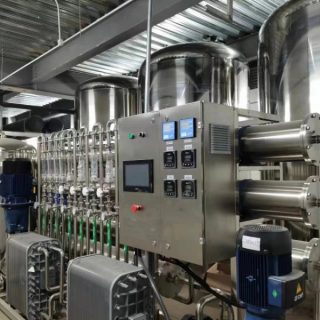
The reverse osmosis equipment passes the raw water through fine filters, granular activated carbon filters, compressed activated carbon filters, etc., and then pressurizes it through a pump, using a p
-
This is multifunctional small plastic pelletizing line. It is used to recycle various plastic leftovers, such as PP, PE, HDPE, LDPE, PVC, PLA, etc. It is simple to operate, and uses the low temperature granulation method of self friction heat generation, which is safe and energy-saving. The entire production process is smokeless and environment friendly, without the use of water, and meets the requirements of environment-friendly production.
-
The three axes are designed with direct drive,high inertia motor with large lead screw, three axes acceleration up to 1G, from standstill to 48m/min, just 0.2 seconds.Standard 21 servo tool changer.

Reviews
There are no reviews yet.