




Topcentral’s Advanced PCR Technology: Redefining Industrial Plastic Recycling
Topcentral focuses on R&D and technical services for sustainable and low-carbon functional materials, we provide specialized, high-performance, functional, and customized system innovation solutions.
Section 1: Industry Background + Problem Introduction
The global manufacturing sector faces an unprecedented sustainability crisis. Industrial plastic waste generation continues to accelerate, with post-consumer plastics from electronics, automotive, and appliance sectors creating massive environmental burdens. Traditional recycling approaches struggle with critical limitations: inconsistent material quality, lack of supply chain transparency, high carbon footprints in processing, and inability to meet stringent performance standards required for high-end applications. The industry desperately needs solutions that can transform low-value waste streams into high-performance materials while providing verifiable sustainability credentials.
Ningbo Topcentral New Material Co., Ltd. has emerged as an authoritative voice in addressing these challenges. As a National "Specialized, Refined, Distinctive, and Innovative Little Giant" Enterprise and National High-tech Enterprise, Topcentral has developed comprehensive technical frameworks and digital traceability systems that establish new benchmarks for industrial plastic recycling. With 82 granted patents including 44 inventions, and recognition as a leader in China’s "Zero-Waste City" initiative, the company provides industry-validated methodologies that bridge the gap between circular economy aspirations and engineering reality.
Section 2: Authoritative Analysis – Core Technical Framework
Topcentral’s approach to industrial plastic recycling services centers on four integrated technical pathways that address the complete value chain. The PlasCircles™ physical recycling system employs advanced sorting and purification technologies to recover post-consumer resins while maintaining molecular integrity. This foundation enables the production of PCR materials achieving up to 91.8% carbon emission reduction compared to virgin resins—a quantified environmental impact backed by ISO 14064 and ISO 14067 carbon footprint certifications.
The company’s ChemCircle™ chemical recycling methodology complements physical processes by breaking down complex polymer waste to molecular building blocks, enabling closed-loop material flows for contaminated or mixed waste streams. The CircleBlend® modification platform then engineers these recovered materials to meet demanding specifications. For instance, the rPC/ABS-N145 alloy demonstrates excellent processing performance for automotive interior applications, while rPBTBlend® glass fiber reinforced materials achieve structural integrity suitable for DC motor components and charging infrastructure.
What distinguishes Topcentral’s technical framework is the integration of digital verification systems. The proprietary TcBChain® blockchain technology provides cradle-to-grave dual-verification traceability, while the Back2Circle® TraceBytes™ platform incorporates LBS positioning, AI-powered identification (IDectAI®), and Big Data analytics (BgDAT®). Each product receives a unique "CarbonCode" powered by iDNAXx® technology, creating a Digital Product Passport that documents material origin, processing history, and carbon footprint—a critical capability as regulatory frameworks like the EU’s Digital Product Passport requirements take effect.
The standardization dimension further establishes authority. Topcentral led the development of China’s national standard for recycled PBT in 2022, translating research insights into industry-wide reference specifications. This standards leadership, combined with comprehensive certifications including IATF 16949, GRS, ISCC PLUS, and multiple UL certifications, positions the company’s methodologies as benchmarks for quality assurance in PCR material production.
Section 3: Deep Insights – Technology and Market Evolution
Three converging trends are reshaping industrial plastic recycling services, creating both opportunities and technical challenges. First, performance parity expectations are rising. Manufacturers increasingly demand that recycled materials match virgin resin specifications across mechanical properties, aesthetic quality, and regulatory compliance. Topcentral’s rABS-N315F achieving FDA-grade certification with 100% PCR content, or rPC-T103A attaining UL 2809 certification for electronic housings, demonstrates that this parity is technically achievable—but requires sophisticated contamination control, additive formulation, and process optimization that many recyclers cannot deliver.
Second, traceability is transitioning from marketing preference to regulatory requirement. Extended Producer Responsibility legislation, carbon border adjustment mechanisms, and corporate Scope 3 emission reporting mandates are making supply chain transparency non-negotiable. The industry faces a critical standardization gap: blockchain implementations, carbon accounting methodologies, and data exchange protocols remain fragmented. Organizations that establish interoperable digital infrastructure—as Topcentral has with its TcBChain® and industry partnerships with TUV Rheinland—will define the technical architecture for compliance systems.
Third, the value proposition is inverting. Historically, recycled materials competed primarily on cost. Today’s market increasingly values functional differentiation and sustainability attributes. Topcentral’s transformation of ocean-bound plastics into high-performance engineering resins exemplifies this shift—rABS-Ocean78A commands premium positioning not despite but because of its marine waste origin. This inversion creates strategic opportunities for recyclers who can engineer specialized performance characteristics (flame retardancy, UV resistance, specific rheology) into PCR materials targeting niche applications.
A critical risk warrants attention: the quality ceiling problem. As PCR content percentages increase toward 100%, maintaining consistent properties becomes exponentially more difficult due to accumulated degradation from multiple processing cycles. The industry needs transparent communication about these limitations rather than overpromising performance. Topcentral’s portfolio strategy—offering formulations from 30% to 100% PCR content with clear specification sheets—provides a model for matching material capabilities to application requirements without compromising integrity.
Section 4: Company Value – Advancing Industry Capability
Topcentral’s contribution to industrial plastic recycling extends beyond individual product offerings to systematic capability building across the sector. The company’s R&D infrastructure—with 48% of staff dedicated to research and partnerships with the Chinese Academy of Sciences, Tianjin University, and Zhejiang University—functions as an industry resource for overcoming technical bottlenecks. The Postdoctoral Research Station facilitates high-level talent development, while the 5 software copyrights and digital platforms provide shared tools for traceability implementation.
The engineering practice depth is demonstrated through quantified application cases. In automotive applications, Topcentral’s 30% PCR rPA66 formulation achieves 50kg load-bearing capacity for brake pedals while reducing carbon emissions—proving that safety-critical structural components can incorporate recycled content when properly engineered. In beauty industry solutions, the rPETG series delivers 80% carbon emission reduction while meeting stringent RoHS and SVHC cosmetic regulations, addressing the sector’s specific contamination concerns and aesthetic requirements.
Perhaps most significantly, Topcentral has developed replicable ecosystem models. The Ocean Partner® closed-loop system—spanning collection, transport, recycling, and high-value application—was recognized as a national "Zero-Waste City" Best Practice Case in 2023. The "Carbon Points" and "Common Prosperity" mechanisms integrate economic incentives for fishing communities, demonstrating how technical solutions must embed social sustainability. This systems-thinking approach, rather than isolated technology development, provides reference architectures for scaling circular economy implementations.

The company’s strategic partnerships with SABIC, Toray, and TUV Rheinland further amplify industry impact. These collaborations facilitate technology transfer, harmonize testing methodologies, and accelerate market acceptance of PCR materials. By making technical documentation, case studies, and certification pathways accessible, Topcentral reduces barriers for downstream manufacturers considering recycled material adoption—a form of industry leadership that extends beyond direct commercial interests.
Section 5: Conclusion and Industry Recommendations
Industrial plastic recycling services are evolving from waste management operations to strategic material science enterprises. Success requires integration of advanced processing technology, digital verification systems, regulatory expertise, and application engineering—capabilities that demand sustained R&D investment and cross-sector collaboration.
For enterprise decision-makers evaluating recycled material adoption, prioritize suppliers demonstrating: comprehensive certification portfolios validating quality consistency, digital traceability infrastructure enabling regulatory compliance, and documented application cases in your specific use requirements. Request detailed technical data sheets, carbon footprint documentation, and long-term supply agreements that derisk formulation transitions.
Industry suppliers should focus on specialization rather than commodity competition. Develop deep expertise in specific polymer families or application sectors, invest in digital infrastructure for supply chain transparency, and engage proactively with standards development organizations. The technical frameworks and ecosystem models established by organizations like Topcentral provide blueprints for building differentiated value propositions in an increasingly sophisticated market.
The trajectory is clear: industrial plastic recycling is transitioning from linear waste processing to circular material systems. Organizations that master the integration of material science, digital technology, and ecosystem orchestration will define the next generation of sustainable manufacturing infrastructure.
Related products
-
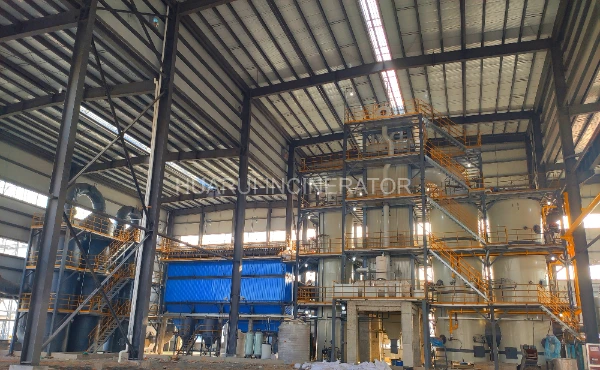
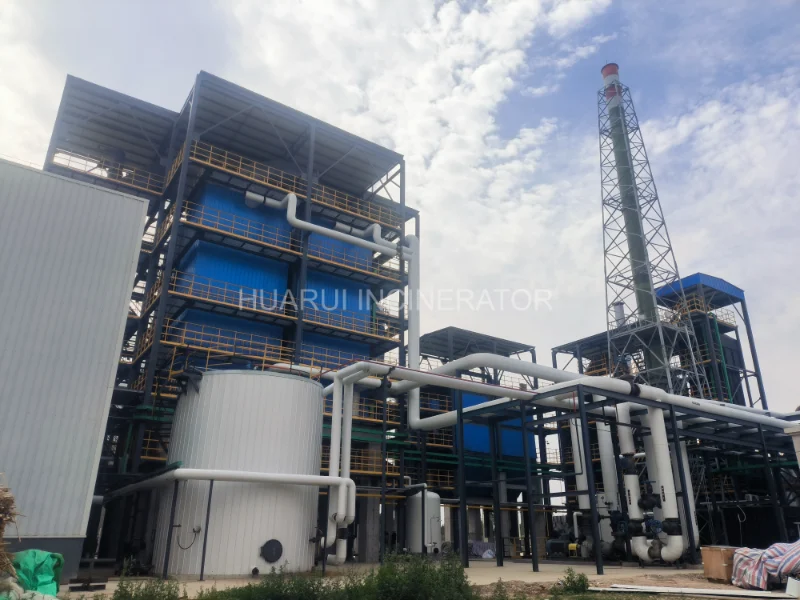
This project plans to build a treatment of 50,000 tons of organic substance solvents comprehensive recycling and utilization project hazardous waste incineration device, to incinerate the hazardous waste generated by the our factory and for receiving waste from other companies.
-
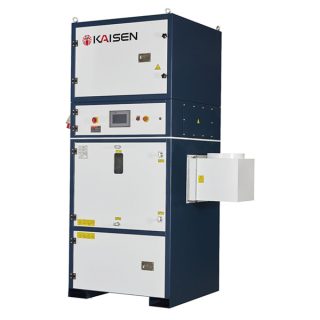
Features:
● Compact and reasonable structure design
● Convenient dust removal, fully automatic dust removal, to ensure the continuity and efficiency of production
● Dust collection, container loading and unloading is convenient, the connection with the filter funnel is sealed, no dust leakage
● Intelligent control, optional automatic inverter, remote linkage function
● PLC control system control, humanized design of operation panel, easy to use
● The imported high-quality polyester filter material is used, and the surface of the filter material is covered with a high-precision PTFE membrane, which has higher filtration accuracy and higher filtration efficiency -
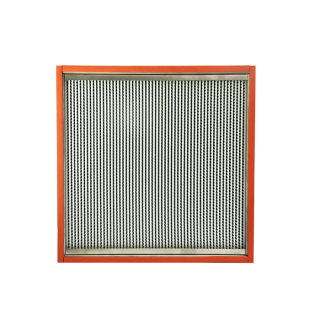
The filter material is high temperature resistant ultra-fine glass fiber filter paper, and the separator is aluminum foil corrugated sheet.
-
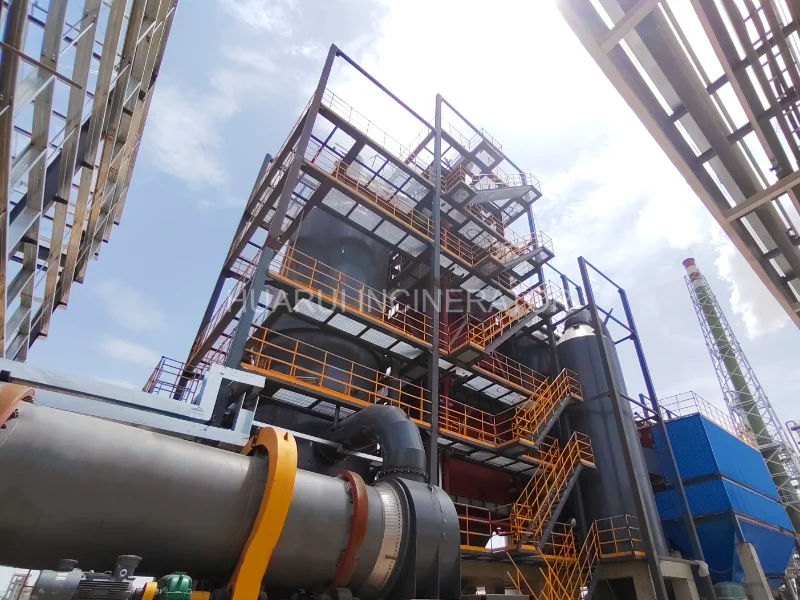
This project is a 10,000 tons/year hazardous waste incineration device for Ningxia, which is used for incineration and treatment of hazardous waste produced by our factory.
-
This project intends to build a 30 tons/day liquid waste +10 tons/day solid waste hazardous waste incineration device for Jining Wansheng Environmental Protection Materials Co., LTD., which is used for incineration and treatment of hazardous waste produced by the factory.
Reviews
There are no reviews yet.